FFacts On Tap Editorial Team Fact-checkedUpdated December 11, 20253 min read
Share
The moon phase soulmate trend took over TikTok in 2023, promising to reveal whether you and your partner are cosmically meant to be. The idea: find the phase the moon was in on each of your birthdays, layer the two images together, and see if they combine into a full moon.
It's a fun bit of internet astrology, not an actual compatibility test, but here's exactly how the trend works and the real science behind moon phases.
The moon phase soulmate trend asks you to find the moon phase on the day you were born and the day your partner was born, then layer both images to see if they form a complete full moon.
The trend spread widely across TikTok in 2023, largely thanks to an in-app 'Moon Phase Test' effect that lets users enter two birthdates and instantly generates the overlay.
You can also find your birth moon phase using third-party moon-phase calculator websites and apps that let you search any historical date and location.
The moon takes about 29.5 days to cycle through all of its phases, a period astronomers call a synodic month.
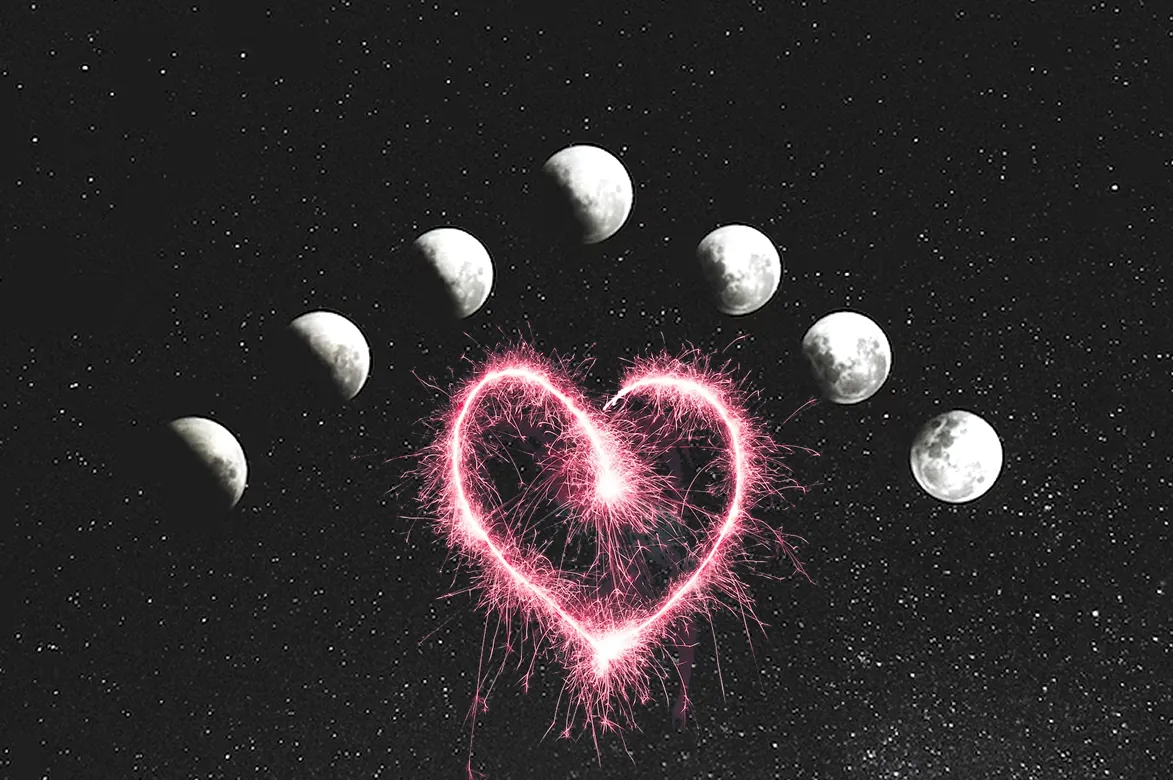
There are eight named phases in that cycle: new moon, waxing crescent, first quarter, waxing gibbous, full moon, waning gibbous, last quarter, and waning crescent.
Because a full moon happens once every cycle, it is not statistically rarer than any other single phase - it's just one of eight roughly equal segments of the 29.5-day cycle.
There is no scientific or astronomical basis connecting the moon's phase at birth to romantic compatibility; astronomers and science writers have publicly debunked the trend.
Moon phase is different from a 'moon sign' in astrology, which refers to which zodiac constellation the moon appeared in front of at birth - a separate, also unscientific, concept.
The moon does have real, measurable effects on Earth, most notably driving ocean tides through its gravitational pull, but no verified effect on human personality or relationships.
To make the trend video, most creators use TikTok's built-in photo or green-screen editing tools to layer the two moon images and adjust their size and position until they overlap.
Once generated, both partners' birth moon phases are fixed and never change, so redoing the trend later will always produce the same match result.
The trend is part of a broader wave of astrology-flavored 'cosmic compatibility' content on TikTok, following earlier viral trends built around zodiac sign matching.
The hashtag most associated with the trend is #moonphasesoulmate, though related tags like #mooncompatibility have also circulated.
Many participants add the trend's audio, text overlays, or reaction stickers to their videos before posting, similar to other TikTok challenge formats.
Frequently asked questions
What is the moon phase soulmate TikTok trend?
It's a viral trend where users compare the moon phase on their birthday with their partner's, layering the two images to see if they form a complete full moon - supposedly signaling a soulmate connection.
When did the moon phase soulmate trend start?
The trend went viral across TikTok in 2023, spreading quickly after the app introduced an in-app effect that automates the moon phase overlay.
How do I find my birth moon phase?
Use TikTok's 'Moon Phase Test' effect and enter your birthdate, or use an online moon phase calculator that lets you look up the moon's phase for any historical date.
Is the moon phase soulmate trend scientifically accurate?
No. There is no scientific or astronomical evidence that the moon's phase on someone's birthday relates to romantic compatibility. It's a fun social media trend, not a real predictive tool.
How often does the moon's phase change?
The moon moves through its full cycle of phases roughly every 29.5 days, a period known as a synodic month.
How many moon phases are there?
There are eight recognized phases: new moon, waxing crescent, first quarter, waxing gibbous, full moon, waning gibbous, last quarter, and waning crescent.
We write every article to be genuinely fun — and genuinely true. Each fact is checked against reputable sources before it goes live. Spotted something off? Tell us and read our fact-check policy.