FFacts On Tap Editorial Team Fact-checkedUpdated July 20, 20263 min read
Share
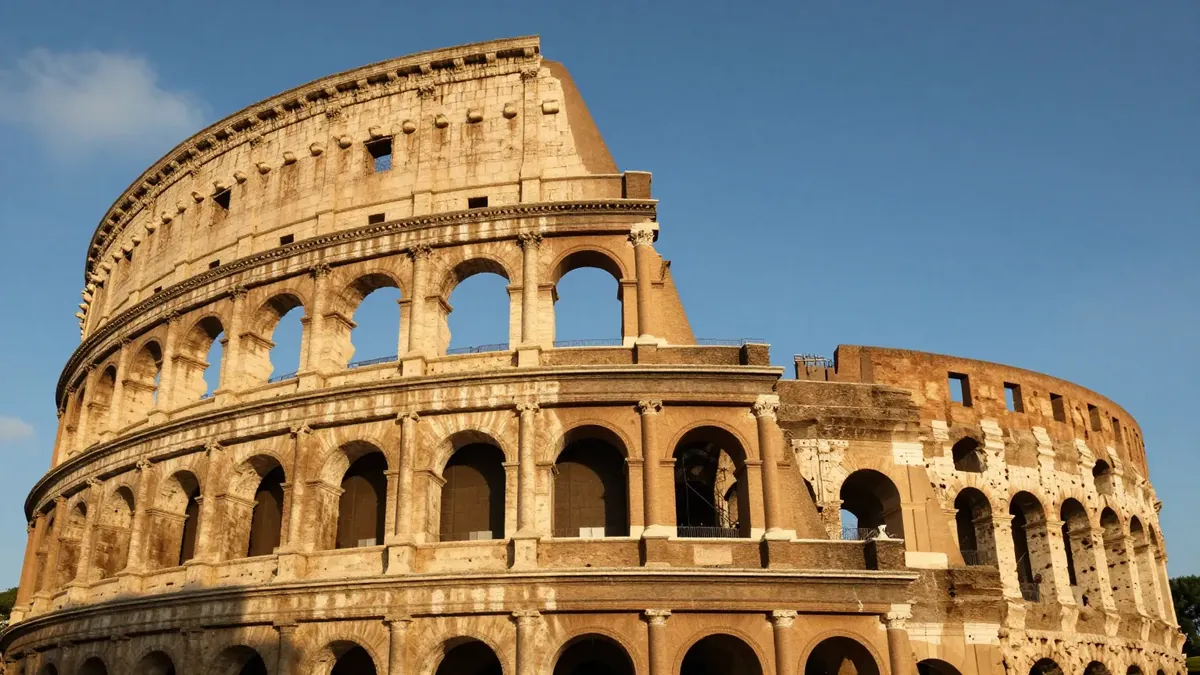
Nearly two thousand years after its opening games, the Colosseum still dominates the center of Rome — the largest amphitheater ever built and one of the most recognizable structures on Earth.
Here's what's actually true about it, from the flooded naval battles to why it's full of holes.
The Colosseum's real name is the Flavian Amphitheatre, after the dynasty of emperors who built it: begun under Vespasian around 70–72 AD and opened by his son Titus in 80 AD.
Its popular name likely comes from the 'Colossus' — a giant bronze statue of Nero that once stood nearby — not from the building's own size.
It is the largest amphitheater ever built: an ellipse roughly 189 by 156 meters (620 by 513 feet), rising about 50 meters (164 feet).
Estimates put its capacity at around 50,000 spectators, with some ancient sources claiming even more.
The inaugural games under Titus in 80 AD reportedly ran for 100 days, with thousands of animals killed in staged hunts.
Ancient sources describe the arena being flooded for staged naval battles (naumachiae) in its early years, before the underground complex was completed.
Beneath the wooden arena floor lay the hypogeum — a two-level maze of tunnels, animal cages, and elevator systems that could raise fighters and beasts through trapdoors.
A giant retractable awning called the velarium shaded spectators; it was operated by detachments of sailors from the Roman fleet.
Admission was free, with numbered entrance tickets (tesserae) and 80 entrance arches getting crowds in and out remarkably efficiently — seating was strictly arranged by social rank.
Gladiators were expensive investments who trained in professional schools; many bouts had rules and referees, and fights were not always to the death.
Gladiatorial combat faded in the 5th century AD, and the last recorded animal hunts in the Colosseum date to around 523 AD.
Major earthquakes — especially one in 1349 — collapsed the south outer wall, and for centuries the ruin served as a quarry: its travertine and bronze clamps were reused across Rome.
The distinctive holes covering the walls mark where metal clamps that once held the stone blocks together were pried out for scrap.
The Colosseum is a UNESCO World Heritage Site (as part of Rome's historic centre) and was named one of the New Seven Wonders of the World in 2007.
Today it is one of the most-visited monuments on Earth, drawing millions of visitors every year.
Frequently asked questions
Why is it called the Colosseum?
Most historians link the name to the Colossus of Nero, a giant bronze statue that stood beside the amphitheater — the building's official name was the Flavian Amphitheatre.
Did gladiators always fight to the death?
No. Gladiators were costly to train and maintain, bouts had rules and referees, and many ended with both fighters surviving. Deaths certainly happened, but not in every match.
Were naval battles really staged inside?
Ancient writers describe early naumachiae (mock sea battles) in the flooded arena. Once the underground hypogeum was built, flooding became impossible, so the practice moved elsewhere.
Can you visit the underground today?
Yes — the hypogeum and upper tiers are open via guided tours run by the official archaeological park.
Why is the Colosseum partly ruined?
Earthquakes (notably in 1349) brought down the south side, and Romans reused its stone and metal for other buildings for centuries — which is also why the walls are covered in holes.
We write every article to be genuinely fun — and genuinely true. Each fact is checked against reputable sources before it goes live. Spotted something off? Tell us and read our fact-check policy.