FFacts On Tap Editorial Team Fact-checkedUpdated July 11, 20264 min read
Share
Animals are endlessly fascinating, from the pets curled up on our couches to the strangest creatures roaming the wild. Whether it's a shark that walks on its fins or a whale with a tongue as heavy as an elephant, nature never runs out of surprises.
Here are 20 surprising, fact-checked facts about animals that will change how you look at the animal kingdom.
Dolphins communicate using a complex system of whistles and clicks, and each dolphin develops its own unique 'signature whistle' that functions much like a name.
Koala fingerprints are remarkably similar to human fingerprints — so similar that in rare cases they have been mistaken for human prints at crime scenes.
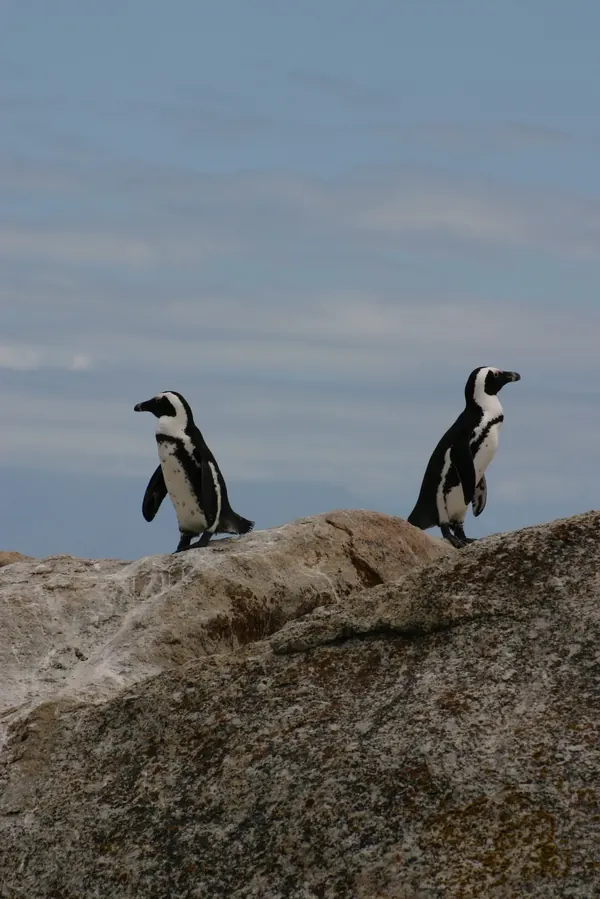
Emperor penguins are extraordinary divers: the record for the longest recorded dive is 32.2 minutes, though their typical foraging dives last only a few minutes.
Kangaroos can't walk backwards because of the shape of their legs and the way their large tail is used for balance and movement.
A group of flamingos is called a 'flamboyance.'
Sloths move so slowly that algae actually grow on their fur, giving many sloths a greenish tinge that helps camouflage them in the trees.
Male seahorses carry fertilized eggs in a pouch and give birth to the young, making them one of the few animal species where the male becomes 'pregnant.'
The Australian superb lyrebird can mimic an astonishing range of sounds, including chainsaws, camera shutters, and even human speech.
Cats are often described as making around 100 distinct vocal sounds, compared to roughly 10 for dogs — a striking difference, though the exact counts are estimates rather than precise measurements.
Octopuses have three hearts and blue blood; the blue color comes from a copper-based protein called hemocyanin that carries oxygen through their bodies.
Honeybees perform a 'waggle dance' to tell other bees the direction and distance to a food source.
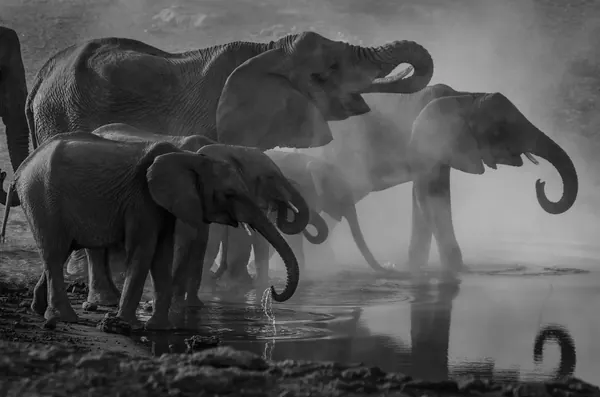
Elephants are the only mammal that cannot jump, because their leg structure and enormous weight don't allow all four feet to leave the ground at once.
No two zebras have the same stripe pattern — each animal's stripes are as unique as a human fingerprint.
A blue whale's tongue can weigh as much as an elephant, roughly 2.7 to 4 tons, and its heart alone can weigh as much as a small car.
Camels have unusually long, thick double rows of eyelashes — along with eyelids that close like windows — to keep blowing desert sand out of their eyes.
Sea otters often hold hands (technically called 'paws') while floating and sleeping so they don't drift apart from each other.
Polar bear fur is actually translucent and hollow, and their skin underneath is black. Because their fur insulates so well, very little body heat escapes, which can make them nearly invisible on thermal infrared cameras.
Ants can carry objects many times their own body weight, with some species able to lift roughly 20 to 50 times their weight.
The Australian box jellyfish is considered one of the most venomous marine creatures on Earth, capable of delivering an extremely painful and potentially fatal sting.
Epaulette sharks, sometimes called 'walking sharks,' can use their fins to push themselves across the seafloor and even survive briefly out of water to reach tide pools.
Frequently asked questions
Which animal can mimic human speech almost perfectly?
The Australian superb lyrebird is famous for mimicking an enormous range of sounds, including human speech, camera shutters, and chainsaws, with remarkable accuracy.
Can kangaroos walk backwards?
No. Kangaroos cannot walk backwards because of how their powerful hind legs and large tail are built for hopping forward.
Do male or female seahorses give birth?
Male seahorses give birth. Females deposit eggs into a pouch on the male's body, where he fertilizes and carries them until they hatch.
How long can an emperor penguin hold its breath underwater?
Most emperor penguin dives last only a few minutes, but the longest scientifically recorded dive lasted 32.2 minutes.
Is it true that camel eyelashes are longer than their legs?
No, that's a myth. Camel eyelashes are unusually long (several inches) and grow in a double row to block desert sand, but they are nowhere near as long as a camel's legs.
Are polar bears really invisible to infrared cameras?
Polar bears are extremely difficult to detect with thermal infrared cameras because their dense, translucent fur traps body heat so effectively that very little escapes through the surface.
We write every article to be genuinely fun — and genuinely true. Each fact is checked against reputable sources before it goes live. Spotted something off? Tell us and read our fact-check policy.