FFacts On Tap Editorial Team Fact-checkedUpdated July 16, 20263 min read
Share
Penguins are some of the most beloved birds on the planet, instantly recognizable by their tuxedo-like plumage and waddling walk. But behind the charm are some genuinely remarkable adaptations for surviving in the water and on land.
Here are 18 verified facts about penguins, from their swimming speed to their salt-filtering glands.
Penguins are birds, but they cannot fly. Instead, their wings have evolved into flippers that propel them through the water.
There are 18 recognized living species of penguins, found from Antarctica to the Galapagos Islands.
The gentoo penguin is the fastest-swimming penguin species, reaching bursts of up to 22 miles per hour (36 km/h), making it the fastest swimming bird in the world.
The emperor penguin is the largest living penguin species, standing up to about 4 feet (1.2 m) tall and weighing as much as 90 pounds (roughly 40 kg).
Emperor penguins huddle together in large groups to conserve body heat, with individuals taking turns rotating from the sheltered inside of the huddle to the exposed outside.
Penguins have a special supraorbital gland above their eyes that filters excess salt from their bloodstream, letting them drink seawater and eat marine prey without becoming dehydrated.
Most penguin species are largely monogamous within a breeding season and often return to the same colony, and even the same nest site, year after year.
Penguins have excellent eyesight underwater, which helps them spot fast-moving prey like fish, krill, and squid.
The Galapagos penguin is the only penguin species that lives north of the equator, thanks to the cool waters brought by the Humboldt Current.
The little penguin (also called the fairy penguin or little blue penguin) is the smallest penguin species, standing only about 12 to 13 inches tall and weighing roughly 2 to 3 pounds.
Penguins play an important role in marine food webs, acting as both predator (eating fish, krill, and squid) and prey (for orcas, leopard seals, and sharks).
A penguin's black-and-white coloring is a form of camouflage called countershading: the dark back blends with the dark ocean depths when viewed from above, while the white belly blends with the bright surface when viewed from below.
Penguins can drink both fresh water and salt water because of their salt-excreting glands.
Emperor penguins can dive deeper than any other bird, reaching depths of over 1,800 feet (roughly 550 m) in search of food.
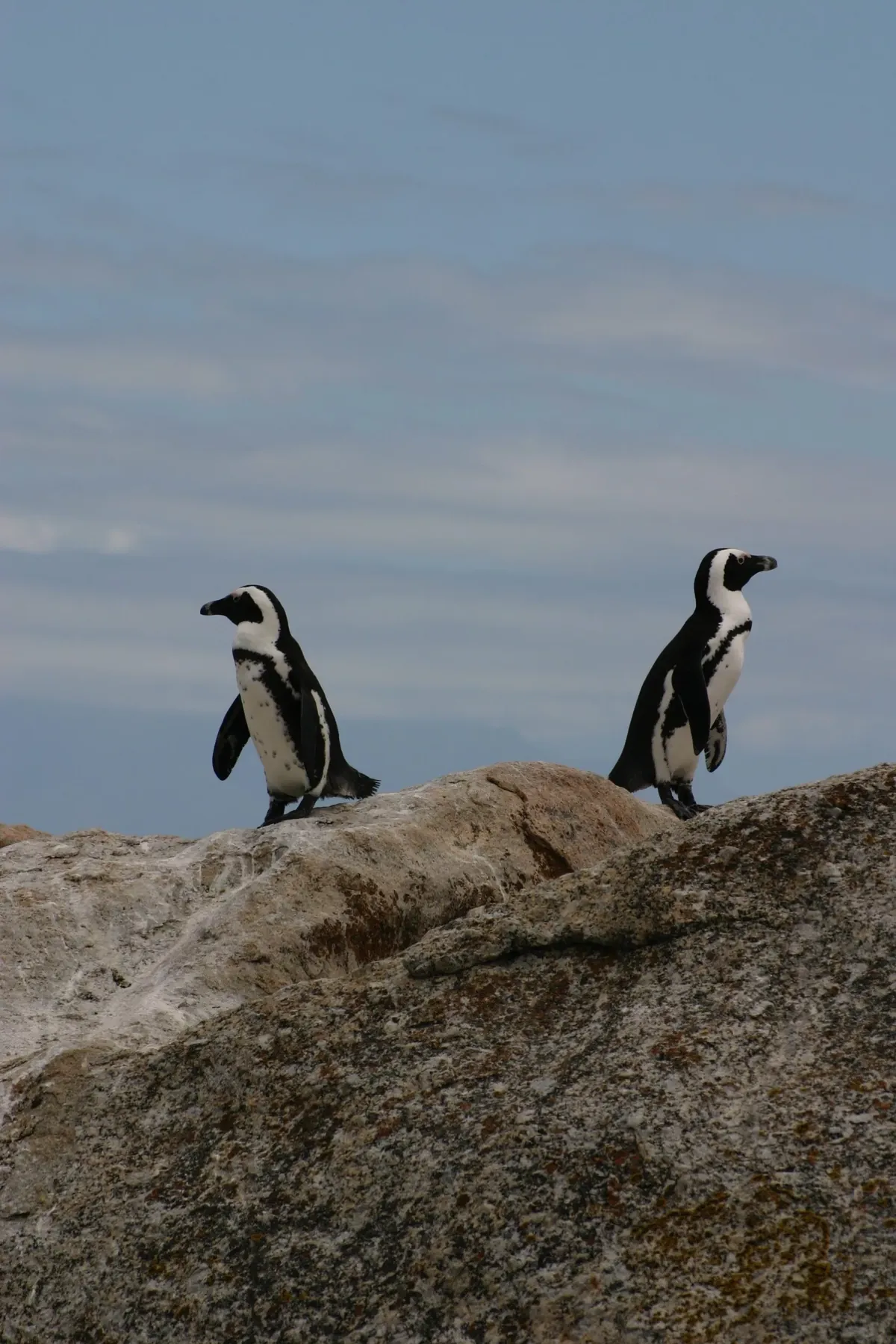
Not all penguins live in icy climates; species like the African penguin and the Galapagos penguin live in temperate and even tropical regions.
Penguin chicks are typically covered in soft down feathers and rely on their parents for food until they grow waterproof adult feathers.
Several penguin species, including the African penguin and the Galapagos penguin, are classified as endangered largely due to habitat loss, overfishing, and climate change.
Penguins are found almost exclusively in the Southern Hemisphere, with no wild penguin populations native to the Arctic or North Pole.
Frequently asked questions
What do penguins eat?
Penguins predominantly feed on fish, krill, and squid, which they catch while swimming.
Do all penguins live in Antarctica?
No. While many species live in and around Antarctica, others are found in South America, Africa, Australia, New Zealand, and even the Galapagos Islands near the equator.
How long do penguins live?
Lifespan varies by species, but many penguins live 15 to 20 years in the wild, and some can live longer in zoos and aquariums with no natural predators.
Can penguins breathe underwater?
No. Penguins are air-breathing birds that hold their breath while diving and must surface periodically to breathe.
Are penguins endangered?
Several penguin species, such as the African penguin and Galapagos penguin, are considered endangered or vulnerable due to habitat loss, climate change, and overfishing, and conservation efforts are underway to protect them.
Do penguins live at the North Pole?
No. Penguins are native only to the Southern Hemisphere; polar bears, not penguins, are found near the North Pole.
We write every article to be genuinely fun — and genuinely true. Each fact is checked against reputable sources before it goes live. Spotted something off? Tell us and read our fact-check policy.