FFacts On Tap Editorial Team Fact-checkedUpdated January 11, 20264 min read
Share
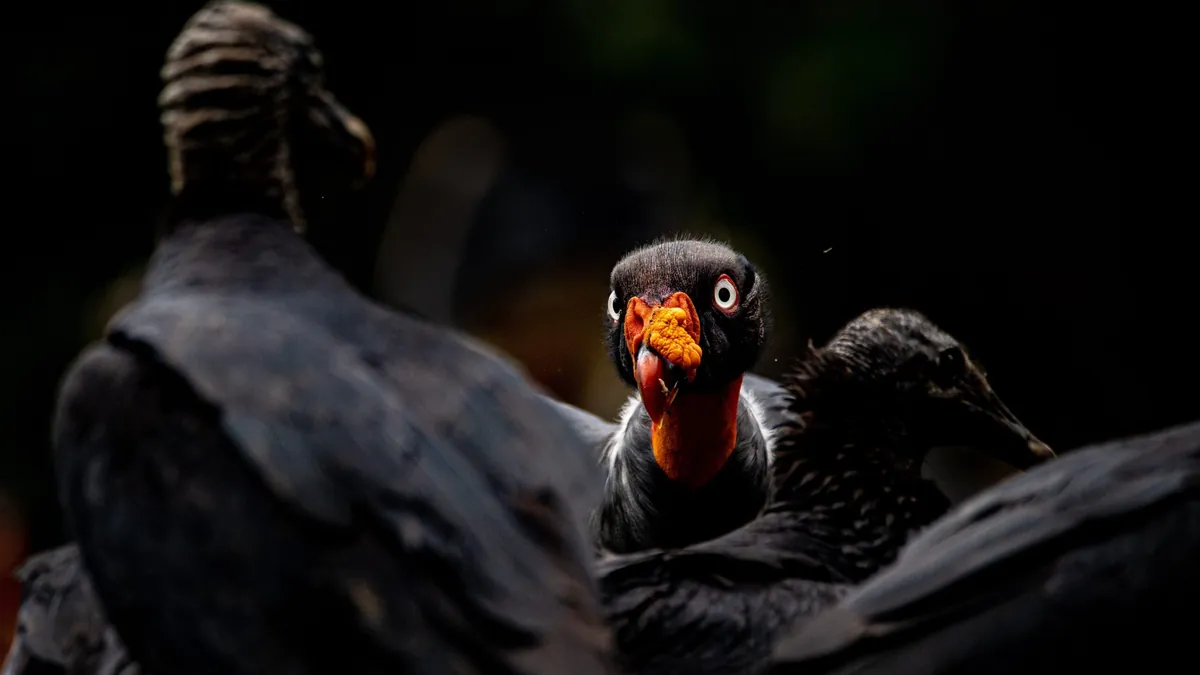
Vultures rarely get the credit they deserve. These bald-headed scavengers are nature's cleanup crew, keeping ecosystems healthy by clearing away carcasses and stopping diseases from spreading. Far from being creepy, they're some of the most specialized and resilient fliers on the planet.
Here are the real facts behind these misunderstood birds, verified and corrected where the popular version gets it wrong.
There are 23 living species of vulture in the world, split between 16 Old World vultures (Africa, Europe, and Asia) and 7 New World vultures (the Americas).
Vultures are found on every continent except Australia and Antarctica.
The Andean condor, a New World vulture, has the longest wingspan of any raptor on Earth and is the heaviest bird of prey alive today — though a few seabirds, like the wandering albatross, edge it out for the single longest wingspan overall.
Vultures have an extraordinarily keen sense of smell (in the species that use it) or sharp eyesight that lets them spot or sniff out carrion from great distances while soaring.
Many vulture species have bald heads, which helps keep bacteria from building up in feathers while feeding on carcasses.
An Andean condor's wingspan can reach up to about 10.5 feet, letting it soar for hours on rising air currents with barely a wingbeat.
Vultures are social birds and often gather in groups, called a "venue" or "committee," to feed together on a carcass.
A vulture's stomach acid has a pH near 1 — strong enough to destroy anthrax, botulism, cholera, and other deadly pathogens found in rotting carcasses.
Cultural attitudes toward vultures vary widely: some traditions honor them as sacred cleanup birds (Zoroastrian sky burials, for instance, rely on vultures), while others associate them with death and decay.
A Rüppell's griffon vulture holds the record for the highest confirmed flight of any bird, recorded at roughly 37,000 feet after colliding with an aircraft over Côte d'Ivoire in 1973.
Vultures can eat up to 20% of their body weight in a single meal, then go days or even weeks without eating again.
Many vulture species live 20 to 30 years in the wild, and some, like the Andean condor, can live 50 years or more in captivity.
Vultures are excellent gliders, capable of covering well over 100 miles in a single day while barely flapping their wings.
Several vulture species, including Andean condors and turkey vultures, form long-term pair bonds and often mate for life.
When threatened, vultures can vomit forcefully to lighten themselves for a quick takeoff and to deter predators with the smell.
In Hindu mythology, the vulture-demigod Jatayu is a heroic figure in the Ramayana, reflecting the reverence vultures hold in parts of South Asian culture.
Vultures have strong, hooked beaks built for tearing through tough hides that many other scavengers can't get through.
The Egyptian vulture is one of the few birds known to use tools, picking up rocks to hammer open thick ostrich eggs.
Vultures are scavengers that feed almost entirely on carrion rather than hunting live prey.
Several vulture species are critically endangered, especially in Africa and South Asia, largely due to poisoning, habitat loss, and (in Asia) a veterinary drug called diclofenac that is toxic to them.
Frequently asked questions
What do vultures eat?
Vultures primarily feed on carrion, or dead animals, rather than hunting live prey.
Are vultures endangered?
Yes, many vulture species are endangered or critically endangered due to poisoning, habitat loss, and, in parts of Asia, exposure to livestock drugs like diclofenac that are toxic to them.
Do vultures have any predators?
Adult vultures have few natural predators, but their eggs and chicks can be vulnerable to animals like eagles and snakes.
How do vultures communicate?
Vultures mostly rely on body language and visual displays around feeding sites, along with some hisses and grunts, since they lack a strong vocal syrinx.
Can vultures fly long distances?
Yes, vultures are efficient gliders that use rising thermal air currents to travel long distances while barely flapping their wings, conserving energy as they search for food.
How do vultures help prevent the spread of disease?
A vulture's extremely acidic stomach destroys dangerous pathogens like anthrax and cholera in the carcasses it eats, effectively sterilizing the environment and stopping those diseases from spreading further.
We write every article to be genuinely fun — and genuinely true. Each fact is checked against reputable sources before it goes live. Spotted something off? Tell us and read our fact-check policy.