FFacts On Tap Editorial Team Fact-checkedUpdated August 4, 20233 min read
Share
With their striped backs and stuffed cheeks, chipmunks are some of the most recognizable small mammals in North America. But a lot of what gets repeated about them online is exaggerated or just plain wrong.
We fact-checked the most common chipmunk claims against wildlife biology sources, so here are the facts that actually hold up.
There are roughly 25 species of chipmunks. Most live only in North America, but one, the Siberian chipmunk, is native to forests across Europe and Asia.
Chipmunks belong to the squirrel family, Sciuridae, along with tree squirrels, ground squirrels, and marmots.
The least chipmunk is the smallest species, reaching about 7 to 8.75 inches long including its tail.
The eastern chipmunk is the largest species, growing to roughly 9 to 11 inches long including its tail.
Chipmunks are omnivores, eating nuts, seeds, berries, fruit, insects, and occasionally bird eggs or small amphibians.
Chipmunks have expandable cheek pouches they use to carry food back to their burrows.
A chipmunk's cheek pouches can stretch to about three times the size of its head and hold roughly 32 beechnuts or up to 70 sunflower seeds at once.
Chipmunks don't truly hibernate. Instead they go into torpor, a deep winter sleep state, waking every few days to eat from the food they cached in their burrow.
During torpor, a chipmunk's heart rate can drop from around 350 beats per minute to as few as 4, and its body temperature falls dramatically to conserve energy.
Chipmunks typically mate in spring, and many species have a second mating period in summer or early fall.
Chipmunks have a gestation period of about 31 days.
Baby chipmunks are called kits or pups.
Most chipmunks in the wild live only 2 to 3 years on average, though some individuals survive up to 8 years; lifespan varies by species and captivity extends it further.
Chipmunks are agile climbers and can scale trees, fences, and walls with ease.
Chipmunks have sharp eyesight and hearing that help them spot predators quickly.
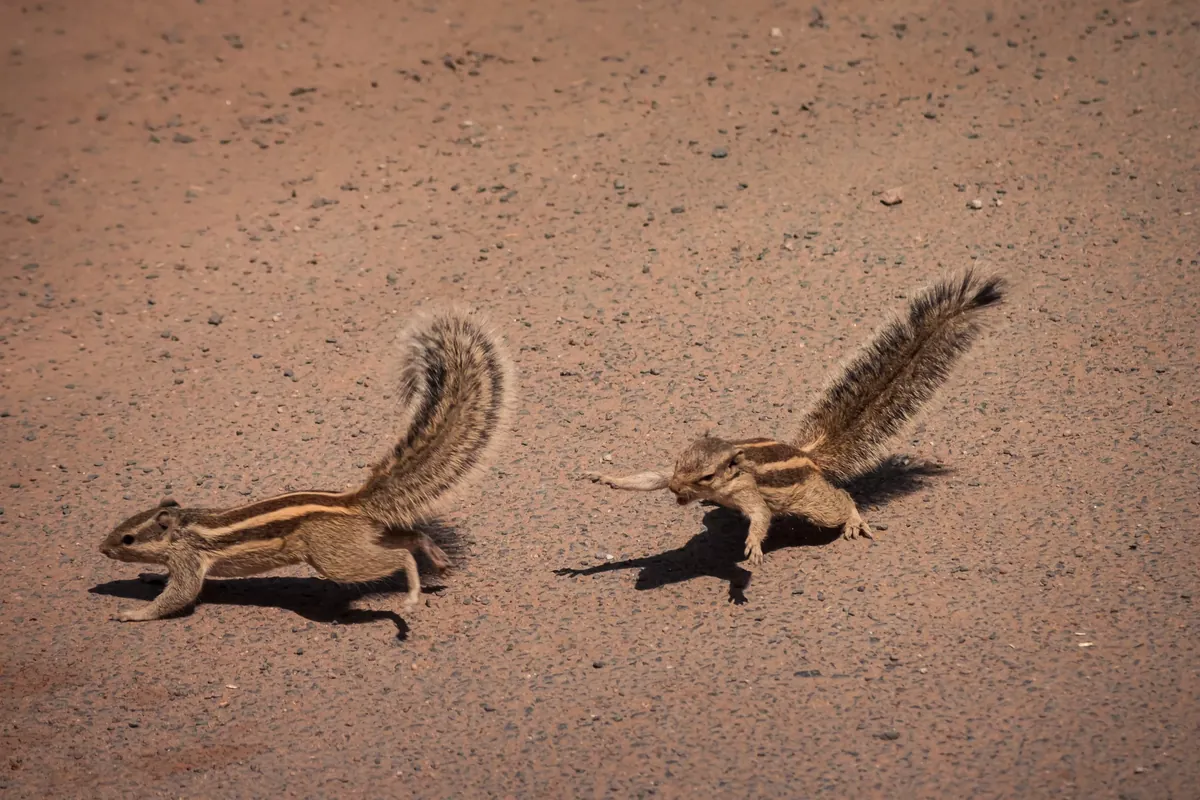
Chipmunks use their bushy tails for balance while climbing and flick them as a warning signal to other chipmunks.
Chipmunks are territorial and will chase off other chipmunks that enter their burrow area.
Chipmunks make a sharp, repetitive "chip-chip" call, which is how they got their name, often used to warn others of nearby predators.
Natural predators of chipmunks include hawks, owls, foxes, snakes, weasels, and domestic cats.
Chipmunks as a group are not endangered, but some individual species, like Palmer's chipmunk, are considered vulnerable due to habitat loss.
The Siberian chipmunk is sometimes kept as a pet, but most North American chipmunk species are wild animals that don't adapt well to captivity.
Frequently asked questions
How do I attract chipmunks to my yard?
Offer a reliable food source like nuts or seeds and provide cover such as a rock pile, log pile, or brush where they can shelter and store food safely.
Are chipmunks dangerous?
Chipmunks are not dangerous to people; they're small, timid, and would rather flee than fight. They can host ticks that carry diseases like Lyme disease, so it's best to avoid handling wild chipmunks.
Do chipmunks make good pets?
Only the Siberian chipmunk is commonly kept as a pet, and even then it requires specialized care, a large enclosure, and a proper diet. Native North American chipmunk species are wild animals and are not suited to captivity.
What is the lifespan of a chipmunk?
Most wild chipmunks live around 2 to 3 years, though some individuals survive up to 8 years. Captive chipmunks, particularly Siberian chipmunks, can live noticeably longer.
What is the difference between a chipmunk and a squirrel?
Chipmunks are smaller, have stripes running down their backs and faces, and carry food in expandable cheek pouches, a feature most squirrels lack.
What do chipmunks do during the winter?
Chipmunks spend fall gathering and storing food in their burrows, then enter torpor for the winter, waking periodically to eat from their cache rather than sleeping straight through like true hibernators.
We write every article to be genuinely fun — and genuinely true. Each fact is checked against reputable sources before it goes live. Spotted something off? Tell us and read our fact-check policy.