How to Prepare Edible Insects at Home: A Beginner's Guide
FFacts On Tap Editorial Team Fact-checkedUpdated January 21, 20263 min read
Share
Eating insects isn't a fringe fad, it's one of the oldest and most widespread food traditions on Earth. An estimated 2 billion people in more than 80 countries already include insects as part of their regular diet, and interest in "entomophagy" is growing fast in the West as a sustainable protein option.
If you're ready to try making your own edible insects at home, here's what you need to know to choose, prepare, cook, and season them safely.
An estimated 2 billion people worldwide regularly eat insects as part of their traditional diet, according to a 2013 UN Food and Agriculture Organization report.
More than 1,900 insect species have been documented as edible, most commonly beetles, caterpillars, bees, ants, grasshoppers, crickets, and termites.
Crickets and mealworms are considered nutritionally dense, providing complete protein along with iron, zinc, magnesium, and vitamin B12.
Raising insects for food generally requires far less land, water, and feed than raising cattle, pigs, or poultry for the same amount of protein.
Insect farming produces significantly lower greenhouse gas emissions than raising cattle, which is a major source of methane.
The most commonly farmed edible insects sold in the US and Europe are crickets and mealworms, usually available dried, roasted, or ground into flour.
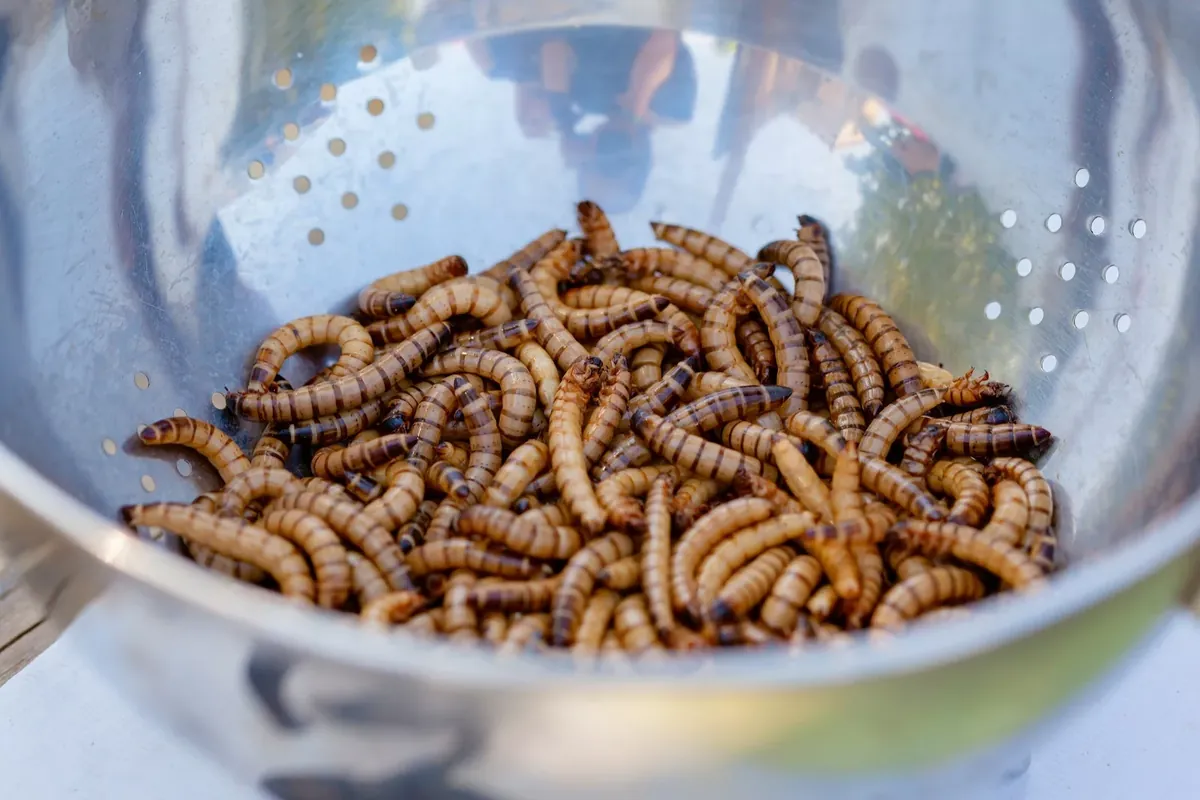
Mealworms are not worms at all, they're the larval stage of the darkling beetle (Tenebrio molitor).
Between 2021 and 2023, the European Union approved dried house crickets, migratory locusts, and mealworm larvae as "novel foods" safe for human consumption after formal safety review.
People with shellfish allergies should be cautious with insects, since both share chitin and tropomyosin proteins that can trigger cross-reactive allergic reactions.
For safety, insects meant for eating should come from farms or reputable retailers raised specifically for human consumption, not insects caught in the wild, garden, or yard, which may carry pesticides or parasites.
Before cooking, crickets and grasshoppers typically have their wings and legs removed and are rinsed, since these parts can be tough or scratchy to eat.
Roasting insects in a 350°F (175°C) oven for about 10-15 minutes until crisp is a common home preparation method, similar to roasting nuts.
Toasted or fried insects are often finished with simple seasonings like salt, chili powder, or garlic, similar to how you'd season roasted nuts or popcorn.
In Oaxaca, Mexico, toasted grasshoppers seasoned with chili, lime, and salt are a well-known traditional snack called chapulines.
Cricket flour (ground, dried crickets) can be substituted for a portion of regular flour in baked goods like cookies, bread, and protein bars.
Frequently asked questions
Is it safe to eat insects you catch outside?
No, it's not recommended. Wild insects may carry pesticides, parasites, or toxins depending on species and habitat. Stick to insects raised specifically for food by farms or retailers.
Do edible insects taste like anything?
Most commonly eaten insects, like crickets and mealworms, have a mild, nutty, earthy flavor and take on seasonings well, similar to nuts or popcorn.
Are edible insects actually good for you?
Yes. Crickets and mealworms are good sources of protein, iron, zinc, and vitamin B12, and are generally low in fat compared to many meats.
Can I eat insects if I'm allergic to shellfish?
You should be cautious. Insects and shellfish share some of the same proteins, like chitin and tropomyosin, so people with shellfish allergies can have cross-reactive allergic reactions to insects.
Where can I legally buy edible insects?
In the US, specialty food retailers and online sellers offer farmed crickets, mealworms, and cricket flour intended for human consumption. In the EU, approved insect products are increasingly available in mainstream grocery stores.
We write every article to be genuinely fun — and genuinely true. Each fact is checked against reputable sources before it goes live. Spotted something off? Tell us and read our fact-check policy.