FFacts On Tap Editorial Team Fact-checkedUpdated February 24, 20263 min read
Share
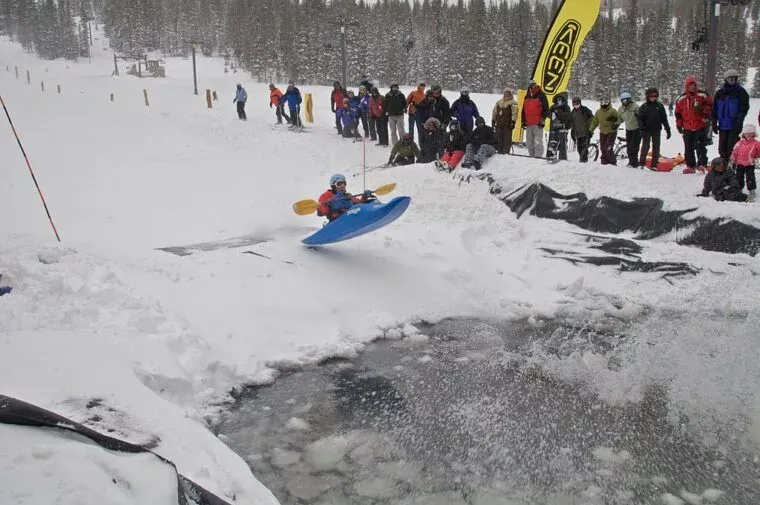
When you think of kayaking, you probably picture warm summer days on a calm river. But there's a thrilling winter twist on the sport called snow kayaking, which blends elements of snowboarding, skiing, and whitewater paddling into one adrenaline-fueled ride down a mountain.
Here are 10 fun, fact-checked facts about snow kayaking, the extreme sport that trades rapids for snowy slopes.
Snow kayaking traces its roots to the Austrian Alps, where locals held the first known snow kayaking race in 2002. An unofficial world championship followed in Lienz, Austria, in 2007.
The sport is also known as snow boating or 'snowkayak,' and it grew out of kayakers looking for a way to keep paddling once their local rivers froze over for winter.
Snow kayakers use kayaks modified for the slopes, often with reinforced or grooved hulls that help them glide over packed snow and ice instead of water.
Because runs can reach high speeds over hard, icy terrain, safety gear is essential: helmets, goggles, and padded clothing are standard, and some racers add extra body armor.
Paddles do double duty as both a steering tool and a balance aid, similar to how a skier uses poles, helping riders carve turns and stay upright on the way down.
There are two broad styles of the sport: slope kayaking, done on groomed ski runs, and off-piste kayaking, done on ungroomed, natural terrain with more unpredictable conditions and obstacles.
Competitions generally fall into two formats: timed races down a course, and freestyle events where riders are judged on tricks, flips, and style rather than speed.
One of the sport's most famous events, the Red Bull Snow Kayak race, was held in Otepää, Estonia, where competitors ran a custom-built downhill snow track in a bracket-style elimination format.
The experience is often compared to whitewater rafting on snow: racers hurtle down a mountainside course the way a rafter would ride rapids, just without the water.
Skiing filmmaker Warren Miller helped popularize snow kayaking in the winter sports world by featuring it alongside skiing and snowboarding in his ski films.
Like most action sports, snow kayaking has a beginner-to-advanced progression: newcomers typically start on gentle, low-angle slopes before working up to steeper, more technical runs.
Snow kayaking is a genuine workout: paddling and steering build upper-body and core strength, while hiking back up the slope after each run works the legs and cardiovascular system.
The sport is accessible to a wide range of ages and fitness levels, since intensity can be scaled by choosing a gentler slope, making it a popular activity for families at ski resorts that offer it.
Frequently asked questions
What is snow kayaking?
Snow kayaking is a winter sport in which riders use a kayak, steered with a paddle, to slide and race down a snow-covered slope instead of a river.
Where did snow kayaking originate?
The sport traces back to the Austrian Alps, where the first known snow kayaking race took place in 2002, followed by an unofficial world championship in Lienz, Austria, in 2007.
Is snow kayaking safe?
Like most extreme sports, it carries real risk due to speed and hard terrain, so participants wear helmets, goggles, and padded or armored clothing and should only ride on slopes designated for the activity.
What equipment do you need for snow kayaking?
You need a kayak modified for snow (often with a reinforced or grooved hull), a paddle, a helmet, goggles, and warm, padded cold-weather clothing.
Can beginners and kids try snow kayaking?
Yes. The sport can be scaled to skill level by starting on gentle slopes, which makes it accessible to children, seniors, and casual participants, not just experienced athletes.
We write every article to be genuinely fun — and genuinely true. Each fact is checked against reputable sources before it goes live. Spotted something off? Tell us and read our fact-check policy.