Facts About Chinese Food: A Delicious Journey Through China's Culinary Traditions
FFacts On Tap Editorial Team Fact-checkedUpdated January 29, 20263 min read
Share
Chinese cuisine is one of the world's most beloved and diverse culinary traditions, with a history spanning thousands of years. From dim sum and dumplings to noodles and stir-fries, it offers something for nearly every palate.
In this article, we explore fun and fascinating facts about Chinese food, its regional variety, and the customs that shape how it's eaten and enjoyed around the world.
One of China's oldest surviving culinary and agricultural texts is the Qimin Yaoshu, compiled around 544 CE during the Northern Wei dynasty, which covers farming, food preservation, and cooking techniques.
The Yinshan Zhengyao, a notable dietary and recipe text with over 200 recipes, was written by court dietician Hu Sihui in 1330 during the Yuan dynasty, not the Tang dynasty.
Chinese cuisine is traditionally divided into eight major regional culinary traditions, often called the 'Eight Great Cuisines': Sichuan, Hunan, Cantonese, Shandong, Jiangsu, Zhejiang, Anhui, and Fujian.
Chinese cooking philosophy often emphasizes balance, pairing hot and cold ingredients, sweet and sour flavors, and crunchy and soft textures within a single meal.
General Tso's chicken was actually created by Chef Peng Chang-kuei in Taiwan in 1955, honoring Hunanese general Zuo Zongtang; the sweeter, Americanized version familiar in the U.S. was developed by New York restaurants in the early 1970s after Peng brought the dish to the city.
Chopsticks have been used in China for at least 3,000 years, with archaeological evidence of chopstick-like utensils dating back to the Shang dynasty.
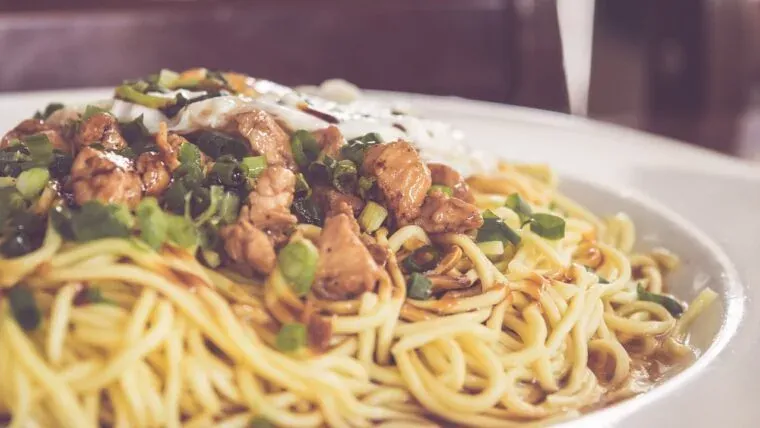
Noodles are a staple of Chinese cuisine, appearing in soups, stir-fries, and cold dishes, with dozens of regional noodle varieties made from wheat, rice, and mung bean starch.
Ginger and star anise are common ingredients in Chinese cooking that have long been used in traditional Chinese medicine, ginger for digestion and star anise for its aromatic, warming qualities.
Dim sum is a Cantonese tradition of small, bite-sized dishes such as steamed dumplings and buns, traditionally served with tea during brunch, called 'yum cha' (drinking tea).
Tea is deeply embedded in Chinese food culture and is often served alongside meals; major categories include green, black, oolong, white, and pu-erh tea, each processed differently.
Chinese New Year is celebrated with symbolic foods, including dumplings (representing wealth), whole fish (representing abundance), and sticky rice cakes called nian gao (representing progress).
Hot pot is a communal dining style where diners cook raw meat, seafood, and vegetables in a simmering pot of broth at the table, with regional variations like spicy Sichuan hot pot and milder Cantonese versions.
Soy sauce, made from fermented soybeans and wheat, has been produced in China for over 2,000 years and remains one of the most widely used condiments in Chinese cooking.
Sichuan peppercorns produce a distinctive tingling, numbing sensation known as 'ma la' when combined with chili peppers, a hallmark of Sichuan cuisine.
Frequently asked questions
What are some popular Chinese ingredients?
Common ingredients include soy sauce, rice vinegar, ginger, garlic, sesame oil, and Sichuan peppercorns.
What is the difference between Hunan and Sichuan cuisine?
Hunan cuisine tends to be spicy, sour, and salty with fresh chili peppers, while Sichuan cuisine is known for its 'ma la' flavor, a numbing heat from Sichuan peppercorns combined with chili oil.
What are some popular Chinese dishes?
Widely known dishes include Kung Pao chicken, dumplings, hot and sour soup, chow mein, and fried rice, though many are regional specialties rather than found nationwide.
What are some vegetarian Chinese dishes?
Vegetarian options include vegetable fried rice, stir-fried greens, vegetable dumplings, and various tofu dishes like mapo tofu (which can be made without meat).
What is dim sum?
Dim sum is a Cantonese tradition of small, shareable dishes, often served in bamboo steamer baskets alongside tea, typically enjoyed as a brunch or lunchtime meal.
We write every article to be genuinely fun — and genuinely true. Each fact is checked against reputable sources before it goes live. Spotted something off? Tell us and read our fact-check policy.