FFacts On Tap Editorial Team Fact-checkedUpdated April 26, 20263 min read
Share
Mexican cuisine is beloved worldwide for its bold flavors, colorful ingredients, and deep cultural roots. From street tacos to rich mole sauces, it's one of the most influential food traditions on the planet.
Here are 12 fascinating, fact-checked facts about the history, ingredients, and traditions behind Mexican food.
Mexican cuisine is deeply woven into Mexican culture and family life. Meals are often shared communally, and many traditional dishes carry special meaning tied to holidays, ceremonies, or regional identity.
In 2010, UNESCO added traditional Mexican cuisine to its Representative List of the Intangible Cultural Heritage of Humanity, recognizing the Michoacan community model of "food, farming, and celebration" as a living cultural tradition.
Mexican food varies dramatically by region. Northern states favor beef and flour tortillas, coastal regions lean on seafood and ceviche, and central and southern Mexico are known for complex sauces like mole and a huge variety of chiles.
Mexican cuisine has roots stretching back to the pre-Columbian era, when indigenous peoples such as the Aztecs and Maya cultivated corn, beans, and chiles — the "three sisters" that still anchor the cuisine today.
Corn (maize) is Mexican cuisine's foundational ingredient, used to make tortillas, tamales, and countless other dishes. Archaeological evidence shows people in Mexico's Balsas River valley began domesticating maize from wild teosinte roughly 9,000 years ago.
Mexico is a major center of chile diversity, growing dozens of distinct chile varieties — from mild poblano to fiery habanero — used fresh, dried, or smoked in salsas, moles, and adobos.
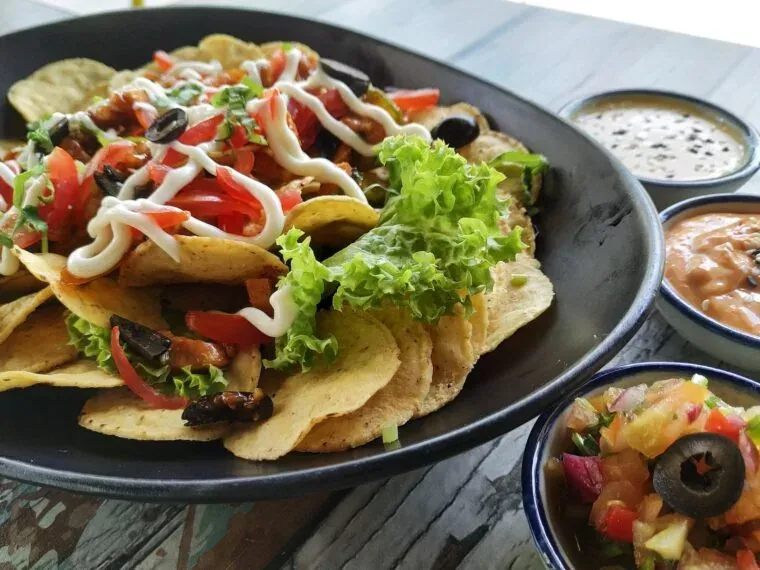
Tacos have deep roots in Mexico, where corn tortillas filled with meat, beans, or vegetables have been a common way of eating for generations before becoming a global phenomenon.
Guacamole traces back to the Aztecs, who mashed avocados into a dish called "ahuacamolli." Modern guacamole typically adds lime juice, salt, and often tomato, onion, and cilantro.
Cacao was first domesticated in South America, but it was Mesoamerican peoples — starting with the Olmecs around 1500 BCE, followed by the Maya and Aztec — who developed the bitter, spiced cacao drink that evolved into modern chocolate.
Traditional Mexican cooking makes heavy use of fresh vegetables, herbs, beans, and lean proteins. Dishes like ceviche, grilled fish, and bean-based salads are often prepared with minimal added fat.
The margarita, a cocktail of tequila, lime juice, and orange liqueur usually served with a salted rim, is one of Mexico's most famous culinary exports, though its exact origin story is disputed among several competing legends.
Dia de los Muertos (Day of the Dead) honors deceased loved ones with food-centered traditions, including pan de muerto (sweet bread), sugar skulls, and dishes the departed enjoyed in life.
Tequila and mezcal, two of Mexico's signature spirits, are both distilled from agave plants, but tequila must legally be made from blue Weber agave and mostly comes from the region around Jalisco.
Mole, one of Mexico's most iconic sauces, can contain dozens of ingredients — chiles, spices, nuts, and sometimes chocolate — and varies widely by region, with Oaxaca famous for producing several distinct mole varieties.
Frequently asked questions
What are some popular Mexican desserts?
Popular Mexican desserts include churros, flan, tres leches cake, and pan de muerto around Day of the Dead.
Is Mexican food always spicy?
No. Many traditional Mexican dishes are mild, and heat level depends heavily on the region and the specific chiles used.
What is the difference between a burrito and a taco?
A taco is typically made with a smaller corn tortilla, while a burrito is usually larger and wrapped in a flour tortilla.
What is the most popular Mexican dish?
Tacos are among the most iconic Mexican dishes worldwide, alongside enchiladas, tamales, and mole.
Can you eat healthy at a Mexican restaurant?
Yes. Choosing dishes with fresh ingredients, such as grilled fish, ceviche, or bean-based salads, can make for a healthy meal.
Did chocolate originate in Mexico?
Cacao itself was first domesticated in South America, but Mesoamerican civilizations in Mexico, starting with the Olmecs, were the first to develop it into a chocolate drink.
We write every article to be genuinely fun — and genuinely true. Each fact is checked against reputable sources before it goes live. Spotted something off? Tell us and read our fact-check policy.