FFacts On Tap Editorial Team Fact-checkedUpdated February 17, 20264 min read
Share
Food fuels our bodies, but it also hides some genuinely strange history and science. Ketchup started life as a fermented fish sauce, carrots used to be purple, and scientists really have squeezed peanut butter into tiny diamonds.
Here are 20 surprising, fact-checked tidbits about the food you eat every day.
Ketchup began as a fermented fish sauce in China, and its name likely comes from a Hokkien Chinese word for fish brine, e-ke-tsiap.
The ketchup we know today, made from tomatoes, sugar, and vinegar, was popularized in the United States in the 19th century.
Sushi originally referred to a method of preserving fish by fermenting it with rice, not to raw fish itself.
The word "sushi" actually refers to the vinegared rice used in the dish, not the fish on top.
Carrots were originally purple (and also came in white and yellow); the now-familiar orange carrot was developed by Dutch growers in the late 16th and 17th centuries.
Purple carrots are still grown today and contain anthocyanin antioxidants that give them their color.
Umami, the savory "fifth taste," was identified in 1908 by Japanese chemist Kikunae Ikeda, who traced it to glutamate in kombu seaweed broth.
Umami-rich foods include soy sauce, Parmesan cheese, mushrooms, and tomatoes.
Durian, a fruit popular across Southeast Asia, is famous for a smell so strong that it's banned on public transit and in many hotels in the region.
Despite the odor, durian is prized as a delicacy and is sometimes called the "king of fruits."
The hot dog's American roots trace to German immigrant sausage vendors in New York in the mid-to-late 1800s, though the exact "first" stand is disputed.
Most "wasabi" served in restaurants outside Japan is actually a mix of horseradish, mustard, and green food coloring.
Real wasabi comes from the plant's rhizome (an underground stem, not a true root), is difficult to farm, and is far more expensive than the imitation paste.
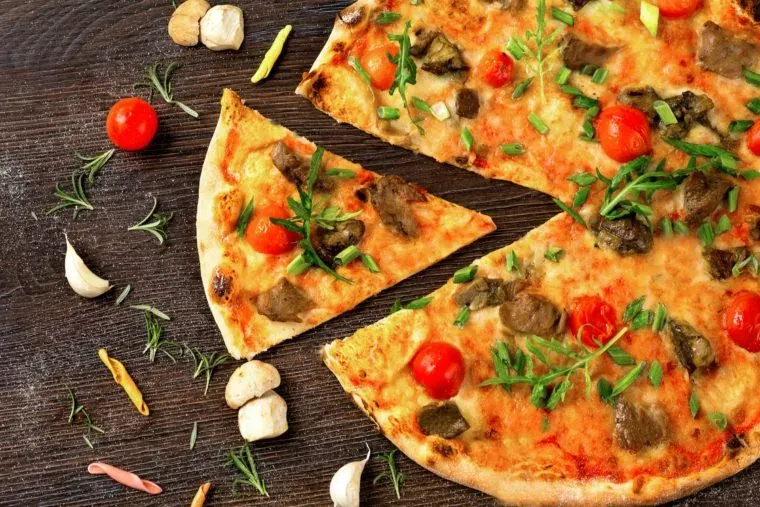
Pizza has roots in Naples, Italy going back to the 18th century, though the now-classic Margherita pizza wasn't created until 1889.
Tea has played a central role in Chinese culture for thousands of years, with formal tea ceremonies emphasizing preparation and presentation.
Chocolate chip cookies were invented by Ruth Wakefield at the Toll House Inn in Massachusetts in 1938, after she chopped up a Nestle chocolate bar as a substitute for baker's chocolate.
The world's largest omelette was made in Santarem, Portugal in 2012, using 145,000 eggs and weighing about 6.5 tons, cooked in a pan over 10 meters wide.
Coffee is linked to a reduced risk of type 2 diabetes and liver disease in observational studies, though it isn't a guaranteed health cure and effects vary by person.
Food pairing is the practice of combining ingredients that share overlapping flavor compounds, a technique chefs use to create unexpected but harmonious dishes.
Miracle fruit contains a protein called miraculin that temporarily binds to taste receptors, making sour foods like lemons taste sweet.
So-called "white" strawberries, like the pineberry, are actually pale pink or white with red seeds and taste closer to pineapple than a typical strawberry.
French fries are popularly believed to have originated in Belgium, where street vendors were frying sliced potatoes as early as the late 1600s, though the exact origin is still debated by historians.
Cinnamon was so valuable in the ancient world that it was treated as a luxury on par with precious metals, and the spice trade helped drive European exploration of new sea routes.
The burning sensation of spicy food comes from capsaicin, a compound in chili peppers that activates the same pain receptors that respond to actual heat.
Scientists at the University of Edinburgh have squeezed peanut butter under extreme heat and pressure to break down its carbon bonds and reform them into tiny diamonds, mainly as a classroom demonstration rather than a commercial process.
Ice cream-like frozen desserts date back roughly 2,000 years in China, and frozen treats became widely popular in Europe and America centuries later.
Frequently asked questions
What are some interesting food facts from around the world?
Many cultures have distinctive traditional foods, such as balut (a fertilized duck egg) in the Philippines, haggis (a savory pudding of sheep offal, oats, and spices) in Scotland, and escamoles (ant larvae) in Mexico.
What is the most expensive food in the world?
White truffles are among the most expensive foods, regularly selling for over a thousand dollars per pound, with rare specimens fetching much more at auction.
Are there any health benefits to eating spicy food?
Some studies link regular spicy food consumption to modest benefits like improved metabolism and reduced inflammation, but the evidence is not conclusive and spicy food isn't a substitute for medical treatment.
Is chocolate good for you?
Dark chocolate in moderation contains antioxidants called flavanols that may support heart health, but it's also calorie-dense and often high in sugar, so portion size matters.
Did ketchup really used to be a fish sauce?
Yes. Early versions of ketchup in Southeast Asia and China were fermented fish or seafood sauces; tomatoes weren't added until the condiment reached the West in the 1800s.
We write every article to be genuinely fun — and genuinely true. Each fact is checked against reputable sources before it goes live. Spotted something off? Tell us and read our fact-check policy.