FFacts On Tap Editorial Team Fact-checkedUpdated September 9, 20233 min read
Share
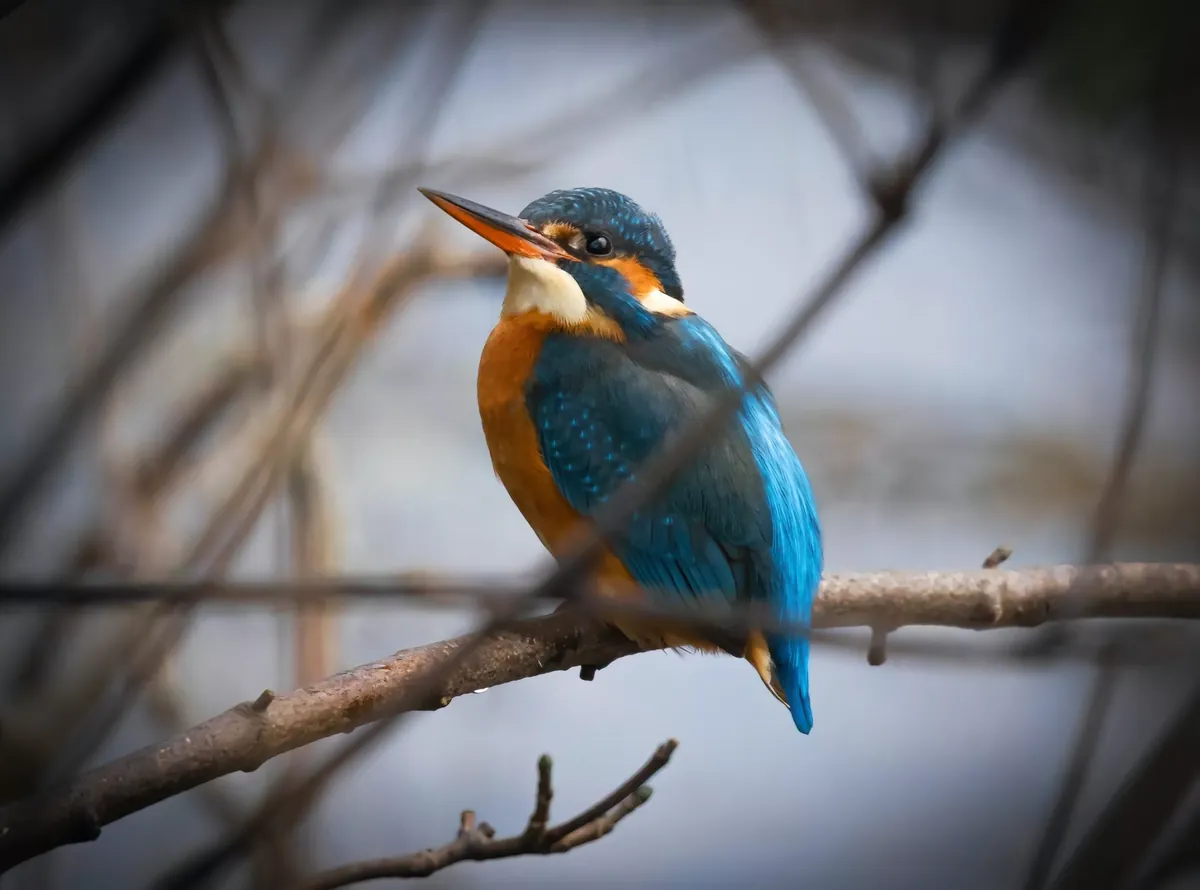
Kingfishers are a dazzling family of birds found on nearly every continent, prized for their jewel-toned feathers and pinpoint fishing dives. But there's more to them than bright colors and sharp beaks.
Here's a fact-checked look at how these birds hunt, nest, and survive around the world.
Kingfishers make up a family of birds, Alcedinidae, with more than 90 recognized species (some classifications count well over 100).
They are found on every continent except Antarctica.
The smallest kingfisher is the African dwarf kingfisher, averaging about 10 cm (4 inches) long and weighing roughly 12 grams.
The giant kingfisher is the largest kingfisher in Africa, measuring 42-46 cm (about 17-18 inches) long.
A kingfisher's vivid plumage comes largely from structural color, tiny light-scattering structures in the feathers, rather than pigment alone.
Their long, dagger-like beaks are built for spearing fish and other prey with a quick, precise strike.
Some kingfisher species, like woodland and forest-dwelling kinds, use their bills to probe soil and leaf litter for insects rather than fish.
Kingfishers are highly territorial and will aggressively defend their nesting and fishing sites.
They are vocal birds, using sharp calls and, in some species, elaborate songs to communicate.
Kingfishers live in a wide range of habitats, including rivers, wetlands, mangroves, and dry forests far from water.
Most kingfisher species are non-migratory residents, though a few, like the Eurasian kingfisher in colder regions, migrate seasonally.
Their diet includes fish, insects, crustaceans, small reptiles, and even small birds and rodents in some larger species.
Fishing kingfishers dive from a perch or hover in place before plunging into the water, often submerging for only a second or two per strike.
Kingfishers have exceptionally sharp eyesight adapted to spot prey both above and below the water's surface.
A protective membrane covers a kingfisher's eyes at the moment of impact when it dives, shielding them from the force of hitting the water.
Many kingfisher species are monogamous during a breeding season, and some pairs re-mate with the same partner in following years.
They typically nest in burrows dug into riverbanks or earthen slopes, though some species use tree cavities or termite mounds.
Clutch size varies by species, with females typically laying between 2 and 7 eggs, though some clutches can be larger.
Both parents usually share incubation duties and help feed the chicks after hatching.
Kingfisher chicks hatch blind and featherless, completely dependent on their parents for warmth and food.
Most kingfisher species are not globally endangered, but several, including some island and forest specialists, are threatened by habitat loss and water pollution.
Kingfishers appear throughout mythology and folklore, often as symbols of good luck, peace, or prosperity, most famously in the ancient Greek halcyon legend.
Frequently asked questions
Do kingfishers only eat fish?
No. While many kingfishers rely heavily on fish, the family as a whole also eats insects, crustaceans, small reptiles, and even small mammals and birds depending on the species and habitat.
How long can kingfishers stay underwater?
Fishing dives are brief, typically lasting only a second or two as the bird strikes its prey and returns to the surface or a perch.
Are kingfishers endangered?
Most kingfisher species are not considered globally endangered, but a number of species, particularly on islands or in shrinking forest habitats, are threatened by habitat loss and pollution.
What is the largest species of kingfisher?
The giant kingfisher, found in Africa, is the largest kingfisher on that continent, reaching about 42-46 cm in length.
Do kingfishers mate for life?
Many kingfisher species are monogamous within a breeding season, and some pairs reunite in later years, though lifelong pairing is not universal across the family.
What is the purpose of the membrane that covers a kingfisher's eyes when it dives into the water?
This protective membrane shields the bird's eyes from the impact and water pressure at the moment it strikes its prey during a dive.
We write every article to be genuinely fun — and genuinely true. Each fact is checked against reputable sources before it goes live. Spotted something off? Tell us and read our fact-check policy.