FFacts On Tap Editorial Team Fact-checkedUpdated September 10, 20233 min read
Share
Quails are small, plump, ground-dwelling birds found on nearly every continent, prized as game birds, backyard pets, and prolific egg-layers. Beneath their quiet, low-to-the-ground habits is a surprisingly varied family with unusual biology and a long history alongside humans.
Here are the real facts behind these pocket-sized birds, fact-checked and cleaned up.
Quails are small, ground-dwelling birds found on nearly every continent except Antarctica.
There are more than 130 quail species worldwide, split between Old World quail (family Phasianidae, which also includes pheasants and partridges) and New World quail (family Odontophoridae).
The common quail (Coturnix coturnix) and the Japanese quail (Coturnix japonica) are among the best-known and most widely domesticated species.
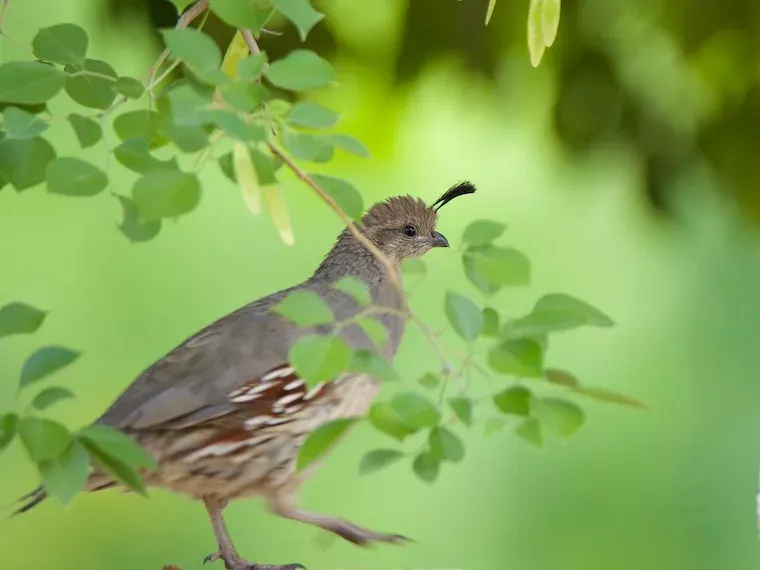
Quails have distinctively plump, rounded bodies and small heads, an adaptation suited to life in dense ground cover.
In most species, male quails are more colorful than females, with bolder markings used to attract mates.
Quails are social birds that often gather in groups called coveys, especially outside the breeding season.
They are omnivores, feeding on seeds, grains, insects, and other small invertebrates.
Quails are fast runners and can burst into quick, low flights to escape predators, though they rarely fly long distances.
Most quail species are active during the day (diurnal) and rest at night.
Domesticated Japanese quail hens are exceptional layers, capable of producing 250 to 300 eggs a year under good conditions, often nearly one egg per day.
Quail eggs are much smaller than chicken eggs and are known for their speckled, mottled shells.
Quails are popular game birds and are hunted in many countries for sport and meat.
Quails are also raised commercially and as backyard pets for both their eggs and meat.
Male quails do not have a true phallus. Instead, most male quail develop a cloacal gland that produces a foam-like secretion, which plays a role in mating and is linked to fertility.
Quail eggs typically incubate for about 16 to 18 days before hatching, depending on the species.
Quails communicate with a range of distinctive calls, from soft chirps to sharp whistles used to mark territory or attract mates.
Quails have a high metabolic rate for their size and need to forage frequently to maintain their energy.
Quails are hardy and adaptable, living in habitats ranging from deserts and grasslands to woodlands.
Some quail species, including the common quail, are migratory and travel long distances between breeding and wintering grounds.
Quail chicks are precocial, meaning they hatch covered in down and can walk and start feeding themselves within hours.
Quails kept as pets are generally quiet and low-maintenance compared to many other pet birds.
In several cultures, quails have long been associated with good luck, courage, or prosperity.
Frequently asked questions
What is the average lifespan of a quail?
Wild quails typically live around 2-3 years, while quails kept in captivity with protection from predators can live up to 5 years or more.
Are quails good pets?
Yes, many people keep quails as low-maintenance backyard pets since they are generally calm, quiet, and easy to care for compared to other poultry.
Are quail eggs healthy?
Quail eggs are nutrient-dense, high in protein, and contain notable amounts of vitamins B12 and B2, along with iron and selenium.
How can you tell if a quail is male or female?
In most species, males have brighter, more distinctive plumage markings than females, though some species require closer inspection or DNA testing to sex accurately.
What is the difference between a quail and a partridge?
Quails and partridges are related, both belonging to the pheasant family Phasianidae, but they are distinct species that differ in size, range, and specific physical features.
Do quails migrate?
Some species, such as the common quail, are migratory and travel considerable distances between breeding and wintering grounds, while many other quail species stay put year-round.
We write every article to be genuinely fun — and genuinely true. Each fact is checked against reputable sources before it goes live. Spotted something off? Tell us and read our fact-check policy.