FFacts On Tap Editorial Team Fact-checkedUpdated April 13, 20253 min read
Share
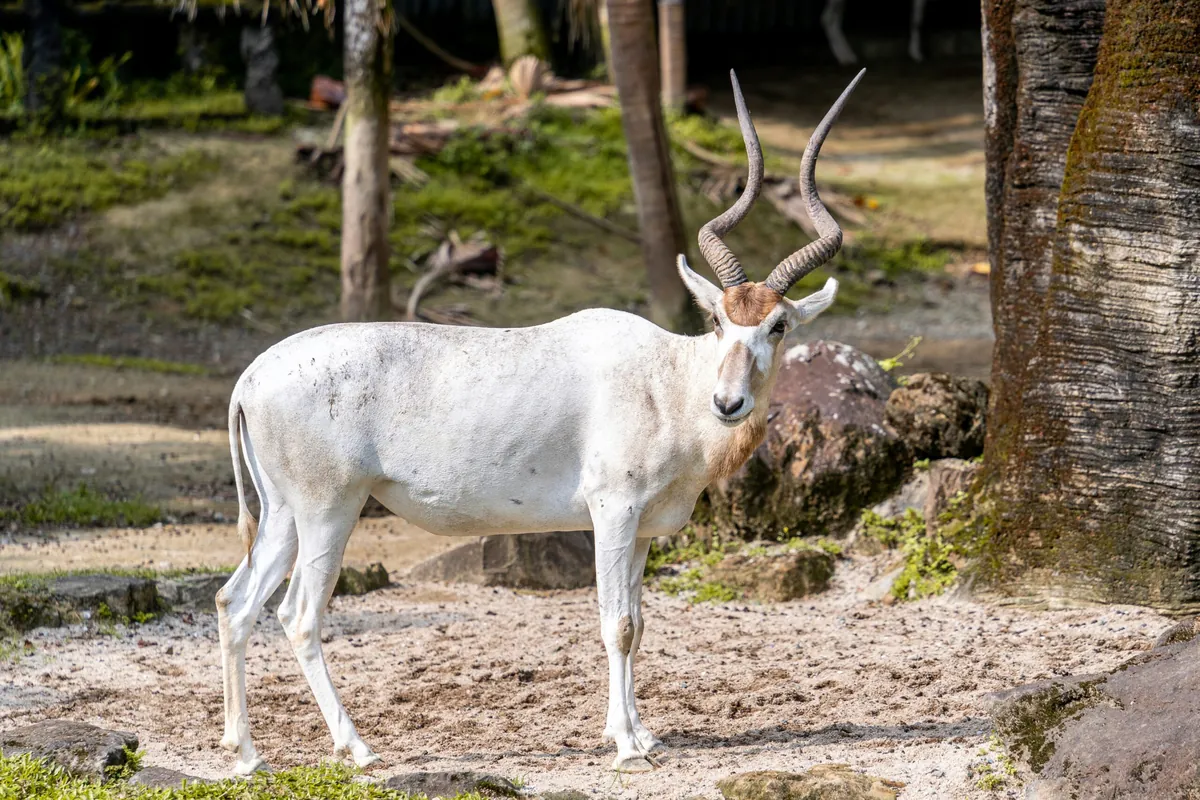
The addax, also known as the white antelope or screwhorn antelope, is one of the most remarkable survivors of the Sahara desert. With its spiraled horns, pale coat, and extraordinary ability to go almost without drinking water, this antelope has adapted to one of the harshest environments on Earth.
Unfortunately, the addax is also one of the most endangered mammals in the world, with only a small number left roaming free in the wild. Here are some verified facts about this unique desert dweller.
The addax (Addax nasomaculatus) is classified as Critically Endangered by the International Union for Conservation of Nature (IUCN), with its population having collapsed due to hunting, habitat loss, and prolonged drought.
Its most striking feature is a pair of long, spiraled horns with two to three twists, typically 28 to 33 inches long in males (up to about 43 inches at maximum) and slightly shorter in females; both sexes carry horns.
Addax are superbly adapted to desert life. They can go for very long stretches without drinking, obtaining most of the moisture they need from the plants they eat.
Addax are generally social rather than solitary, living in small herds of about 5 to 20 animals led by a dominant male, with herd size shifting depending on food and water availability.
Their pale, sandy-to-white coat (which grows lighter in summer and grayer in winter) helps reflect heat and blend into the desert landscape, offering some camouflage from predators.
Addax are nomadic rather than strictly migratory, wandering widely across the desert to follow rainfall and fresh vegetation rather than water holes.
Females give birth to a single calf after a gestation period of roughly 257 to 264 days, about 8.5 to 9 months; twins are rare.
Despite their sturdy build, addax are relatively slow runners for antelope, reaching only around 25 mph (40 km/h), which makes them vulnerable to faster predators like cheetahs.
Historically, the addax has held cultural significance across parts of North Africa, appearing in traditional artwork and folklore of Saharan peoples.
Conservation groups, zoos, and government agencies run captive-breeding and reintroduction programs, including releases of captive-born addax into protected reserves in Chad and Niger.
Wild addax numbers have fallen so low that surveys in the late 2010s found only a handful of individuals left roaming free; conservationists estimate the current wild population at roughly 30 to 90 mature animals, though reintroduction programs have since added over 100 more into protected reserves.
Addax have wide, flat hooves that act like natural snowshoes, spreading their weight to help them walk across soft desert sand without sinking.
Frequently asked questions
How many addax are left in the wild?
Wild addax numbers dropped so low that surveys found only a handful of individuals in the late 2010s. Conservationists now estimate roughly 30 to 90 mature addax remain truly wild, though reintroduction efforts have added over 100 more captive-bred animals into protected reserves in Chad and Niger.
What are the main threats to the addax population?
The main threats are illegal hunting (for meat and horns), habitat loss from desertification and human encroachment, and severe droughts that reduce available forage and water.
Are addax herbivores?
Yes. Addax are herbivores that feed on desert grasses, leaves, and shrubs, and they get most of the water they need from this vegetation rather than drinking directly.
How fast can an addax run?
Addax are relatively slow for antelope, reaching top speeds of only about 25 mph (40 km/h). Their short, sturdy legs are built more for endurance in soft sand than for speed.
Do addax have natural predators?
Yes. Historically, lions, leopards, hyenas, and cheetahs preyed on addax, though today human hunting is the far greater threat to the species' survival.
What is being done to help protect the addax?
Organizations such as the Sahara Conservation Fund, along with zoos and government wildlife agencies, run captive-breeding programs and have reintroduced captive-born addax into protected reserves in Niger and Chad to help rebuild wild populations.
We write every article to be genuinely fun — and genuinely true. Each fact is checked against reputable sources before it goes live. Spotted something off? Tell us and read our fact-check policy.