FFacts On Tap Editorial Team Fact-checkedUpdated December 26, 20254 min read
Share
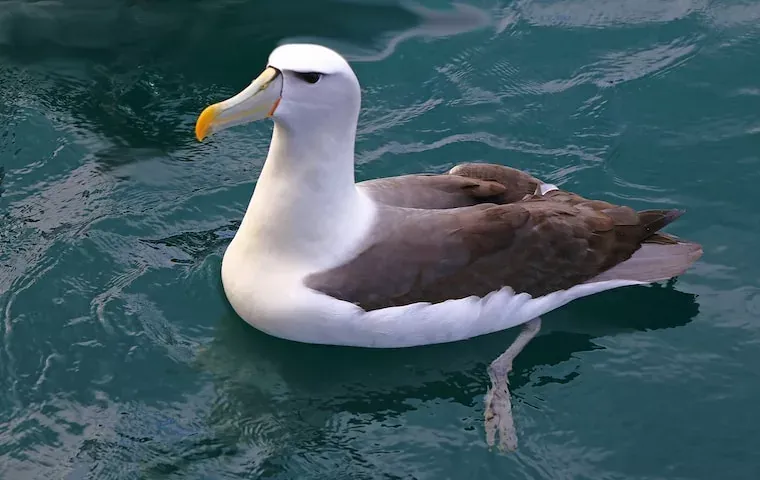
Albatrosses are the ocean-going giants of the bird world, gliding for thousands of miles on wings that barely flap. Below are verified facts about their record-breaking wingspans, unusual family life, and the surprising word origins behind their name.
Albatrosses are the largest seabirds in the world; the Wandering Albatross has a wingspan of up to 11 feet (3.4 meters), the longest of any living bird.
There are about 22 recognized species of albatross, and the Wandering Albatross is the largest of them.
Albatrosses live across the Southern Ocean and the North Pacific; a few species, like the Waved Albatross, breed near the equator around the Galápagos Islands. They no longer breed in the North Atlantic, though fossils show they once did.
They spend most of their lives flying or floating over the open ocean and only come to land to breed.
Some albatrosses can cover over 10,000 miles (16,000 kilometers) on a single foraging trip, and they may circle the globe over the course of a year.
They use a flight technique called dynamic soaring, riding the wind gradient above waves to gain speed and altitude with almost no wingbeats.
Albatrosses are largely monogamous, and many pairs stay together for life, reuniting at the same nesting site each breeding season.
Most species lay a single egg per breeding attempt, which is incubated for roughly 65 to 80 days depending on the species.
Because chicks can take several more months to fledge after hatching, a full breeding cycle can span nearly a year, which is why some larger species breed only every other year.
Albatross chicks are covered in soft down and are fed a regurgitated, energy-rich substance called "stomach oil" by their parents.
Depending on the species, albatrosses reach sexual maturity anywhere from about 5 to 10 years of age, with larger species like the Royal Albatross often not breeding until 9 to 11 years old.
Albatrosses are strong swimmers that can rest and paddle on the ocean's surface for long periods, occasionally making shallow dives to catch prey.
Like other tubenosed seabirds, albatrosses have an unusually keen sense of smell, which they use to locate food across long distances.
They feed mainly on fish, squid, and krill, often scavenging at or near the surface.
Albatrosses are known to follow fishing boats to scavenge discarded fish and bycatch.
The word "albatross" traces back through Spanish and Portuguese "alcatraz" (originally used for pelicans) to an Arabic root, possibly "al-ghattas" ("the diver") or "al-qadus" (a water-wheel bucket); its spelling was later influenced by the Latin "albus," meaning white.
Albatrosses were historically hunted for their feathers and down, especially during the 19th-century plume trade that supplied the hat and fashion industry.
Several albatross species are now considered vulnerable or endangered, primarily due to accidental bycatch in longline fishing gear and habitat loss on breeding islands.
Albatrosses are long-lived birds that can survive 40 to 60 years or more in the wild.
Wisdom, a Laysan Albatross banded in 1956, is the oldest known wild bird in the world and was still raising chicks in her seventies.
Albatrosses have a specialized gland above their nostrils that filters excess salt from the seawater they ingest, which they then excrete through their beak.
Albatrosses perform elaborate courtship displays involving bill-clacking, head-nodding, and synchronized dancing to strengthen their pair bonds.
Sailors have long associated albatrosses with good luck, believing that harming one would bring misfortune to the ship.
The albatross features prominently in literature, most famously in Samuel Taylor Coleridge's poem "The Rime of the Ancient Mariner."
Frequently asked questions
What is the lifespan of an albatross?
Albatrosses typically live 40 to 60 years or more in the wild. The oldest known individual, a Laysan Albatross named Wisdom, has been tracked since 1956 and was still breeding in her seventies.
How do albatrosses feed their chicks?
Albatross parents feed their chicks a regurgitated, energy-dense substance called "stomach oil," produced in a special stomach organ called the proventriculus.
How do albatrosses get rid of excess salt from seawater?
Albatrosses have a salt gland above their nostrils that filters salt out of their bloodstream; the concentrated salt solution then drips out through their beak.
Why are albatrosses considered endangered?
Many albatross species are threatened mainly by accidental bycatch on longline fishing hooks and gear, along with habitat loss and invasive predators on their breeding islands.
What is dynamic soaring?
Dynamic soaring is a flight technique in which albatrosses exploit the difference in wind speed just above the ocean's surface to gain speed and altitude, allowing them to glide for hours with minimal flapping.
Do albatrosses live in the North Atlantic?
Not today. Fossil evidence shows several albatross species once bred in the North Atlantic, including on Bermuda, but none breed there now; the birds are currently found in the Southern Ocean, North Pacific, and near the equator around the Galápagos Islands.
We write every article to be genuinely fun — and genuinely true. Each fact is checked against reputable sources before it goes live. Spotted something off? Tell us and read our fact-check policy.
 Animal Facts