FFacts On Tap Editorial Team Fact-checkedUpdated March 29, 20263 min read
Share
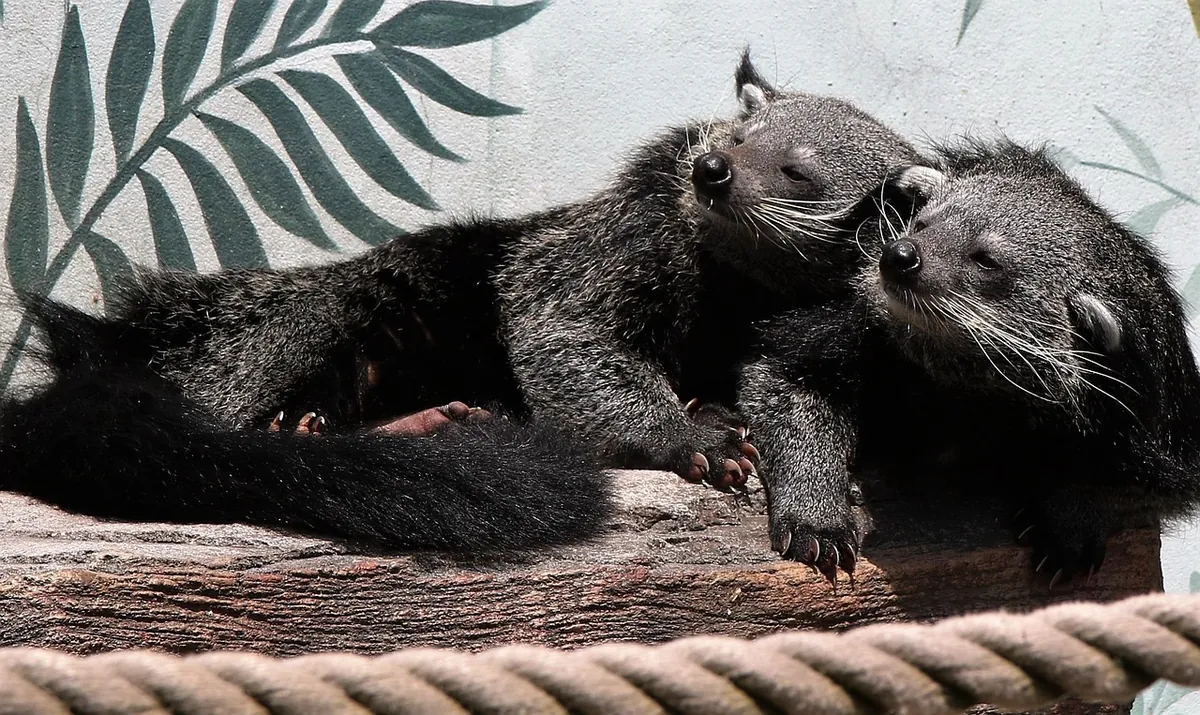
Binturongs, nicknamed "bearcats," are shaggy, tree-dwelling mammals native to the forests of South and Southeast Asia. Despite the nickname, they aren't related to bears or cats at all — they're actually part of the civet family.
With a scent that smells oddly like buttered popcorn and one of the few prehensile tails in the carnivore world, binturongs are one of nature's strangest and most endearing animals. Here's what makes them so remarkable.
Binturongs, also called bearcats, get their popcorn-like smell from a gland near the base of their tail, which they use to mark territory and communicate with other binturongs.
Despite the nickname "bearcat," binturongs are not related to bears or cats; they belong to the civet family (Viverridae).
Binturongs are one of only two carnivoran species with a fully prehensile tail (the other being the kinkajou), which acts almost like a fifth limb for gripping branches.
These arboreal, mostly nocturnal mammals spend much of their time in trees, using sharp claws and that prehensile tail to move through the forest canopy.
Binturongs are omnivores with a varied diet that includes fruit (especially figs), leaves, shoots, birds, eggs, small mammals, and insects.
Female binturongs have a gestation period of roughly three months (about 84 to 92 days) and typically give birth to one to three young, called kits.
The IUCN Red List classifies binturongs as Vulnerable, with wild populations having declined due to habitat loss, hunting, and the illegal pet and fur trade.
In the wild, binturongs typically live around 10 to 18 years; in zoos, with veterinary care and steady food, they can live into their 20s.
Binturongs are mostly solitary, coming together primarily to mate, and they communicate through growls, hisses, and a distinctive chuckling sound.
They are found in the dense forests of South and Southeast Asia, including parts of India, Bhutan, Nepal, Myanmar, Thailand, Vietnam, Malaysia, Indonesia, and the Philippines.
Binturongs are generally shy and not aggressive toward humans, but like any wild animal they can bite or scratch defensively if cornered or threatened.
Their sharp claws, strong jaws, and pungent scent all help binturongs deter predators, alongside their ability to retreat quickly into the treetops.
Binturongs are not suitable pets: they need specialized diets, large climbing spaces, and long-term care that most households can't provide, and in many places keeping one is restricted or illegal.
Female binturongs can delay implantation of a fertilized egg, a reproductive trait that helps them time births to more favorable conditions.
Frequently asked questions
What is the habitat of binturongs?
Binturongs live in the dense tropical forests of South and Southeast Asia, including India, Myanmar, Thailand, Vietnam, Malaysia, Indonesia, and the Philippines. They prefer forests with plenty of tree cover for climbing and shelter.
Are binturongs dangerous to humans?
Binturongs are generally shy, elusive, and not aggressive toward people. Like any wild animal, though, they can bite or scratch if they feel cornered or threatened.
Why do binturongs smell like popcorn?
Their scent comes from a gland near the base of the tail that produces a compound called 2-acetyl-1-pyrroline, the same aromatic compound found in popcorn and rice, which they use to mark territory.
Do binturongs make good pets?
No. Binturongs have specialized dietary and space needs, can live 15 to 20+ years, and are wild animals rather than domesticated ones, so they aren't recommended or, in many places, legal to keep as pets.
What are the major threats to binturongs in the wild?
Habitat loss from logging and agriculture, hunting for meat and fur, and capture for the illegal pet trade are the main threats, which is why the IUCN lists them as Vulnerable.
Are binturongs related to cats or bears?
No. Despite the nickname "bearcat," binturongs are members of the civet family (Viverridae) and aren't closely related to either bears or cats.
We write every article to be genuinely fun — and genuinely true. Each fact is checked against reputable sources before it goes live. Spotted something off? Tell us and read our fact-check policy.