FFacts On Tap Editorial Team Fact-checkedUpdated April 10, 20253 min read
Share
Glass frogs are small rainforest amphibians from Central and South America best known for one wild trick: skin so transparent you can watch their organs at work. Beyond the see-through look, these frogs have some genuinely surprising biology.
Here are the facts worth knowing about glass frogs, checked against herpetology and conservation sources.
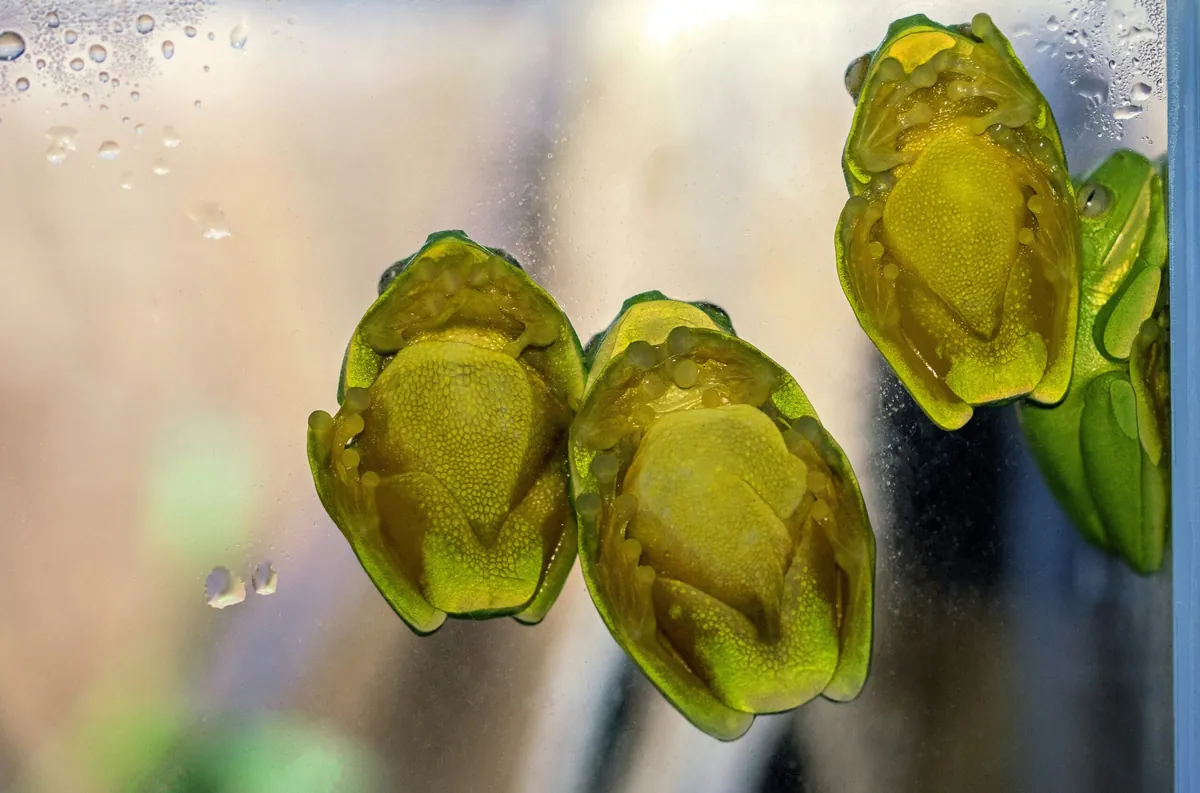
Glass frogs get their name from their translucent underside skin, which in many species lets you see the liver, digestive tract, and even the beating heart through the belly.
Their backs are usually opaque green, which camouflages them beautifully against rainforest leaves even though their bellies are see-through.
Some glass frog species take camouflage even further: while resting during the day, they can pack up to 89% of their red blood cells into their liver, making their translucent bodies look even greener and harder for predators to spot.
In many glass frog species, males guard the egg clutch after the female lays it, defending the eggs from predators and parasitic flies.
Male glass frogs practice a behavior called hydric brooding: they soak up dew from leaves into their bladder, then release that water onto the eggs to keep them from drying out.
During the breeding season, male glass frogs call from leaves and branches at night to attract females, and some species will fight rivals for the best egg-laying spots.
Many glass frog species are considered threatened or endangered, mainly due to habitat loss, pollution, and climate change affecting the cloud forests and streams they depend on.
Some glass frog species live in cool, high-elevation cloud forests in the Andes, while others are found in lowland tropical rainforest closer to sea level.
Glass frogs are mostly nocturnal, calling and feeding at night while resting camouflaged on leaves during the day.
The family Centrolenidae includes more than 150 known glass frog species across a dozen genera, and new species are still being described by scientists.
Glass frog eggs are usually laid on leaves overhanging streams; when the tadpoles hatch, they drop directly into the water below to continue developing.
Because they're sensitive to changes in water quality and habitat, glass frogs are studied as bioindicators, helping scientists track the health of rainforest ecosystems.
Glass frogs are carnivorous and mainly eat small invertebrates like ants, flies, and beetles, catching them with a quick flick of a sticky tongue.
Most glass frogs are not toxic or dangerous to humans, unlike some of their more famous poison-dart-frog neighbors.
Frequently asked questions
How do glass frogs get their name?
They're named for their translucent skin, especially on the belly, which can make internal organs like the heart and liver visible from below.
Are glass frogs poisonous?
No, most glass frogs are not considered toxic or dangerous to humans. Still, it's best to observe them without handling them, both for your safety and theirs.
What do glass frogs eat?
Glass frogs are carnivorous and mainly eat small invertebrates such as ants, flies, beetles, and other insects, which they catch with their sticky tongues.
Do glass frog dads really take care of the eggs?
Yes, in many species the male guards the egg clutch, fends off predators and parasites, and keeps the eggs hydrated by transferring water from his bladder onto them.
Why are glass frogs endangered?
Many glass frog species are threatened by deforestation, water pollution, and climate change, since they depend on clean streams and intact rainforest habitat to breed and develop.
Can glass frogs be kept as pets?
Glass frogs have specialized humidity, temperature, and habitat needs, and many species have conservation concerns, so they aren't recommended as pets for most people.
We write every article to be genuinely fun — and genuinely true. Each fact is checked against reputable sources before it goes live. Spotted something off? Tell us and read our fact-check policy.