FFacts On Tap Editorial Team Fact-checkedUpdated June 11, 20263 min read
Share
Guanacos roam the mountains, grasslands, and deserts of South America with a quiet elegance that has made them a symbol of the Andes and Patagonia. As wild relatives of the domesticated llama and alpaca, they've developed remarkable adaptations for surviving in some of the continent's harshest terrain.
From surprising speed to a knack for going without water, here are the real facts behind these graceful camelids.
Guanacos (Lama guanicoe) are wild camelids native to South America, ranging across Peru, Bolivia, Chile, Argentina, and small remnant populations in Paraguay.
They thrive in a huge range of habitats, from high Andean altiplano and desert scrubland to the windswept grasslands of Patagonia.
Guanacos are highly social. Family groups typically consist of one dominant male, several females, and their young, while non-territorial males form separate bachelor herds.
Female guanacos are called hembras and males are called machos; a baby guanaco is known as a chulengo.
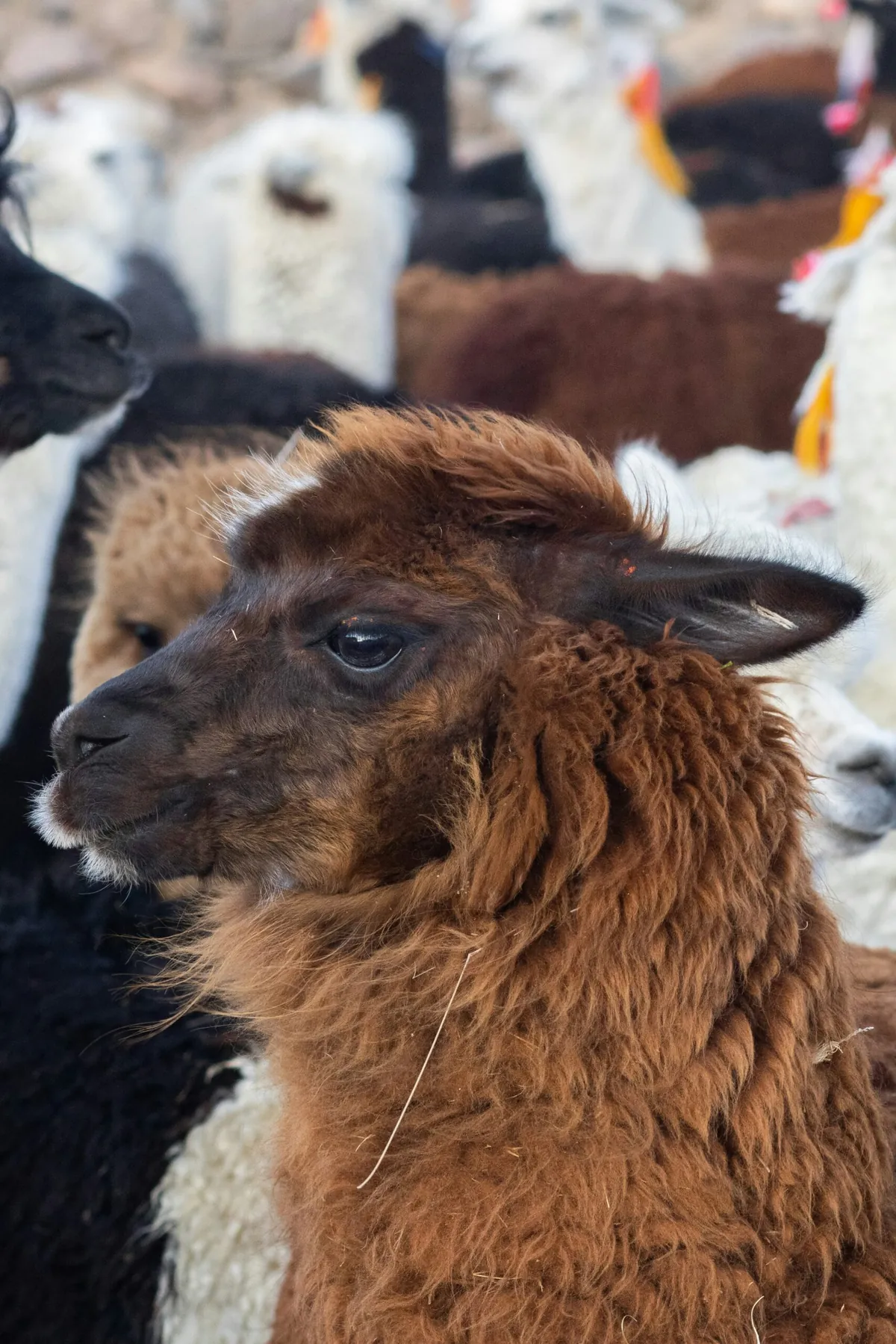
Their thick, soft double coat ranges from light tan to reddish-brown, with a whitish underside, and insulates them against extreme Andean temperature swings.
Guanaco wool is prized for being exceptionally soft and warm, and is considered one of the finer natural fibers alongside vicuna wool.
Guanacos have long, pointed ears that rotate independently, helping them detect predators such as pumas and foxes from a distance.
They are surprisingly fast, capable of running up to about 35 mph (56 km/h) to outrun predators.
Guanacos are well adapted to arid environments and can go long periods without drinking, drawing most of the moisture they need from the plants they eat.
They communicate through a range of vocalizations, including alarm calls, grunts, hums, and a distinctive high-pitched bleat used to warn the herd of danger.
Mother guanacos are fiercely protective of their chulengos and will act aggressively, including kicking, to defend them from threats.
Guanacos are selective herbivores, grazing on grasses, shrubs, lichens, and other available vegetation depending on their habitat.
Guanacos are the largest wild land mammal native to South America.
They typically use communal dung piles, called latrines, to mark territory and communicate with other guanacos.
The IUCN lists the guanaco as a species of Least Concern, with an estimated global population of roughly 1.5 to 2 million, though some local populations remain threatened.
Guanacos in the wild typically live around 20 to 25 years, depending on food availability, predation, and environmental conditions.
Habitat loss, poaching, and competition with livestock for grazing land remain the biggest threats to guanaco populations in parts of their range.
Unlike their domesticated relative the llama, guanacos rarely spit and rely mainly on speed and agility to escape danger.
Guanacos are the wild ancestor of the domesticated llama, while their smaller relative the vicuna is the wild ancestor of the alpaca.
Frequently asked questions
How do guanacos differ from llamas and alpacas?
Guanacos are wild animals, while llamas and alpacas are domesticated descendants of guanacos and vicunas respectively. Guanacos tend to have a leaner, more athletic build than their domestic cousins.
Do guanacos spit like llamas?
Guanacos can spit but do so far less often than llamas. They generally rely on speed and agility rather than spitting to deal with threats.
Are guanacos endangered?
No. The IUCN classifies guanacos as a species of Least Concern, though some local populations are threatened by habitat loss and hunting.
Can guanacos be domesticated like llamas?
Guanacos have not been domesticated. They remain wild animals, even though they are the genetic ancestor of the domesticated llama.
What is the lifespan of a guanaco in the wild?
Wild guanacos typically live around 20 to 25 years, with lifespan influenced by food availability, predation, and climate.
How do guanacos communicate with each other?
Guanacos combine vocal calls (including alarm bleats and grunts), body language, and scent marking at shared dung piles to coordinate within their herds.
We write every article to be genuinely fun — and genuinely true. Each fact is checked against reputable sources before it goes live. Spotted something off? Tell us and read our fact-check policy.