FFacts On Tap Editorial Team Fact-checkedUpdated March 19, 20253 min read
Share
The Indian cobra (Naja naja), also called the spectacled cobra, is one of the most recognizable snakes on Earth thanks to its dramatic hood display and potent venom. Found across the Indian subcontinent, it's one of the "big four" snake species responsible for the most snakebite cases in India.
Despite its fearsome reputation, the Indian cobra is a shy animal that would rather flee than fight, and it plays a valuable role in controlling rodent populations. Here are the real facts behind the legend.
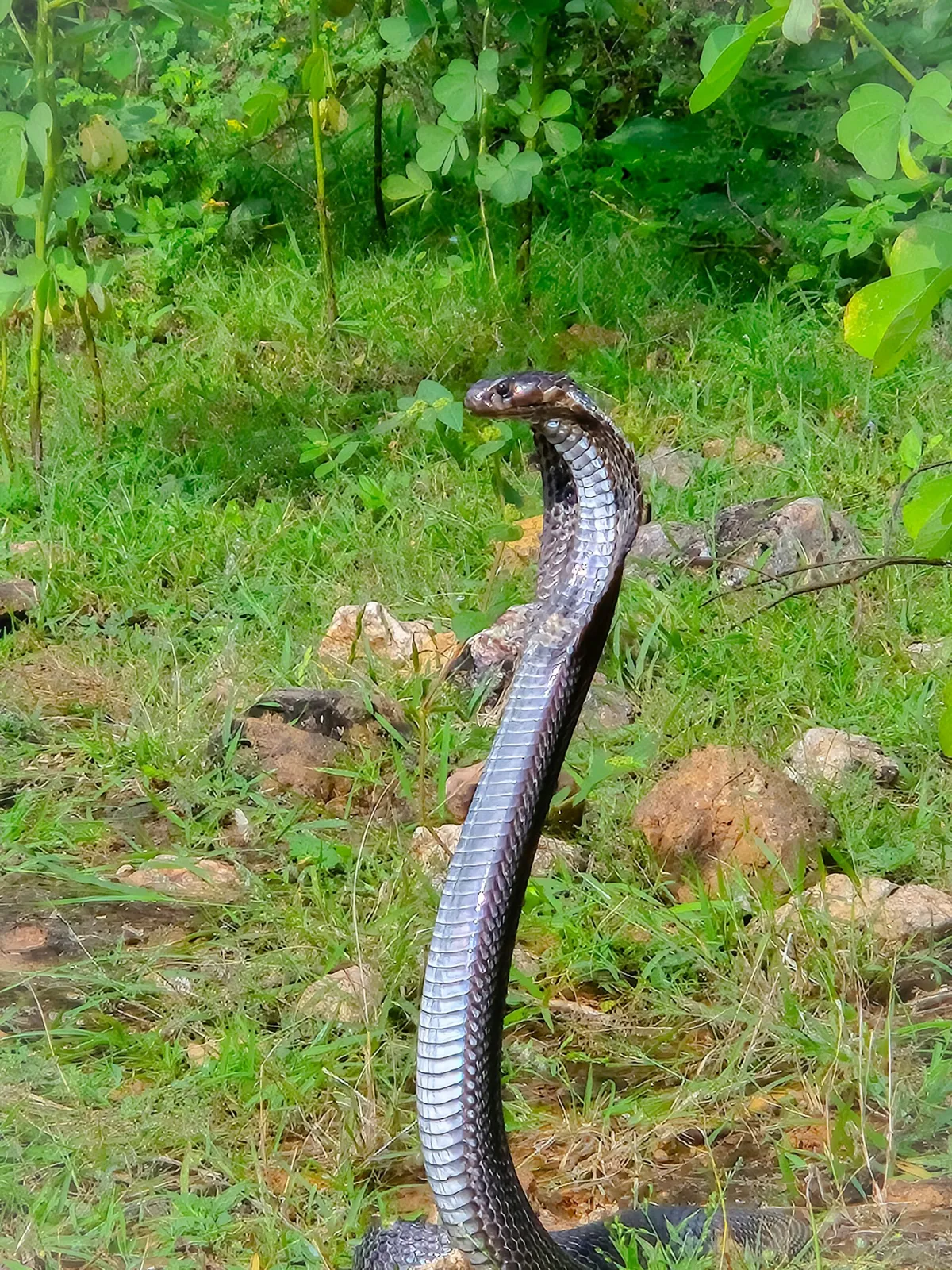
Indian cobras (Naja naja) are also known as spectacled cobras because of the distinctive eyeglass-shaped mark on the back of their hood.
Their venom is primarily neurotoxic, meaning it attacks the nervous system and can cause paralysis and respiratory failure if a bite goes untreated.
When threatened, an Indian cobra raises the front third of its body, spreads its elongated ribs, and flattens its neck into the iconic hood used to intimidate predators and rivals.
Most adult Indian cobras measure about 3 to 5 feet long, though exceptional individuals have been recorded up to roughly 7 feet.
Females and males are similar in size, and both have slender, agile bodies covered in smooth scales.
Coloration varies widely by region, ranging from black or dark brown to yellow or pale gray, sometimes with lighter banding.
Indian cobras live in a wide range of habitats, including forests, farmland, grasslands, and even crowded villages and city outskirts, often near water.
They are capable climbers and swimmers, though most hunting happens on the ground.
Their diet consists mainly of rodents, along with frogs, toads, lizards, birds, and eggs, which makes them useful natural pest controllers for farmers.
Female Indian cobras lay clutches of roughly 12 to 30 eggs in sheltered, warm spots such as termite mounds, rat burrows, or leaf litter.
Eggs typically hatch after about 48 to 69 days, and hatchlings are fully independent and venomous from the moment they emerge.
In the wild, Indian cobras can live around 20 years or more, with some individuals reaching into their late twenties.
The Indian cobra is classified as one of India's 'big four' venomous snakes, alongside the common krait, Russell's viper, and the saw-scaled viper, which together cause the majority of snakebite incidents in the country.
Indian cobras are generally shy and avoid confrontation, preferring to escape rather than bite unless cornered or startled.
The species holds deep cultural significance in India, appearing in Hindu mythology and iconography, including its association with the deity Shiva and the naga tradition.
Traditional snake charming historically featured Indian cobras, though the practice is now illegal in India and has sharply declined due to wildlife protection laws.
Threats to Indian cobras include habitat loss, road mortality, killing out of fear, and illegal capture for the skin and snake-charming trade.
The Indian cobra is listed as a protected species under India's Wildlife (Protection) Act, and it is not currently classified as globally endangered by the IUCN.
Frequently asked questions
Are Indian cobras aggressive towards humans?
No, Indian cobras are generally shy and prefer to avoid people. They typically only strike when they feel cornered, threatened, or accidentally provoked.
What should I do if I encounter an Indian cobra in the wild?
Stay calm, keep your distance, and slowly back away without sudden movements. Never try to touch, corner, or provoke the snake, and give it a clear path to retreat.
Can Indian cobras be kept as pets?
Keeping Indian cobras as pets is illegal in most places without special permits due to their venomous bite, and it is strongly discouraged even where technically possible.
What is the lifespan of an Indian cobra in the wild?
Indian cobras typically live around 20 years or more in the wild, though predation, habitat loss, and human conflict can shorten their lifespan.
Are Indian cobras endangered?
Indian cobras are not currently classified as globally endangered, but they are protected under India's Wildlife (Protection) Act because of pressure from habitat loss and illegal trade.
Why do Indian cobras have a hood?
The hood is formed by spreading long, movable ribs behind the head. It makes the snake look larger and more intimidating, which helps deter predators and rivals without needing to strike.
We write every article to be genuinely fun — and genuinely true. Each fact is checked against reputable sources before it goes live. Spotted something off? Tell us and read our fact-check policy.