FFacts On Tap Editorial Team Fact-checkedUpdated April 1, 20264 min read
Share
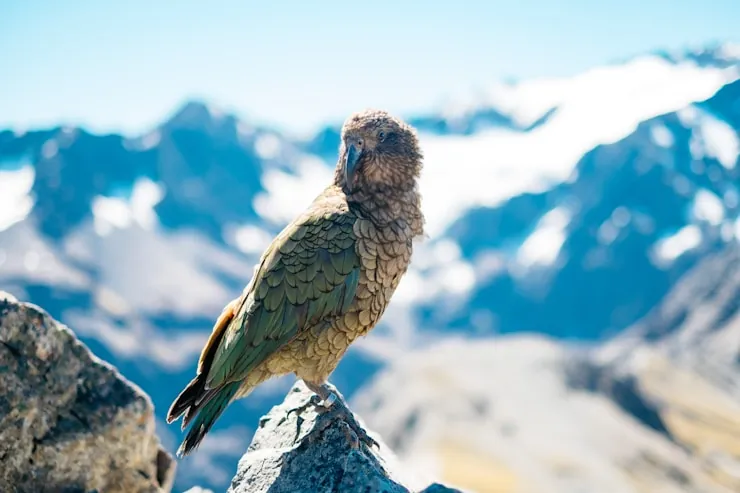
High in the Southern Alps of New Zealand lives a bird nicknamed the "clown of the mountains": the kea. Olive-green with flashes of orange under its wings, this large parrot is famous for two things at once — remarkable intelligence and an insatiable curiosity that gets it into constant trouble with hikers, campers, and parked cars.
Keas are also one of the world's rarest parrots. Here's what makes them so unusual, and why New Zealand is working hard to keep them around.
Keas (Nestor notabilis) are the world's only alpine parrot, living year-round in the mountains of New Zealand's South Island, often at elevations up to around 2,000 meters (6,500 feet).
Keas are considered one of the most intelligent bird species on Earth, with problem-solving skills that researchers compare to those of young children.
They are skilled tool users and have been observed manipulating sticks and other objects to investigate their surroundings and reach food.
Keas are famously playful, sliding down snowbanks, tumbling with each other, and even engaging in bouts of contagious play-calling that spreads excitement through a flock.
Their curiosity is legendary and occasionally destructive: keas are well known for prying rubber trim off cars, unzipping backpacks, and stealing shiny objects from tourists.
Keas have a loud, distinctive call — a wide-ranging "kee-aa" screech, which is where their name comes from — used to coordinate with the group and mark territory.
They are omnivorous and opportunistic feeders, eating fruits, seeds, nectar, roots, insects, and occasionally carrion.
The IUCN lists the kea as Endangered, with an estimated wild population of only around 3,000 to 7,000 birds left.
Introduced predators such as stoats, rats, and possums are a major threat, preying on eggs and chicks in nests, since keas nest in burrows and crevices on the ground.
Lead poisoning from old roofing nails, flashing, and other building materials is a serious and ongoing threat to keas in some areas.
Kea lifespans are hard to pin down in the wild, but banded birds have been recorded living 20 or more years; in captivity, keas have lived into their 50s.
Keas are highly social and live in loose flocks with a clear pecking order, but they are not strictly monogamous — dominant males often mate with more than one female in a breeding season.
Breeding usually happens from winter into summer, and females lay 2 to 4 eggs in nests built in rock crevices, hollow logs, or burrows among tree roots.
Kea chicks take a long time to mature, remaining dependent on their parents for months and not reaching full adult plumage and behavior until they are a few years old.
Keas have been fully protected under New Zealand law since 1986; it is illegal to kill, capture, or harm them.
Kea numbers dropped sharply during the 20th century after a government bounty once paid hunters for each bird killed, in the mistaken belief they were a major threat to sheep flocks.
Frequently asked questions
Are keas harmful to humans?
Keas are not aggressive toward people, but their curiosity can cause problems — they're known for damaging cars, gear, and buildings. Feeding wild keas is discouraged because it makes them dependent on humans and increases risky encounters.
How intelligent are keas compared to other birds?
Keas are considered among the most intelligent birds in the world, on par with corvids like crows in problem-solving tests, and they can use tools and cooperate to open complex mechanisms.
Do keas have any natural predators?
Adult keas have few natural predators, but their eggs and chicks are vulnerable to introduced mammals such as stoats, rats, and possums, which were brought to New Zealand by humans and are not native.
Can keas mimic human speech like other parrots?
No, keas are not known for mimicking human speech. Their intelligence shows up mainly in tool use, cooperation, and problem-solving rather than vocal mimicry.
Why are keas endangered?
Keas are endangered due to predation by introduced species, lead poisoning from old building materials, past bounty hunting, and slow reproduction rates that make population recovery difficult.
How can people help protect keas?
People can help by not feeding wild keas, securing lead-based materials in kea habitat, supporting predator control programs, and reporting sightings to conservation groups like the Kea Conservation Trust.
We write every article to be genuinely fun — and genuinely true. Each fact is checked against reputable sources before it goes live. Spotted something off? Tell us and read our fact-check policy.