FFacts On Tap Editorial Team Fact-checkedUpdated May 21, 20253 min read
Share
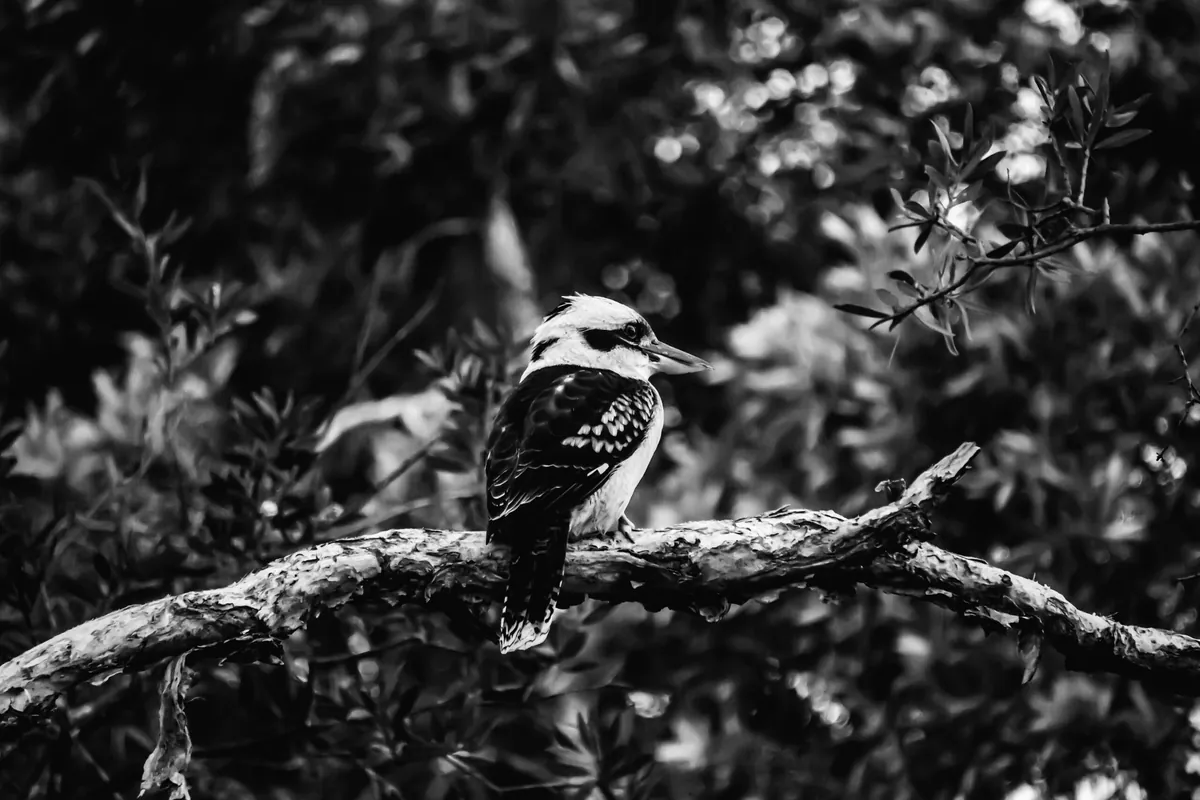
Few sounds are as instantly recognizable as the kookaburra's cackling "laugh," a call that echoes through Australian forests and suburban backyards alike. Native to Australia and New Guinea, these hefty, big-headed birds are actually the largest members of the kingfisher family, and their tight-knit family groups and fearless personalities make them one of the continent's most beloved birds.
Here's what's genuinely true about kookaburras, from their four distinct species to their surprisingly long family memories.
There are four recognized kookaburra species in the genus Dacelo: the laughing kookaburra (Dacelo novaeguineae), blue-winged kookaburra (Dacelo leachii), spangled kookaburra (Dacelo tyro), and rufous-bellied kookaburra (Dacelo gaudichaud).
The laughing kookaburra is the best known and most widespread species, famous for its loud, cackling call that sounds like human laughter.
The laughing kookaburra's call is actually a territorial signal, used to warn other kookaburra groups to stay off their patch. It's most often heard at dawn and dusk, earning the bird the nickname "the bushman's clock."
Kookaburras are carnivores that hunt insects, worms, small reptiles, frogs, and even small mammals and snakes, rather than fish, which is unusual for a kingfisher.
They hunt by perching quietly on a branch, watching for movement below, then swooping down to snatch prey with their large, strong bill.
Kookaburras often kill larger prey, such as snakes, by repeatedly beating it against a branch or rock before swallowing it.
The laughing kookaburra is the largest species in the kingfisher family, with a stocky body, a large head, a prominent brown eye stripe, and a long, heavy bill.
Laughing kookaburras are native to the eucalyptus forests of eastern Australia, and were introduced by humans to southwestern Australia, Tasmania, and New Zealand.
In the wild, kookaburras typically live around 11 to 15 years; in captivity, with veterinary care and no predators, some individuals have lived past 20 years.
Kookaburras generally form monogamous pairs that can stay together for years, defending a shared territory.
Kookaburras live in family groups, and young birds from earlier broods often stay behind to help their parents feed and defend the next generation of chicks, a rare cooperative-breeding behavior among birds.
They nest in tree hollows (and sometimes termite mounds), where both parents share incubation duties for a clutch that usually numbers two to four eggs.
In Aboriginal folklore, the kookaburra's call was believed to be a signal for the sky spirits to light the sun each morning, and the bird is often regarded as a symbol of good luck.
Kookaburras have adapted well to living near people and are commonly seen in suburban gardens and parks, where bold individuals sometimes take food directly from humans (though feeding wild kookaburras processed meat or bread can harm them).
None of the four kookaburra species are currently considered endangered, though local populations can be affected by habitat loss.
Frequently asked questions
What is the primary diet of a kookaburra?
Kookaburras are carnivores that eat insects, worms, small reptiles, frogs, and small mammals or snakes. Unlike most kingfishers, fish make up very little of their diet.
How do kookaburras hunt?
They perch still on a branch, watch for movement on the ground, then swoop down to grab prey with their bill. Larger prey, like snakes, is often beaten against a branch to subdue it before being swallowed.
Where can you find kookaburras?
Laughing kookaburras are native to eastern Australia's forests and have been introduced to southwestern Australia, Tasmania, and New Zealand. The other three kookaburra species are found mainly in New Guinea and northern Australia.
What role do kookaburras play in Aboriginal folklore?
In Aboriginal folklore, the kookaburra's call is often described as a signal for the sky people to light the sun each morning, and the bird is regarded by many communities as a symbol of good luck.
How long do kookaburras live?
In the wild, kookaburras typically live around 11 to 15 years. In captivity, with consistent food and no predators, they can live considerably longer, sometimes past 20 years.
Are kookaburras endangered?
No. All four kookaburra species are currently classified as species of least concern, and laughing kookaburras in particular remain common across their range.
We write every article to be genuinely fun — and genuinely true. Each fact is checked against reputable sources before it goes live. Spotted something off? Tell us and read our fact-check policy.