FFacts On Tap Editorial Team Fact-checkedUpdated May 20, 20263 min read
Share
Manatees, often called "sea cows," are large, slow-moving marine mammals known for their gentle nature. Found in warm coastal waters and rivers, they play an important role in maintaining healthy seagrass and freshwater plant ecosystems.
Here are some verified facts about these gentle giants, from their surprising ancestry to the threats they face today.
Manatees belong to the order Sirenia, which also includes the dugong and the now-extinct Steller's sea cow.
There are three living manatee species: the West Indian manatee, the Amazonian manatee, and the West African manatee.
The West Indian manatee lives in the southeastern United States (mainly Florida), the Caribbean, and parts of Central and South America.
The Amazonian manatee lives only in freshwater habitats of the Amazon River basin, while the West African manatee inhabits coastal waters and rivers along the west coast of Africa.
Manatees can grow up to about 13 feet long and weigh as much as 1,300 pounds.
Manatees have a broad, paddle-shaped tail and mostly gray skin, sometimes with a brownish or greenish tinge from algae growth.
Manatees are herbivores that graze on seagrasses and other aquatic plants, eating roughly 10-15% of their body weight in vegetation each day.
Manatees are mammals and must surface to breathe, typically every three to five minutes, though they can hold their breath for up to 20 minutes while resting.
Manatees have a slow reproductive rate: females usually give birth to a single calf every two to five years after a gestation period of about 12 months.
Manatees are mostly solitary but sometimes gather in small groups, communicating with squeaks and chirps.
The biggest threats to manatees are human-related, including boat strikes, habitat loss, entanglement in fishing gear, and cold-stress from loss of warm-water habitat.
The West Indian manatee is classified as vulnerable by the IUCN, with the Antillean subspecies classified as endangered.
In the United States, manatees are protected under the Marine Mammal Protection Act and the Endangered Species Act.
Manatees have no natural predators; nearly all of their threats come from human activity.
Manatees can live 50 to 60 years in the wild.
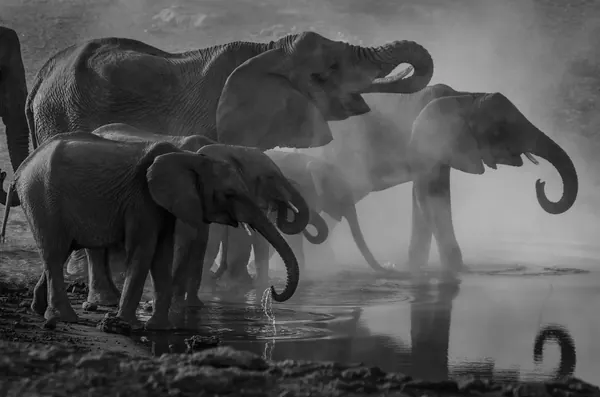
Manatees share a distant common ancestor with elephants, and both have similarly flexible, sensitive upper lips used to grasp food.
While manatees usually cruise at just 3 to 5 miles per hour, they can reach bursts of up to 15-20 miles per hour over short distances when startled.
Manatees have small eyes and relatively poor eyesight, relying more on hearing and touch to sense their surroundings.
The nickname "sea cow" comes from the manatee's grazing habits on seagrass, similar to how cattle graze on land, combined with their bulky, slow-moving bodies.
Frequently asked questions
How long do manatees live?
Manatees can live 50 to 60 years in the wild, though lifespan varies with environmental conditions and human-related dangers like boat strikes.
Are manatees related to elephants?
Yes. Manatees and elephants share a distant common ancestor, a relationship reflected in shared traits such as their flexible, grasping upper lips and similar toenails.
What do manatees eat?
Manatees are herbivores that feed on seagrasses and other submerged, floating, and emergent aquatic plants in both freshwater and saltwater habitats.
How fast can a manatee swim?
Manatees typically swim at a leisurely 3 to 5 miles per hour but can burst up to 15-20 miles per hour for short distances when startled.
Can manatees see well?
Manatees have small eyes and limited eyesight, but they compensate with well-developed hearing and touch, including sensitive whiskers.
Why are manatees called sea cows?
The nickname comes from their habit of grazing on seagrass much like cattle graze on land grass, combined with their slow, bulky movements.
We write every article to be genuinely fun — and genuinely true. Each fact is checked against reputable sources before it goes live. Spotted something off? Tell us and read our fact-check policy.