FFacts On Tap Editorial Team Fact-checkedUpdated May 19, 20254 min read
Share
Mongooses are best known in folklore for their fearless standoffs with venomous snakes, but there is far more to these agile little mammals than cobra-fighting bravado. Part of the family Herpestidae, mongooses come in dozens of species with wildly different lifestyles, from solitary hunters to tightly bonded meerkat colonies.
Here are some genuinely verified facts about mongooses, their biology, behavior, and the outsized impact they've had on ecosystems around the world.
There are roughly 34 recognized species of mongoose in the family Herpestidae, split between two subfamilies: Herpestinae (about 23 species) and Mungotinae (about 11 species, including meerkats).
Mongooses are native mainly to Africa, with additional species found across southern Asia and southern Europe.
The small Indian mongoose was deliberately introduced to islands such as those in the Caribbean and Hawaii in the 1800s to control rats and snakes in sugarcane fields, but it became an invasive species that harmed native wildlife instead.
Most mongooses share a long slender body, a pointed snout, small rounded ears, and a bushy tail.
Mongoose size varies enormously by species: the dwarf mongoose is one of the smallest carnivores in Africa at around 7 inches of body length, while the Egyptian mongoose can reach roughly 2 feet in body length, not counting its long tail.
Mongooses are opportunistic omnivores, eating insects, crabs, earthworms, lizards, birds, eggs, small rodents, and even some fruit.
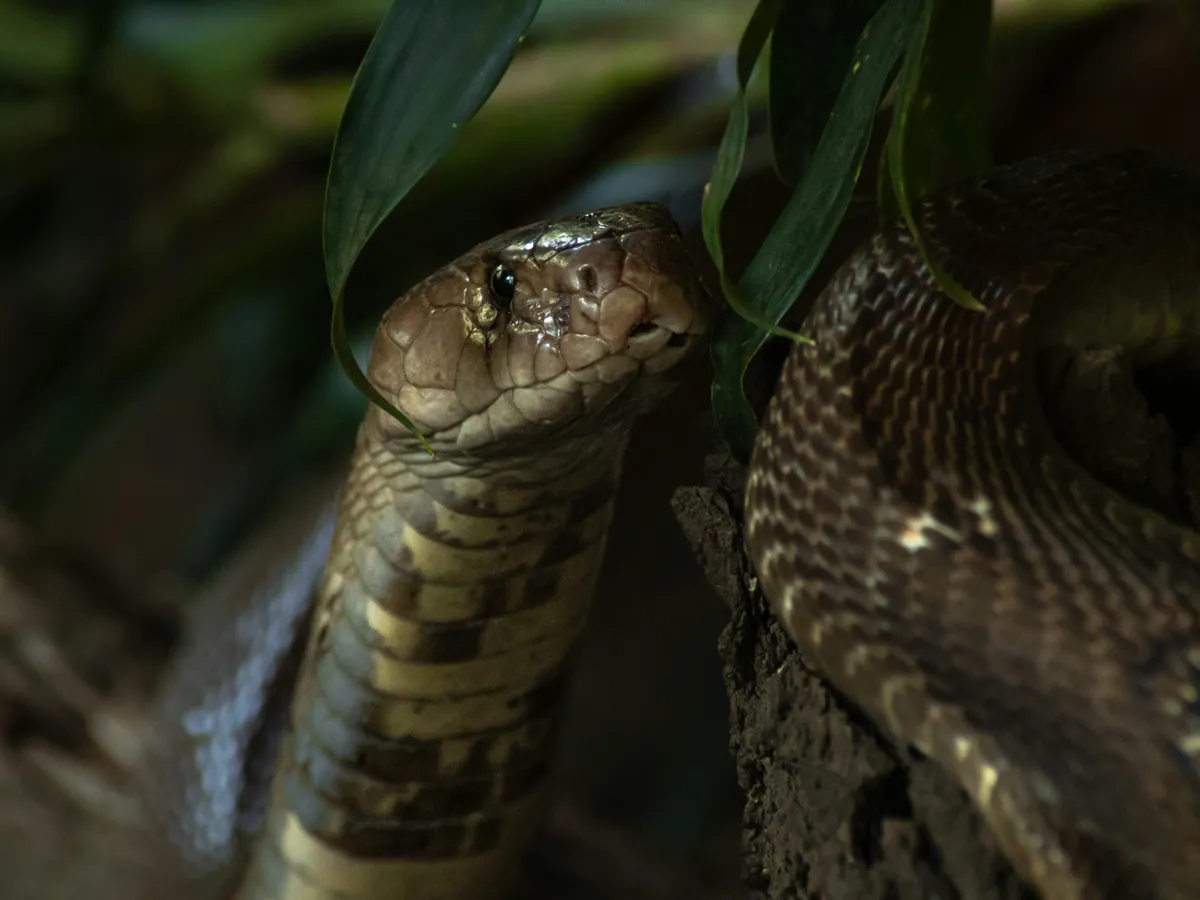
Certain species, most famously the Indian gray mongoose, are well known for attacking and killing venomous snakes, including cobras.
Social structure varies widely across the family: meerkats and banded mongooses live in large, cooperative groups, while many other species, like the Egyptian mongoose, are largely solitary.
Mongoose gestation lasts roughly 42 to 105 days depending on the species, with litters typically ranging from one to four pups.
In cooperatively breeding species such as meerkats and banded mongooses, the whole group helps babysit, feed, and guard the pups, not just their biological parents.
Mongooses communicate through a mix of vocal calls, scent marking from specialized anal glands, and body postures.
Meerkats have one of the most sophisticated alarm-call systems documented in mammals, with distinct calls that vary by predator type (aerial vs. ground) and even urgency level.
Wild mongooses face predation from birds of prey, larger carnivores such as jackals, and pythons, while habitat loss and vehicle collisions are major human-caused threats.
Some mongoose species have evolved resistance to neurotoxic snake venom through mutations in their nicotinic acetylcholine receptors, which prevent certain neurotoxins from binding effectively; this resistance is strongest against elapid venoms like cobra venom and weaker against viper venom.
The honey badger has independently evolved a very similar acetylcholine receptor mutation, an example of convergent evolution toward venom resistance.
In their native ranges, mongooses help control populations of rodents, insects, and snakes, playing a useful ecological role.
Where mongooses have been introduced outside their native range, such as in the Caribbean, Hawaii, and parts of Japan, they have become invasive predators, contributing to declines in native birds, reptiles, and amphibians.
Mongooses feature prominently in folklore and literature, most famously as Rikki-Tikki-Tavi, the mongoose who protects a human family from cobras in Rudyard Kipling's story of the same name, published in "The Jungle Book" (1894).
Mongooses are generally diurnal, meaning most species are active during daylight hours rather than at night.
Wild mongooses typically live around 6 to 10 years, though individuals in captivity have lived up to 20 years.
Frequently asked questions
How long can a mongoose live?
Wild mongooses typically live about 6 to 10 years, while individuals in captivity have been known to live up to 20 years.
Are mongooses good pets?
Mongooses are not recommended as pets. They are wild animals with specialized dietary needs, wide-ranging territories, and in many places it is illegal to keep or import them due to invasive-species concerns.
Can a mongoose really fight a snake?
Yes. Species like the Indian gray mongoose are known for killing venomous snakes, aided by their speed, agility, and a genetic mutation that reduces the effect of certain snake neurotoxins.
What time of day are mongooses most active?
Most mongoose species are diurnal, meaning they are active during the day, though activity patterns can vary somewhat by species and habitat.
How do mongooses communicate with each other?
Mongooses use vocal calls, scent marking, and body posture to communicate. Highly social species like meerkats have especially complex vocal systems, including distinct alarm calls for different predator types.
What impact do introduced mongooses have on local ecosystems?
Where mongooses have been introduced outside their native range, such as Hawaii and the Caribbean, they have become invasive predators that prey on ground-nesting birds, reptiles, and small mammals, contributing to declines in native species.
We write every article to be genuinely fun — and genuinely true. Each fact is checked against reputable sources before it goes live. Spotted something off? Tell us and read our fact-check policy.