FFacts On Tap Editorial Team Fact-checkedUpdated February 14, 20263 min read
Share
Native to the open plains and deserts of Africa, ostriches are the largest living birds on Earth. They can't fly, but between their speed, size, and strange survival tricks, they've earned a reputation as one of nature's oddest success stories.
Here are 19 verified facts about ostriches, corrected and fact-checked for accuracy.
Ostriches are the largest living species of bird.
Males can weigh up to 320 pounds and stand as tall as 9 feet, making them the heaviest birds on Earth.
Ostriches can sprint up to 45 miles per hour, faster than any other bird on land.
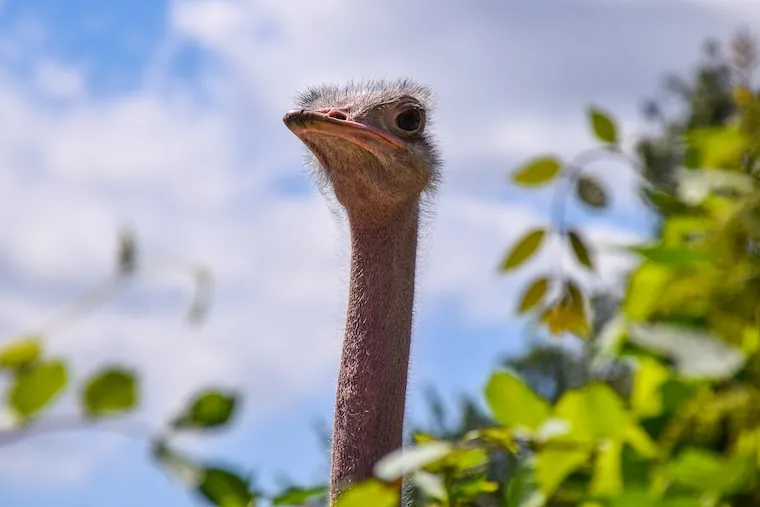
An ostrich's eyes are about 2 inches (5 cm) across, the largest eyes of any land animal and larger than its own brain.
In the wild, ostriches typically live 30 to 40 years; in captivity with good care they can live even longer.
Ostriches lack a crop, unlike most birds. Instead, food passes through a two-part stomach: the glandular proventriculus and the muscular gizzard.
Ostriches are omnivores that mostly eat plants, seeds, and roots, but will also eat insects and small reptiles.
They can go days without drinking water, getting most of their moisture from the plants they eat.
An ostrich's kick is powerful enough to injure or kill a predator, and even lions tend to avoid a cornered ostrich.
Ostrich feathers are soft and loose rather than stiff like flight feathers, and their small wings can't lift their heavy bodies off the ground.
Ostriches lay the largest eggs of any living bird, each weighing around 3 pounds, though relative to the bird's own body size the egg is actually among the smallest of any bird.
Ostriches rely mainly on their exceptional eyesight, not hearing, to spot predators from far across the open savanna.
Male ostriches perform an elaborate courtship dance, flapping their wings and swaying their necks, to attract females.
Ostriches are social birds that live in groups called flocks, sometimes alongside zebras and antelope.
The male digs a shallow nest in the sand where several females may lay their eggs together.
Ostrich skin and legs are thick and tough, which helps protect them from predators, and their leather is prized commercially.
Ostriches can tolerate extreme heat, comfortably surviving temperatures up to about 120°F (49°C) on the African savanna.
Since they have no teeth, ostriches swallow small stones and grit, called gastroliths, to help grind up food in their gizzard.
Ostriches are commercially farmed around the world for their meat, eggs, feathers, and leather.
Frequently asked questions
How long do ostriches live?
Ostriches typically live 30 to 40 years in the wild. In captivity, with abundant food and no predators, they can live even longer.
What do ostriches eat?
Ostriches are omnivores that primarily eat plants, seeds, and roots, but they also eat insects and small reptiles when available.
Why can't ostriches fly?
Ostriches have small wings relative to their large, heavy bodies, so they can't generate enough lift to fly. They use their wings instead for balance, courtship displays, and shade.
How fast can ostriches run?
Ostriches can run up to about 45 miles per hour, making them the fastest bird on land and one of the fastest of all land animals.
How do ostriches defend themselves?
Ostriches rely on sharp eyesight to spot danger early and can flee at high speed. If cornered, they defend themselves with a powerful kick strong enough to injure a large predator.
Where do ostriches live?
Ostriches are native to the savannas and deserts of Africa, though they are also farmed commercially in many other parts of the world.
We write every article to be genuinely fun — and genuinely true. Each fact is checked against reputable sources before it goes live. Spotted something off? Tell us and read our fact-check policy.