FFacts On Tap Editorial Team Fact-checkedUpdated March 18, 20253 min read
Share
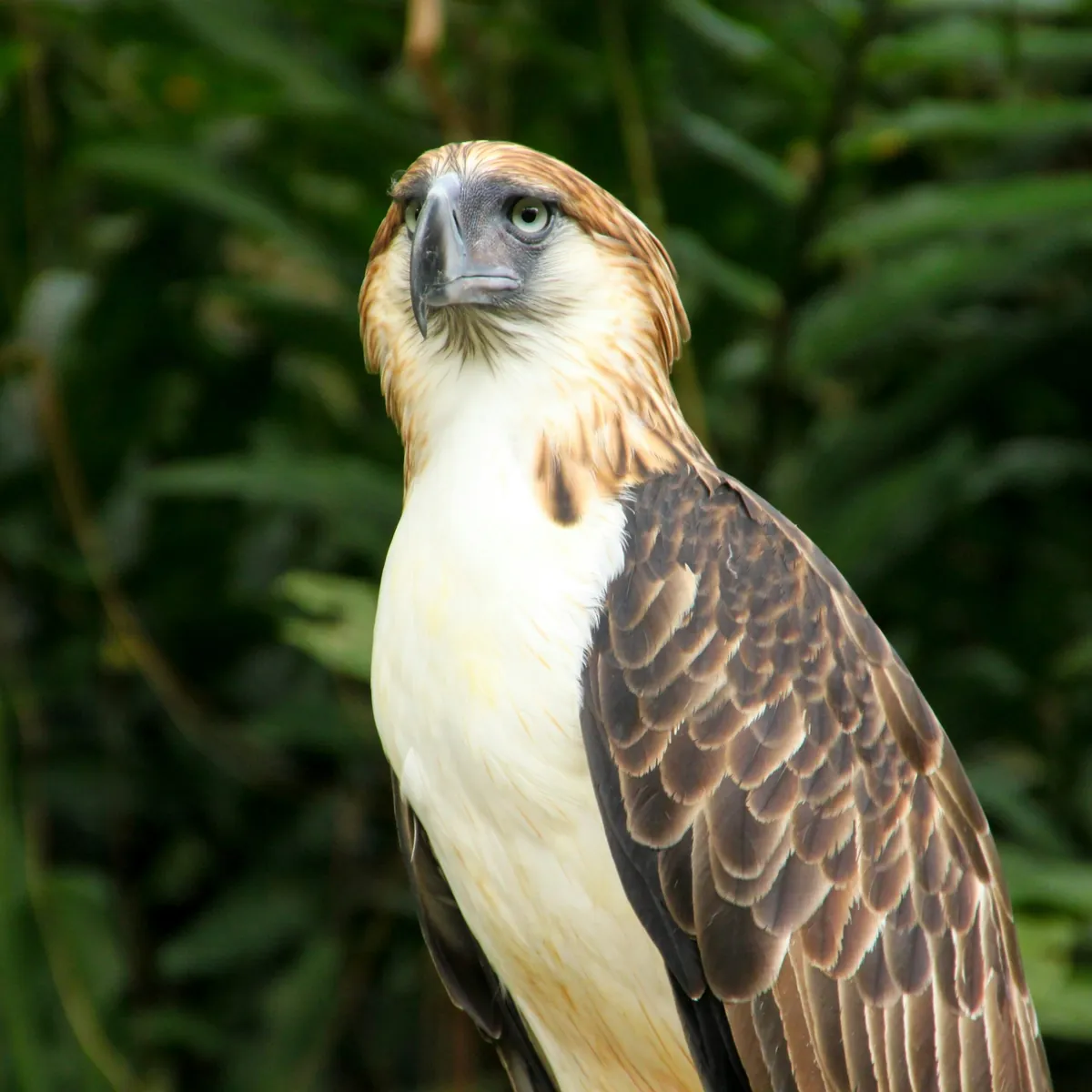
The Philippine eagle is one of the largest and most powerful birds of prey on Earth, found only in the forests of the Philippines. With its shaggy crest, piercing gaze, and reputation as a fearsome hunter, it has become a national symbol and a conservation icon.
Sadly, it's also one of the rarest eagles alive, with only a few hundred believed to remain in the wild. Here's what makes this majestic raptor so remarkable.
The Philippine eagle's scientific name is Pithecophaga jefferyi; the genus name Pithecophaga literally means "monkey-eater," reflecting its habit of hunting monkeys in the forest canopy.
It is classified as Critically Endangered by the IUCN, with an estimated 180 to 600 individuals left in the wild, primarily threatened by deforestation, hunting, and poaching.
It is one of the largest eagles in the world, measuring 86 to 102 centimeters (about 2.8 to 3.3 feet) in body length.
Its wingspan ranges from roughly 1.8 to 2.2 meters (6 to 7.2 feet), and adults weigh between about 4 and 8 kilograms (9 to 17.6 pounds), with females noticeably larger than males.
In the wild, Philippine eagles are estimated to live 30 to 60 years, though few survive that long given ongoing threats; in captivity, one bird lived 46 years at the Philippine Eagle Center in Davao City.
Despite the "monkey-eater" name, their diet is varied and includes flying lemurs, palm civets, large snakes, monitor lizards, bats, and other birds, not just monkeys.
As apex predators, Philippine eagles help keep prey populations in check, playing an important role in the balance of their forest ecosystem.
Philippine eagles are monogamous and typically mate for life, forming long-term breeding pairs.
A breeding pair usually raises only one chick every two years, since the young eagle stays dependent on its parents for an extended period after fledging.
Both parents share incubation duties and help raise and feed the chick after it hatches.
Nests are built high in tall forest trees, often over a meter in diameter, and the same nest site may be reused across breeding seasons.
Philippine eagles have exceptionally keen eyesight and are powerful, agile fliers, allowing them to spot and pursue prey through dense forest canopy.
The Philippine eagle was declared the national bird of the Philippines in 1995, symbolizing the country's commitment to protecting its unique wildlife.
It is found only in the Philippines, on the islands of Luzon, Samar, Leyte, and Mindanao, and nowhere else in the world.
The Philippine Eagle Foundation, based in Davao City, leads captive breeding, rehabilitation, and habitat protection efforts aimed at saving the species from extinction.
Killing a Philippine eagle is a criminal offense in the Philippines, punishable under national wildlife protection laws, with penalties including fines and imprisonment.
Frequently asked questions
What is the primary cause of the Philippine eagle's endangerment?
Habitat loss from deforestation is the biggest threat, as logging, mining, and agricultural expansion destroy the old-growth forest the eagles need to hunt and nest. Poaching and accidental trapping add further pressure.
How does the Philippine eagle help its ecosystem?
As an apex predator, it helps regulate populations of prey species like monkeys and civets, which supports the broader balance of the forest food web.
Can Philippine eagles be found in captivity?
Yes. The Philippine Eagle Foundation's Philippine Eagle Center in Davao City houses captive eagles as part of breeding and rehabilitation programs, some of which have lived decades longer than typical wild birds.
What is being done to conserve the Philippine eagle?
The Philippine Eagle Foundation and government agencies run captive breeding programs, protect remaining forest habitat, and work with local communities to reduce hunting and educate the public about the species.
Why was the Philippine eagle chosen as the national bird?
It was declared the national bird in 1995 because of its rarity, size, and status as a symbol unique to the Philippines, meant to draw attention to the country's need to protect its natural heritage.
Where do Philippine eagles live?
They live only in the Philippines, in the remaining rainforests of Luzon, Samar, Leyte, and Mindanao.
We write every article to be genuinely fun — and genuinely true. Each fact is checked against reputable sources before it goes live. Spotted something off? Tell us and read our fact-check policy.