FFacts On Tap Editorial Team Fact-checkedUpdated June 6, 20243 min read
Share
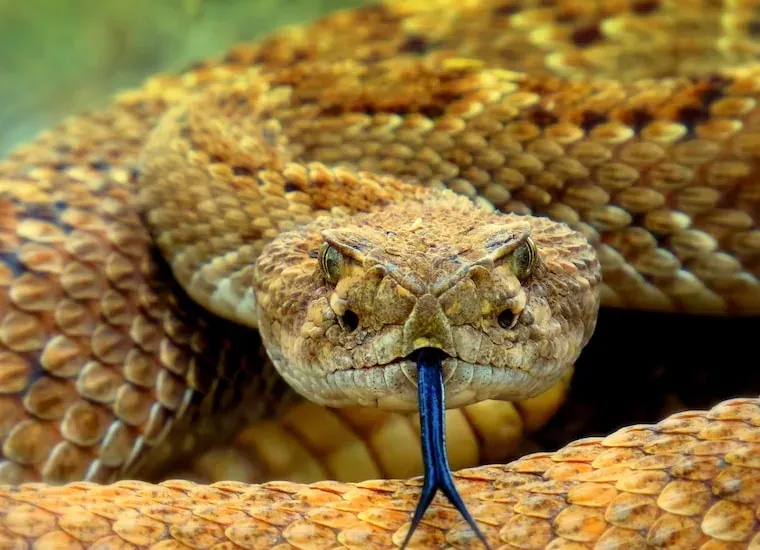
Rattlesnakes are among the most recognizable reptiles on Earth, instantly identifiable by the buzzing warning of their tail. Found only in the Americas, these venomous pit vipers have fascinated and intimidated people for centuries.
Here are some verified facts about rattlesnakes, from their unique rattle to their remarkable heat-sensing senses.
Rattlesnakes are found only in the Americas, ranging from southern Canada down through the United States, Mexico, and Central America into Argentina.
Scientists recognize roughly three dozen rattlesnake species, with the exact count (commonly cited as 32 to 36) varying by taxonomic classification.
The eastern diamondback is the largest rattlesnake species; most adults reach 3 to 6 feet, though the record specimen measured about 7 feet 9 inches.
The pygmy rattlesnake is one of the smallest rattlesnake species, typically growing to only 18 to 24 inches long.
A rattlesnake's rattle is made of interlocking segments of keratin, the same protein found in human hair and fingernails.
A new rattle segment is added each time the snake sheds its skin, which can happen multiple times a year, so rattle length isn't a reliable way to tell a snake's exact age.
Rattlesnakes don't always rattle before striking; some strike with little or no warning, especially if startled.
Rattlesnake venom is a complex mixture of proteins and enzymes that can cause intense pain, swelling, and tissue damage at the bite site.
In some species, venom can also affect the nervous system, potentially causing symptoms ranging from weakness to breathing difficulty in severe, untreated cases.
Rattlesnakes are important predators that help control rodent populations in their ecosystems.
Rattlesnakes are preyed upon by hawks, eagles, roadrunners, king snakes, and other predators.
Rattlesnakes have heat-sensing pits between their eyes and nostrils that let them detect the infrared heat of warm-blooded prey, even in total darkness.
While generally solitary, rattlesnakes often gather by the dozens or hundreds at shared den sites to hibernate through the winter.
Female rattlesnakes give birth to live young rather than laying eggs.
Litter sizes vary by species, with most rattlesnakes giving birth to somewhere between 5 and 20 young at a time.
Rattlesnakes can go for weeks or even months between meals, since their metabolism is well suited to conserving energy between hunts.
Rattlesnakes are generally not aggressive; most bites occur when a snake is startled, stepped on, or handled rather than from unprovoked attacks.
If you encounter a rattlesnake in the wild, the safest response is to give it plenty of space and back away slowly rather than trying to move or kill it.
Rattlesnakes hold cultural significance in many Native American traditions, where they are often associated with strength, transformation, or protection.
Modern medical research has studied compounds in pit viper venom, including from rattlesnakes, in the development of treatments such as anticoagulant and diagnostic drugs.
Frequently asked questions
Do rattlesnakes lay eggs or give birth to live young?
Rattlesnakes give birth to live young rather than laying eggs, a reproductive strategy called ovoviviparity.
How many species of rattlesnakes are there?
Scientists recognize roughly 32 to 36 species of rattlesnakes, though the exact number depends on taxonomic classification.
Are rattlesnakes aggressive?
No, rattlesnakes are generally not aggressive. Most bites happen when a snake is surprised, stepped on, or handled, not from unprovoked attacks.
How long can a rattlesnake survive without food?
Rattlesnakes can go weeks or months between meals thanks to a slow metabolism, though they still need access to water.
What should I do if I encounter a rattlesnake in the wild?
Give it plenty of space, back away slowly, and never try to handle or provoke it. Most bites occur when people get too close or attempt to move the snake.
How are rattlesnakes important to their ecosystems?
Rattlesnakes are key predators that help control rodent populations, and in turn serve as prey for hawks, eagles, and other animals.
We write every article to be genuinely fun — and genuinely true. Each fact is checked against reputable sources before it goes live. Spotted something off? Tell us and read our fact-check policy.