FFacts On Tap Editorial Team Fact-checkedUpdated March 27, 20253 min read
Share
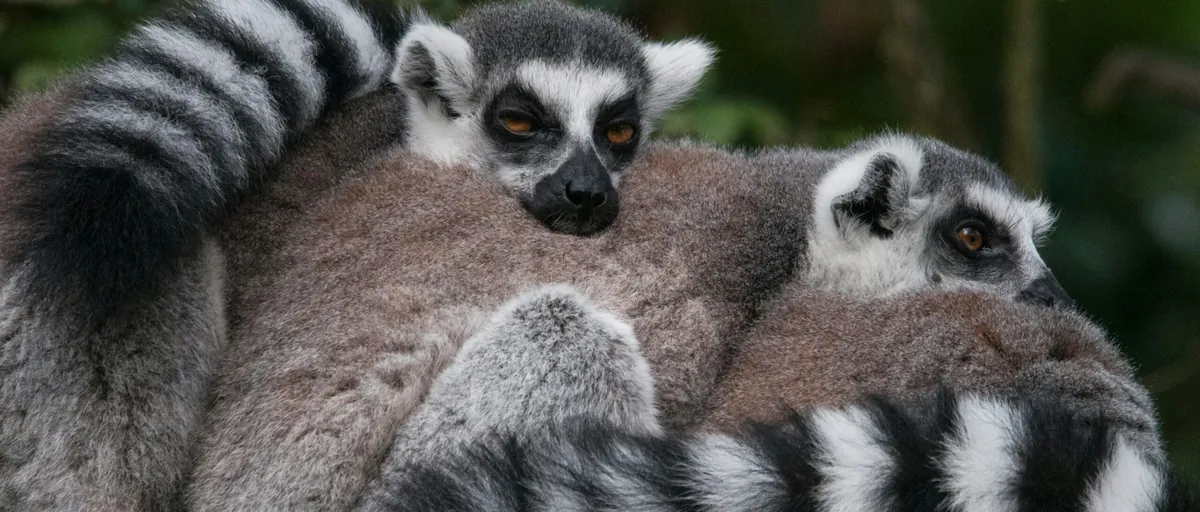
Ring-tailed lemurs are among the most recognizable primates on Earth, instantly identifiable by their long, black-and-white striped tails and piercing amber eyes. Found only on the island of Madagascar, these social, sun-loving animals play a vital role in their ecosystem and hold deep cultural significance for the Malagasy people.
Here are the real facts behind one of the animal kingdom's most charismatic characters.
Ring-tailed lemurs (Lemur catta) are endemic to Madagascar, meaning they occur naturally nowhere else on Earth.
They mainly inhabit dry, southern and southwestern regions of Madagascar, including spiny forests, gallery forests, and rocky scrubland.
Ring-tailed lemurs live in social groups called troops, which typically range from about 6 to 25 members, though some troops can be larger.
Lemur troops are matriarchal: females are dominant over males and lead the group in most social interactions.
They are omnivorous but feed mostly on fruit, especially from tamarind trees, along with leaves, flowers, bark, sap, and occasional insects.
Their diet shifts with the seasons, depending on what fruits and vegetation are available at the time.
Ring-tailed lemurs communicate through a wide range of vocal calls, including alarm calls for different predators, as well as scent marking from glands on their wrists and chest.
Mating occurs during a brief annual breeding season, usually in the spring, and females typically give birth to a single infant after a gestation period of about 135 days.
Their famous tails are longer than their bodies and are used mainly for balance, communication, and group cohesion rather than for gripping branches.
During so-called 'stink fights,' male lemurs rub their tails with scent from glands on their wrists and forearms and wave them at rivals to assert dominance.
Ring-tailed lemurs are famous for sitting upright in a yoga-like pose with their bellies exposed to the sun, likely to help regulate body temperature after cool Madagascar nights.
The IUCN Red List classifies ring-tailed lemurs as Endangered, with wild populations having declined sharply due to habitat loss.
Major threats include deforestation from slash-and-burn agriculture, illegal logging, livestock grazing, and hunting for bushmeat.
Conservation programs in Madagascar focus on protecting remaining habitat, supporting ecotourism, and working with local communities to reduce hunting pressure.
In Malagasy folklore, lemurs are often regarded with respect and sometimes linked to ancestral spirits, which in some regions helps discourage hunting them.
Ring-tailed lemurs are diurnal, active mostly during the day, which is unusual since many other lemur species are nocturnal.
They act as important seed dispersers in their ecosystem, helping many native Madagascar plants germinate and spread.
Ring-tailed lemurs typically live around 16 to 19 years in the wild, but can live into their late 20s or beyond in zoos with good care.
Frequently asked questions
What is the lifespan of a ring-tailed lemur in the wild?
Ring-tailed lemurs typically live around 16 to 19 years in the wild. In zoos, with veterinary care and no predators, they can live considerably longer, sometimes into their late 20s or 30s.
How do ring-tailed lemurs contribute to their ecosystem?
As frugivores, ring-tailed lemurs eat large amounts of fruit and disperse the seeds across the landscape, helping many native Madagascar plant species regenerate.
Are ring-tailed lemurs active during the day or night?
Yes, ring-tailed lemurs are diurnal, meaning they are active mainly during daylight hours. This sets them apart from many other lemur species, which are nocturnal.
Can ring-tailed lemurs be kept as pets?
No. Ring-tailed lemurs have complex social, dietary, and environmental needs that cannot be met in a typical home, and in most places it is illegal to keep them as pets.
What are the main predators of ring-tailed lemurs?
Natural predators include the fossa, birds of prey, and occasionally snakes, but human-driven threats such as habitat destruction and hunting pose a far greater danger to the species.
Why are ring-tailed lemurs endangered?
Their population has declined sharply due to widespread deforestation from slash-and-burn agriculture, illegal logging, and hunting, all of which have shrunk and fragmented their native habitat in Madagascar.
We write every article to be genuinely fun — and genuinely true. Each fact is checked against reputable sources before it goes live. Spotted something off? Tell us and read our fact-check policy.