FFacts On Tap Editorial Team Fact-checkedUpdated July 20, 20262 min read
Share
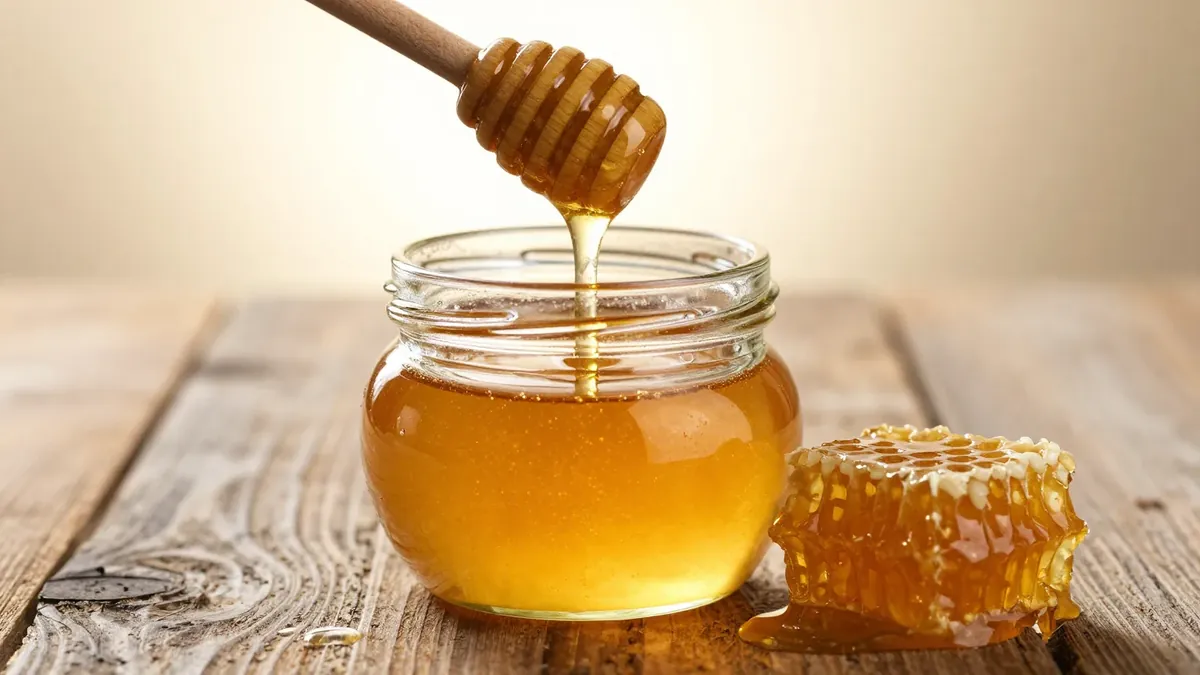
Honey is the only food made by an insect that humans eat in large quantities — and it may be the only food in your pantry that essentially never spoils. Behind every jar is an astonishing amount of work by tens of thousands of bees.
Here are the sweetest facts we could verify.
Properly sealed honey essentially never spoils — archaeologists have found pots of honey in ancient Egyptian tombs, roughly 3,000 years old, that were still edible.
Honey resists spoiling because it is low in moisture, naturally acidic, and produces small amounts of hydrogen peroxide — a hostile environment for bacteria.
To make one pound of honey, a colony's bees collectively visit around two million flowers and fly a combined distance often estimated at 55,000 miles.
A single worker bee produces only about one-twelfth of a teaspoon of honey in her entire lifetime.
Honeybees tell each other where the best flowers are with the 'waggle dance' — a discovery that helped win Karl von Frisch a Nobel Prize in 1973.
Honey is a supersaturated sugar solution, mostly fructose and glucose, with only about 17 percent water.
Crystallized honey has not gone bad — gentle warming in a water bath returns it to liquid, and some honeys are deliberately sold creamed/crystallized.
Honey's color and flavor depend on the flowers the nectar came from, ranging from pale clover honey to dark, malty buckwheat honey.
Medical-grade honey (notably manuka) is used in modern wound dressings for its antibacterial properties.
Honey should never be given to babies under 12 months old because it can contain spores that cause infant botulism.
Mead — made by fermenting honey with water — is one of the oldest known alcoholic drinks, with evidence stretching back thousands of years.
Bears really do raid beehives, but they're after protein-rich larvae as much as the honey itself.
Honey has been used as a sweetener, medicine, and preservative across cultures for millennia — cave paintings in Spain show humans gathering honey around 8,000 years ago.
Frequently asked questions
Does honey ever expire?
Sealed, properly stored honey lasts essentially indefinitely. It may crystallize or darken over time, but that's a physical change, not spoilage.
Why can't babies eat honey?
Honey can contain Clostridium botulinum spores. An infant's immature digestive system can't handle them, which can cause infant botulism — so no honey before 12 months of age.
Is raw honey healthier than regular honey?
Raw honey skips fine filtering and heat processing, so it retains more pollen and enzymes. Nutritionally the differences are modest — honey of any kind is still primarily sugar and should be enjoyed in moderation.
Why did my honey crystallize?
Glucose naturally comes out of solution over time, especially in cooler temperatures. Warm the jar gently in warm water and it will turn liquid again.
Is honey vegan?
By most definitions no, since it's an animal product made by bees. Common plant-based alternatives include maple syrup and agave nectar.
We write every article to be genuinely fun — and genuinely true. Each fact is checked against reputable sources before it goes live. Spotted something off? Tell us and read our fact-check policy.