FFacts On Tap Editorial Team Fact-checkedUpdated February 28, 20264 min read
Share
Our planet is packed with wonders, from natural landmarks so vast they can be spotted from orbit to human-built structures that push the limits of engineering. It's also full of myths that sound true but aren't — so we fact-checked the popular list of "30 facts about the world" and cleaned it up.
Below are the facts that held up, corrected where the numbers or details were off, plus a couple of newly verified additions.
The Great Barrier Reef, off the coast of Australia, is the world's largest living structure and the only one large enough to be seen from space.
Despite a popular claim, the Amazon rainforest does not produce 20% of the world's oxygen. Scientists estimate it contributes closer to 6-9% of atmospheric oxygen, and the forest itself reabsorbs nearly all of what it generates, so its net contribution is close to zero.
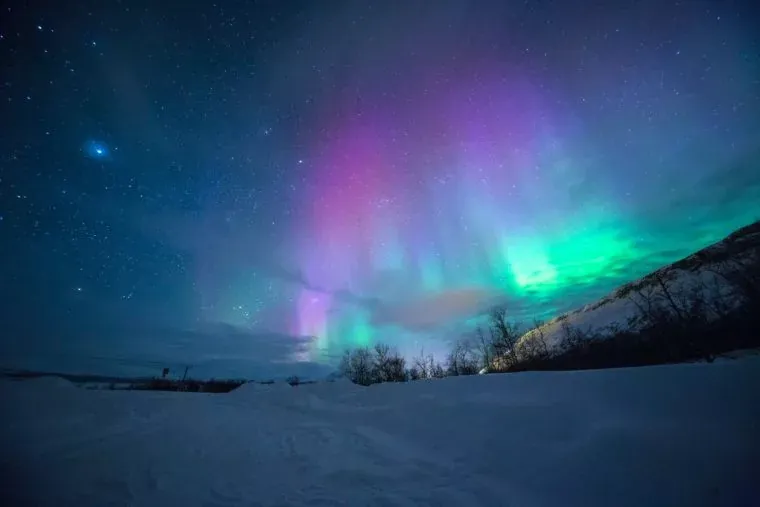
The Northern Lights (Aurora Borealis) occur when charged particles from the sun collide with gases in Earth's atmosphere near the magnetic poles, causing them to glow.
The Grand Canyon in Arizona is about 277 miles long and up to 18 miles wide at its widest point.
The Sahara is the largest hot desert in the world, covering roughly 3.6 million square miles of North Africa.
The Great Wall of China, including all its branches and spurs, measures about 13,171 miles long according to a 2012 Chinese government survey — making it the longest wall ever built.
The Panama Canal, which opened in 1914, was really two projects in one: a failed French effort that began in 1881, followed by a successful ten-year U.S.-led construction from 1904 to 1914 — a 33-year saga from start to finish.
The Eiffel Tower opened in Paris in 1889 at a height of 1,063 feet; with modern antennas added since, it now stands about 1,083 feet tall.
The Burj Khalifa in Dubai, standing 2,717 feet tall, is currently the world's tallest building.
The International Space Station orbits Earth at roughly 17,500 miles per hour, circling the planet about every 90 minutes.
The Great Pyramid of Giza in Egypt is more than 4,500 years old, built around 2560 BCE.
In Japan, it's generally considered impolite to blow your nose loudly in public.
Jericho, in the West Bank, is often cited as one of the oldest continuously inhabited settlements on Earth, with evidence of habitation stretching back roughly 10,000 years.
The Anglo-Zanzibar War of 1896 is recognized as the shortest war in recorded history, lasting only about 38 minutes.
It took Michelangelo about four years, from 1508 to 1512, to paint the ceiling of the Sistine Chapel.
Guinness World Records lists the largest snowflake ever reported as 15 inches wide and 8 inches thick, said to have fallen at Fort Keogh, Montana, in 1887 — though the account was never scientifically verified.
In 2008, a British teenager named George Garratt legally changed his name to "Captain Fantastic Faster Than Superman Spiderman Batman Wolverine Hulk And The Flash Combined."
The shortest scheduled commercial flight in the world connects the Scottish islands of Westray and Papa Westray, with a flight time as brief as 1 minute 14 seconds.
Some of the oldest known chewing gum — wads of chewed birch bark tar — has been found in Sweden and dated to nearly 10,000 years old.
The largest rubber band ball on record weighs more than 9,000 pounds.
Mount Everest, in the Himalayas, is the world's highest mountain, standing at 29,032 feet under its most recent official measurement.
The Nile, stretching roughly 4,135 miles through northeastern Africa, is generally considered the longest river in the world, though some researchers argue the Amazon may be longer depending on how its source is measured.
The Dead Sea, bordering Jordan and Israel, sits about 1,410 feet below sea level, making its shoreline the lowest point on land on Earth.
The Great Lakes of North America hold about 21% of the world's surface fresh water.
St. Augustine, Florida, founded by Spanish colonists in 1565, is the oldest continuously occupied European-established settlement in the continental United States.
Frequently asked questions
What is the most visited tourist attraction in the world?
It depends on how visits are counted, but Times Square in New York City is frequently cited as one of the most-visited attractions on Earth, with tourism estimates putting annual visitors in the tens of millions — far more than most traditional landmarks like the Eiffel Tower or Great Pyramids.
What is the largest man-made structure in the world?
The Great Wall of China is generally considered the largest man-made structure, stretching approximately 13,171 miles when all of its branches are included.
What is the smallest country in the world?
Vatican City, an independent city-state located within Rome, is the smallest country in the world, covering roughly 44 hectares (about 0.17 square miles).
What is the tallest animal in the world?
The giraffe is the tallest living animal, with adult males averaging around 16 to 18 feet in height.
What is the most widely spoken language in the world?
Counting native speakers, Mandarin Chinese is the most widely spoken language in the world, with well over 900 million native speakers.
We write every article to be genuinely fun — and genuinely true. Each fact is checked against reputable sources before it goes live. Spotted something off? Tell us and read our fact-check policy.