FFacts On Tap Editorial Team Fact-checkedUpdated January 17, 20266 min read
Share
Oregon, the Beaver State, is famous for its wild coastline, dense evergreen forests, and a landscape that swings from misty rainforest to high desert within a few hours' drive. But beyond the postcard views lies a state full of odd records, quirky laws, and genuinely surprising history.
Here are 27 fact-checked facts about Oregon, covering everything from the deepest lake in the country to the world's largest living organism.
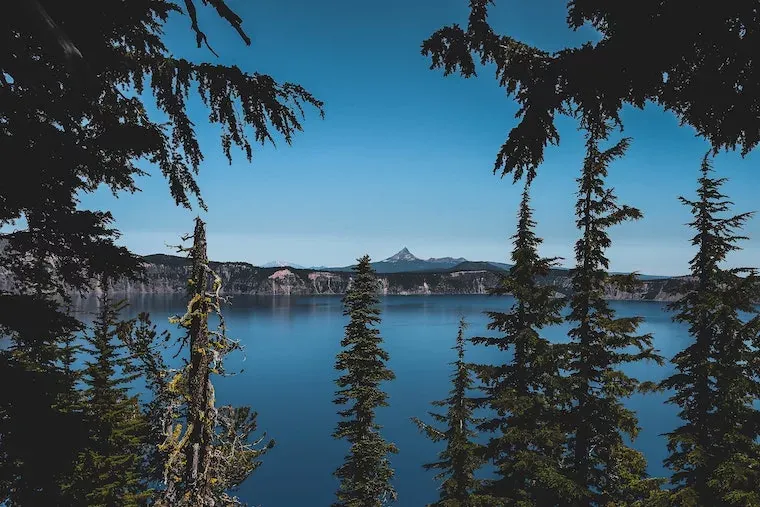
Crater Lake in southern Oregon is the deepest lake in the United States, reaching a depth of 1,949 feet (594 meters). It formed after the eruption and collapse of the ancient volcano Mount Mazama roughly 7,700 years ago.
The Oregon Trail was a roughly 2,170-mile (3,490 km) overland route connecting the Missouri River to Oregon's Willamette Valley, used by hundreds of thousands of settlers during the westward expansion of the mid-1800s.
Portland's Mill Ends Park, at just 24 inches (about 0.6 meters) across, is recognized by Guinness World Records as the smallest park in the world. It was created in 1948 in a hole originally meant for a light pole.
The Tillamook Creamery in Tillamook, Oregon, produces more than 170,000 pounds (77,000 kg) of cheese a day, making it one of the largest single cheese-making operations in the country, though not the largest in the world.
Oregon was the first US state to decriminalize personal possession of marijuana, in 1973, and one of the first to legalize physician-assisted death, when its Death with Dignity Act took effect in 1997.
Haystack Rock, a roughly 235-foot (72-meter) sea stack just offshore at Cannon Beach, is one of the most photographed landmarks on the Oregon coast and a protected marine habitat for nesting seabirds.
Nike traces its roots to Oregon: track coach Bill Bowerman and runner Phil Knight founded the company as Blue Ribbon Sports in 1964, renaming it Nike in 1971. Its headquarters remain in Beaverton, Oregon.
Oregon is the only US state with an official state nut: the hazelnut, also called the filbert. Oregon's Willamette Valley grows the vast majority of the hazelnuts produced in the United States.
Portland, Oregon's largest city, is nicknamed the "City of Roses" for its many rose gardens, including the famous International Rose Test Garden in Washington Park.
Oregon's Willamette Valley is one of the world's most respected wine regions, especially known for its cool-climate Pinot Noir.
The Oregon Vortex in Gold Hill is a roadside attraction where visual tricks created by the sloped structures and surrounding terrain make balls appear to roll uphill and people appear to change height.
Hells Canyon, along the Oregon-Idaho border, is the deepest river gorge in North America, plunging about 7,993 feet (2,436 meters) from the surrounding peaks to the Snake River below — deeper than the Grand Canyon.
Newberry National Volcanic Monument, covering 54,822 acres (about 22,200 hectares) near Bend, is Oregon's only national volcanic monument, protecting lava flows, obsidian fields, and twin crater lakes.
The Oregon Shakespeare Festival, founded in Ashland in 1935, is one of the oldest and largest professional nonprofit theater companies in the United States.
A single honey fungus (Armillaria ostoyae) growing in Oregon's Malheur National Forest, in the Blue Mountains, covers roughly 2,385 acres (965 hectares) and is estimated to be at least 2,400 years old, making it one of the largest known living organisms on Earth.
The Columbia River Gorge stretches about 80 miles (130 km) along the Oregon-Washington border and is home to dozens of waterfalls, including 620-foot (189-meter) Multnomah Falls, one of the tallest year-round waterfalls in the country.
For 72 years, Oregon banned drivers from pumping their own gas. In 2023 the state changed the law, and self-service is now allowed at most stations statewide, though New Jersey remains fully full-service-only.
Powell's City of Books in Portland occupies an entire city block and is widely regarded as the largest independent new-and-used bookstore in the world, stocking over a million books.
Oregon has well over 100 documented ghost towns left over from its mining, timber, and railroad boom-and-bust eras.
Oregon Caves National Monument and Preserve, in the Siskiyou Mountains, protects one of the relatively few marble show caves in the United States.
Portland has one of the highest concentrations of craft breweries of any city in the world, with more than 70 operating within the metro area.
Lincoln City's D River, which runs from Devils Lake to the Pacific, was once listed by Guinness World Records as the world's shortest river before losing that title to Montana's Roe River in 1989; Guinness has since stopped ranking the category.
Central Oregon's high desert holds one of the largest expanses of old-growth western juniper woodland in North America, including individual trees believed to be well over 1,000 years old.
Thanks to Oregon's 1967 "Beach Bill," the entire Oregon coastline — more than 360 miles (580 km) of it — is public land, open to anyone regardless of who owns the adjacent property.
The Oregon Museum of Science and Industry (OMSI) in Portland is one of the largest science museums in the country, with hands-on exhibits, a planetarium, and a decommissioned Navy submarine open for tours.
Mount Hood, Oregon's tallest peak at 11,249 feet (3,429 meters), is a potentially active stratovolcano that last had minor eruptive activity in the mid-1800s.
The Painted Hills in eastern Oregon's John Day Fossil Beds National Monument display bands of red, gold, and black claystone that shift color with moisture and light, built up over roughly 35 million years.
Frequently asked questions
What is Oregon famous for?
Oregon is known for its dramatic natural landscapes — the Pacific coastline, Crater Lake, Mount Hood, and the Columbia River Gorge — as well as its craft beer and wine scenes, tech and outdoor-gear companies like Nike and Intel, and its history along the Oregon Trail.
Why is Oregon called the Beaver State?
The nickname reflects the fur trade era, when beaver pelts drove much of the region's early economy, and the beaver's ongoing ecological role in shaping Oregon's wetlands. The beaver is Oregon's official state animal.
Is Oregon a good place to live?
Oregon offers a high quality of life with abundant outdoor recreation and no sales tax, though its cost of living in cities like Portland and its wet western winters are common trade-offs people weigh.
What is the climate like in Oregon?
Western Oregon has a mild, marine climate with wet winters and dry summers, while eastern Oregon is drier and more continental, with colder winters and hotter summers.
What are the main industries in Oregon?
Oregon's economy centers on technology and advanced manufacturing (including companies like Intel and Nike), agriculture and forestry, and tourism tied to its coastline, wine country, and mountains.
What are some must-see attractions in Oregon?
Top attractions include Crater Lake National Park, Mount Hood, the Columbia River Gorge and Multnomah Falls, the Oregon Coast, the Painted Hills, Powell's City of Books, and the Oregon Shakespeare Festival in Ashland.
We write every article to be genuinely fun — and genuinely true. Each fact is checked against reputable sources before it goes live. Spotted something off? Tell us and read our fact-check policy.