FFacts On Tap Editorial Team Fact-checkedUpdated February 19, 20243 min read
Share
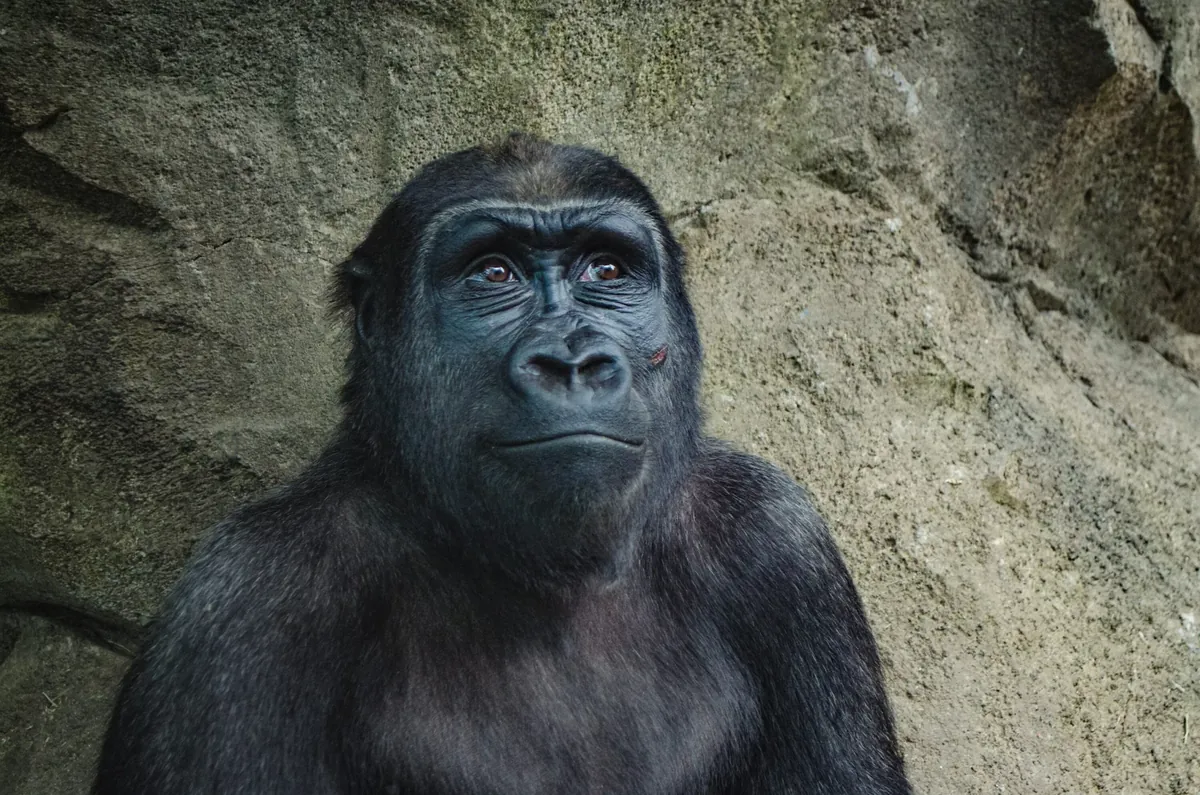
Gorillas are the largest living primates and one of humanity's closest relatives, sharing the family Hominidae with humans, chimpanzees, bonobos, and orangutans. Gentle, intelligent, and deeply social, they spend most of their days foraging in the forests of central Africa.
Below are verified facts about gorilla biology, behavior, and conservation status.
Gorillas are herbivores that mainly eat leaves, stems, shoots, and fruit; a large adult male can eat 40 pounds (18 kg) or more of vegetation in a day.
There are two gorilla species: the eastern gorilla and the western gorilla. Each is split into two subspecies -- the eastern gorilla into the mountain gorilla and the eastern lowland (Grauer's) gorilla, and the western gorilla into the western lowland gorilla and the Cross River gorilla.
Gorillas are highly intelligent and have been observed using tools in the wild, including using a stick to test the depth of water before wading through a swamp.
Gorillas are social animals that live in groups called troops, typically led by one dominant adult male known as a silverback for the patch of silver-gray hair on his back.
Gorillas communicate with grunts, barks, chest-beats, body postures, and facial expressions. One famous captive gorilla, Koko, was taught over 1,000 signs based on American Sign Language, though this is not typical gorilla behavior in the wild.
Both gorilla species are endangered. Roughly 5,000 eastern gorillas remain in the wild -- including fewer than 1,000 mountain gorillas -- while western gorillas, though more numerous, are also declining sharply due to poaching and disease.
A gorilla's heart is structurally similar to a human's but proportionally larger and more muscular, reflecting its bigger body size.
Like humans, gorillas have unique fingerprints (and even unique nose prints), which researchers use to identify individuals in the wild.
The heaviest wild gorilla on record was a silverback that weighed about 589 pounds (267 kg); gorillas in zoos have occasionally grown even larger due to diet and inactivity.
Gorillas can stand and walk briefly on two legs, but they typically move on all fours using a method called knuckle-walking, supporting their weight on the knuckles of their hands.
Gorillas are the largest living primates, with adult males standing up to 5.5 feet tall and able to weigh over 400 pounds.
Gorillas share about 98 percent of their DNA with humans, making them one of our closest living relatives after chimpanzees and bonobos.
Gorillas typically live 35 to 40 years in the wild, though many do not reach that age because of habitat loss, poaching, and disease.
Frequently asked questions
What are the main threats to gorillas?
The main threats are habitat loss from logging and mining, poaching for bushmeat and the illegal wildlife trade, and diseases such as Ebola and respiratory infections, which spread easily because gorillas are genetically close to humans.
How long do gorillas live?
Wild gorillas typically live 35 to 40 years, while gorillas in zoos can live into their 50s with veterinary care and no natural predators.
What is the difference between a western gorilla and an eastern gorilla?
Western gorillas tend to be somewhat smaller with brownish-gray coats and a more auburn crown, while eastern gorillas are larger with darker, blacker coats. Each species also contains two distinct subspecies adapted to different habitats.
How can I help protect gorillas?
You can support accredited conservation organizations that fund anti-poaching patrols and habitat protection, avoid products linked to deforestation, and choose responsible, permit-based gorilla trekking tourism that funds conservation.
Do gorillas really use tools?
Yes. Wild gorillas have been observed using sticks to gauge water depth and as walking aids, and using branches for other practical purposes, evidence of notable problem-solving intelligence.
We write every article to be genuinely fun — and genuinely true. Each fact is checked against reputable sources before it goes live. Spotted something off? Tell us and read our fact-check policy.