FFacts On Tap Editorial Team Fact-checkedUpdated February 8, 20263 min read
Share
Lions are one of the most recognizable animals on Earth, famous for their thunderous roar and their unusual (for cats) social lifestyle. Nicknamed the "King of the Jungle" even though they actually live on grasslands and savannas, not jungles, lions have plenty of genuinely surprising traits once you look past the myths.
Here are verified facts about lion prides, hunting, biology, and more.
Lions are the only big cats that live in social groups called prides, which typically include around 15 members but can grow to 30 or even 40 lions in rare cases.
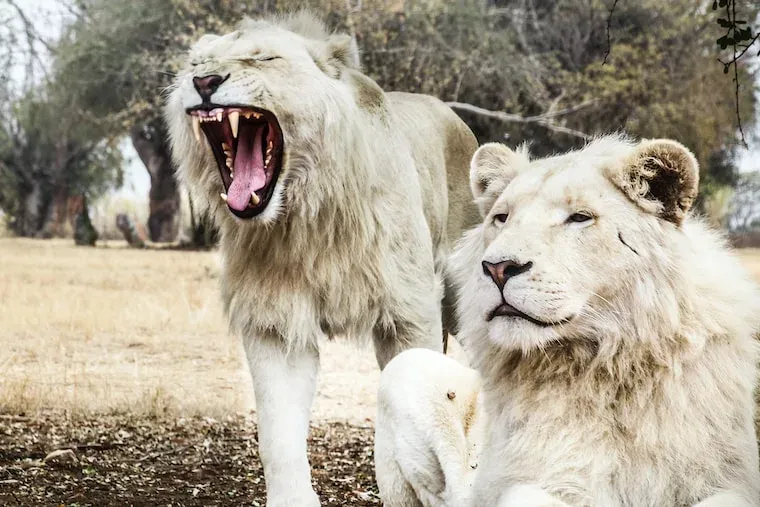
Male lions are larger than females and grow a distinctive mane, which helps protect their necks during fights and signals health and maturity to rivals and potential mates.
Lions are carnivores that do most of their hunting at night or during twilight hours, relying on sharp night vision and hearing to locate prey like antelope, zebra, and buffalo.
Lions can sprint in short bursts at speeds up to about 50 miles per hour, but they can only maintain that pace for a few hundred yards before tiring.
Lions spend up to 20 hours a day resting or sleeping, conserving energy between hunts.
Wild lions typically live 10-14 years, while lions in zoos and sanctuaries can live up to around 20 years thanks to veterinary care and steady food supply.
Lion cubs are born with spotted coats that gradually fade as they mature into adulthood.
Lions are capable swimmers but generally dislike water and avoid it when possible, only crossing rivers or lakes when necessary, unlike tigers, which swim readily.
A lion's roar can be heard from as far as 5 miles away and is used to communicate with the pride and warn off rival lions.
Adult lions are apex predators with no natural predators of their own, though cubs can fall victim to hyenas, leopards, or rival male lions.
Lionesses do the majority of the pride's hunting, often working in coordinated groups, while males more often defend the pride's territory.
Lions are the second-largest big cat species after tigers, with adult males weighing between roughly 330 and 550 pounds.
The African lion is currently classified as Vulnerable by the IUCN, with wild populations estimated at around 20,000 to 25,000 individuals, down sharply over the past few decades due to habitat loss, poaching, and conflict with humans.
The largest lion ever officially recorded was a captive black-maned male named Simba, who weighed about 826 pounds according to Guinness World Records; the largest wild lion on record weighed roughly 690 pounds.
Frequently asked questions
How long do lion cubs stay with their mothers?
Lion cubs typically stay close to their mothers and pride for about two years before becoming more independent.
Are lions endangered?
Lions are classified as Vulnerable by the IUCN, with wild populations declining due to habitat loss, human conflict, and poaching. They are not yet classified as Endangered, but numbers have fallen sharply over the past century.
How do lions communicate with each other?
Lions communicate through vocalizations such as roars, grunts, and moans, as well as body language like tail flicks, ear positions, and scent marking.
What is the difference between a lion and a tiger?
Lions live in social prides and males have manes, while tigers are largely solitary and have no mane. Tigers are generally slightly larger and heavier than lions, and are also much better swimmers.
How do lions hunt?
Lions hunt mostly at night, often in coordinated groups led by lionesses, using stealth and teamwork to target weaker or isolated prey such as antelope, zebra, and buffalo.
What is the largest lion ever recorded?
According to Guinness World Records, the largest lion ever was a captive male named Simba, who weighed about 826 pounds. The largest wild lion on record weighed roughly 690 pounds.
We write every article to be genuinely fun — and genuinely true. Each fact is checked against reputable sources before it goes live. Spotted something off? Tell us and read our fact-check policy.