FFacts On Tap Editorial Team Fact-checkedUpdated July 8, 20243 min read
Share
Giant pandas are among the most recognizable animals on Earth, instantly known for their black-and-white fur and love of bamboo. Native to the mountain forests of central China, these gentle giants have become a global symbol of wildlife conservation.
Here are verified facts about giant pandas, from their curious anatomy to their remarkable comeback from the brink of extinction.
Giant pandas are native to the mountainous bamboo forests of central China, primarily in Sichuan, Shaanxi, and Gansu provinces.
In China, pandas are considered a national treasure and serve as the country's unofficial national animal.
The IUCN reclassified the giant panda's conservation status from 'Endangered' to 'Vulnerable' in 2016, reflecting decades of conservation progress, though the species remains at risk.
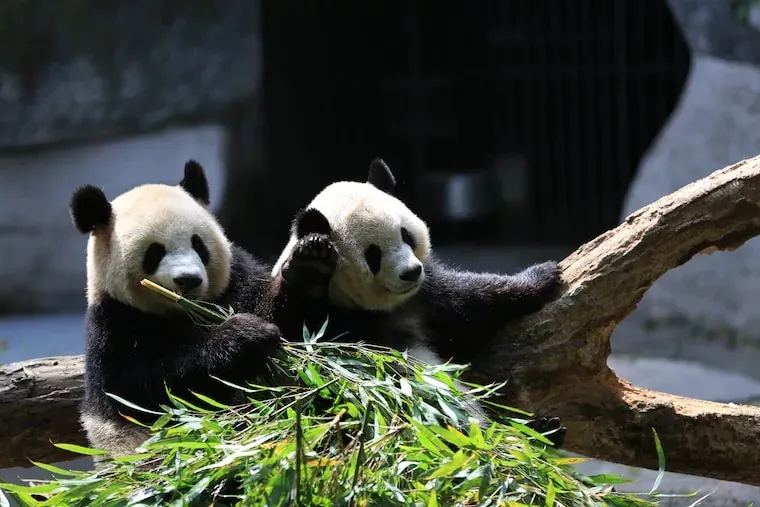
Pandas have distinctive black-and-white markings, including black patches around their eyes; scientists believe these markings may aid in camouflage and communication with other pandas.
A giant panda's diet is almost entirely bamboo, which makes up about 99% of what it eats.
Pandas eat roughly 20 to 40 pounds (9 to 18 kg) of bamboo per day, spending up to 12 hours a day feeding.
Pandas have an enlarged wrist bone, called a 'pseudo-thumb,' that functions like an extra digit to help them grip bamboo stalks while eating.
Despite their bulky build, pandas are skilled climbers and often climb trees to rest or escape danger.
Female pandas typically give birth only once every two to three years, and cubs are born tiny and helpless, weighing about 100 to 200 grams.
Pandas are often photographed sitting upright while eating, using their front paws much like hands.
Pandas have a keen sense of smell, which they rely on more than sight, using scent marks to communicate and establish territory.
Pandas are largely solitary animals, coming together mainly during the breeding season.
Pandas are capable swimmers and will enter water to cool off or travel.
As of the most recent nationwide survey, there are an estimated 1,864 giant pandas living in the wild in China.
Giant panda cubs are born pink and hairless, and their eyes don't open until they are about six to eight weeks old.
Pandas have a digestive system adapted for carnivores, so despite eating mostly bamboo, they absorb only a small fraction of its nutrients and must eat large quantities to get enough energy.
Frequently asked questions
How many pandas are left in the wild?
Based on the most recent national survey, there are an estimated 1,864 giant pandas living in the wild in China.
Are pandas dangerous?
Pandas are generally docile and avoid confrontation, but they are still large wild animals with powerful jaws and can act defensively if they feel threatened or cornered.
Why are pandas considered at risk?
Pandas face ongoing threats from habitat loss and fragmentation, a naturally slow reproductive rate, and their highly specialized bamboo diet, even though their status was upgraded from 'Endangered' to 'Vulnerable' in 2016.
Can you own a panda as a pet?
No. Giant pandas are protected under Chinese law, and all pandas, including those living at zoos abroad, remain the property of China and are managed through official conservation and loan programs.
How long do pandas live?
Wild pandas typically live around 15 to 20 years, while pandas in captivity, with veterinary care and reliable food, can live into their late 20s or 30s.
What is being done to protect pandas?
China has established a large network of nature reserves and corridors connecting panda habitats, alongside anti-poaching enforcement and breeding programs, which together have helped the wild population grow in recent decades.
We write every article to be genuinely fun — and genuinely true. Each fact is checked against reputable sources before it goes live. Spotted something off? Tell us and read our fact-check policy.