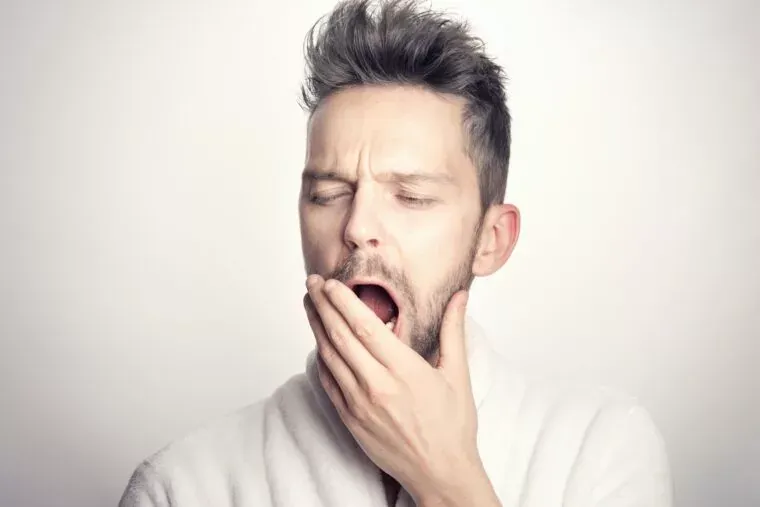
The Science of Yawning: Why Do We Yawn and Is It Contagious?
FFacts On Tap Editorial Team Fact-checkedUpdated May 31, 20263 min read
Share
Everyone yawns — when they're tired, bored, or simply watching someone else do it. Yet scientists still don't fully agree on why this strange, involuntary reflex exists.
Here's what research actually supports about yawning, its possible purposes, and why it seems to spread from person to person.
A yawn is an involuntary reflex involving a deep inhale, a brief hold, and an audible exhale, often paired with stretching.
Yawning occurs across the animal kingdom, including in mammals, birds, reptiles, and even some fish.
One long-standing theory holds that yawning helps regulate brain temperature by drawing in cooler air and increasing blood flow to the brain.
The idea that yawning simply raises blood oxygen or lowers carbon dioxide has been largely discredited by experiments showing people yawn at the same rate breathing pure oxygen as normal air.
Yawning is most common during transitions in arousal state, such as waking up, getting drowsy, or shifting from one activity to another.
Contagious yawning — yawning after seeing, hearing, or even reading about someone else yawning — occurs in humans starting around age four or five.
Researchers have found evidence of contagious yawning in chimpanzees, dogs, wolves, and even budgerigars (a type of parakeet).
A 2013 University of Tokyo study found dogs yawned more often after watching their owner yawn than after watching a stranger yawn, suggesting an emotional bond may play a role.
Whether contagious yawning is linked to empathy is still debated among scientists; some studies support the connection, while others find no clear link between empathy scores and yawn contagion.
Studies on whether women are more susceptible to contagious yawning than men have produced mixed results, with some finding a gender difference and others finding none.
People are more likely to catch a yawn from a close friend or family member than from a stranger, an effect researchers call the 'emotional bias hypothesis'.
Some research suggests people who score higher on psychopathic personality traits are less likely to yawn contagiously.
A developing fetus can yawn in the womb, though researchers are unsure whether this is a true yawn or a related reflex.
Excessive or unusual yawning can occasionally signal an underlying medical issue, such as sleep disorders or the side effects of certain medications — it's worth mentioning to a doctor if it's new or extreme.
A single yawn typically lasts about 6 seconds, and there's usually a short refractory period afterward before another yawn can be triggered.
Reading about yawning or even thinking about yawning can trigger the urge to yawn — this article is a good example.
Frequently asked questions
Why do we yawn when we're tired?
Yawning tends to happen during shifts in alertness, such as getting drowsy, and may help cool the brain and briefly boost arousal, though scientists don't have a single confirmed explanation.
Can we yawn on purpose?
Yes, most people can trigger a yawn voluntarily, even though it's normally an involuntary reflex.
Is yawning always a sign of boredom?
No. Yawning can signal boredom, but it's also linked to fatigue, transitions in activity, and even watching someone else yawn.
Is it rude to yawn in public?
Yawning itself isn't considered rude in most cultures, but covering your mouth is polite etiquette to avoid spreading germs.
Can yawning be a sign of a medical condition?
In rare cases, excessive yawning has been associated with conditions like sleep disorders or as a side effect of certain medications. If yawning becomes frequent or unusual, it's reasonable to check with a doctor.
Do animals catch yawns from humans?
Some animals do. Dogs have been shown in studies to yawn more after watching their owner yawn than after watching a stranger, and similar contagious yawning has been observed in chimpanzees and wolves.
We write every article to be genuinely fun — and genuinely true. Each fact is checked against reputable sources before it goes live. Spotted something off? Tell us and read our fact-check policy.