FFacts On Tap Editorial Team Fact-checkedUpdated July 17, 20233 min read
Share
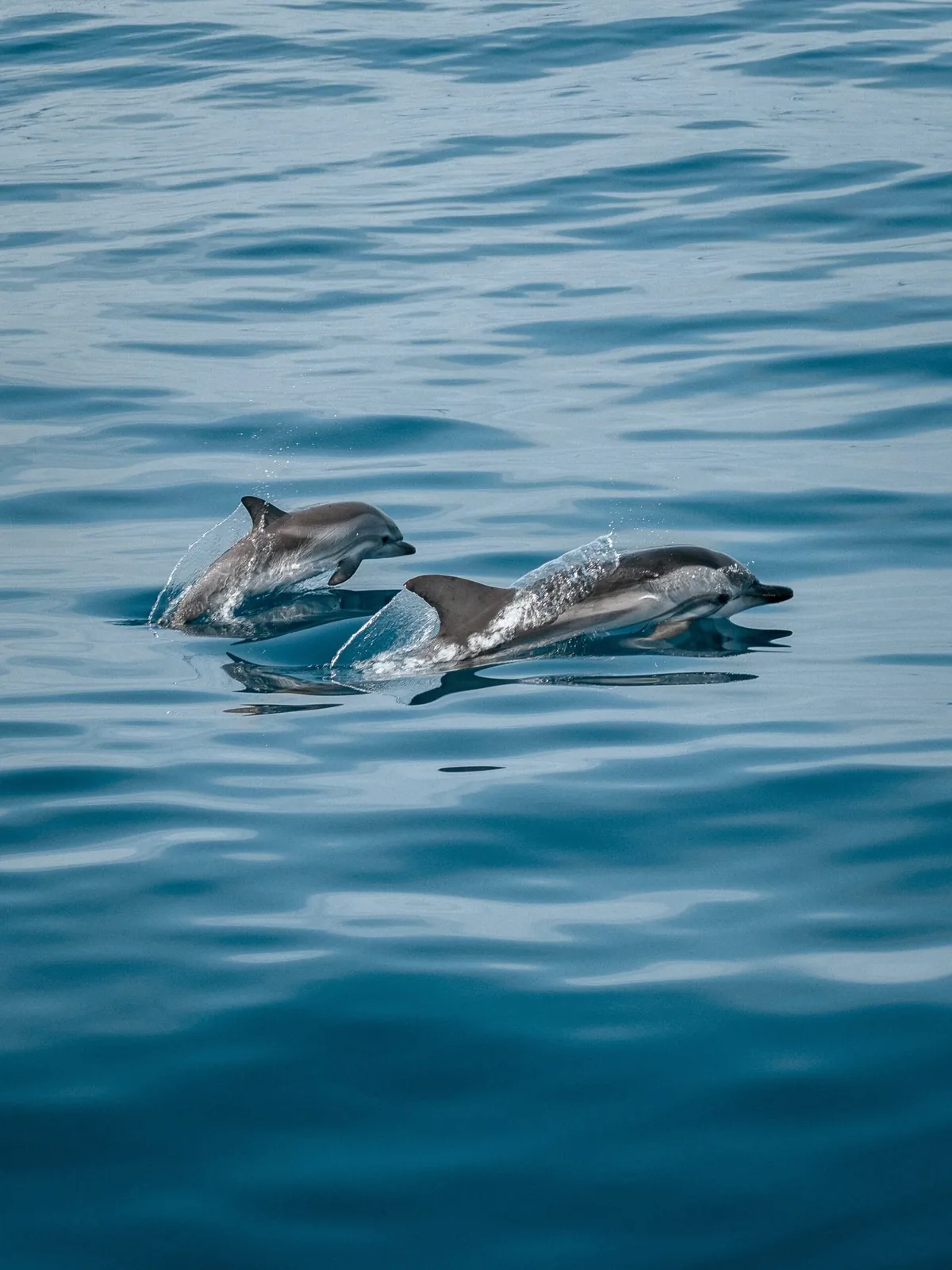
Dolphins have captured our hearts with their playful energy and razor-sharp intelligence, but how much of what you've heard about them is actually true? We dug into the science to bring you facts about dolphins that are both fun and accurate.
From their acrobatic leaps to their surprisingly complex social lives, here's what dolphins are really like.
There are more than 40 species of dolphins in the world, ranging in size from Maui's dolphin at around 4 to 5.5 feet long up to the orca, the largest dolphin species, which can grow over 30 feet.
Dolphins are among the most intelligent animals on Earth, with one of the largest brain-to-body size ratios of any species besides humans.
Dolphins are highly social and live in groups called pods, which can range from a handful of individuals to over 1,000 dolphins in the case of some open-ocean species.
Dolphins communicate using a complex system of clicks, whistles, and body language, and some species use signature whistles that function almost like individual names.
Wild dolphins can leap 15 feet or more out of the water, and trained dolphins in marine parks have been recorded jumping even higher.
Dolphins typically cruise at around 3 to 7 mph but can burst to speeds of 20 mph or more; orcas, the fastest of all dolphins, can reach bursts over 30 mph.
Dolphins are carnivores that mainly eat fish and squid, and some species also eat crustaceans.
Dolphins can hold their breath for several minutes at a time, with some tagged bottlenose dolphins recorded staying submerged for over 10 minutes on a single breath.
Dolphins have good eyesight both above and below water, and they use a fatty organ in their forehead called the melon to focus sound for echolocation.
Dolphins are mammals, not fish - they breathe air through a blowhole and nurse their young with milk.
The bottlenose dolphin is the best-known and most-studied dolphin species, found in warm and temperate oceans around the world.
Dolphins are naturally curious and have been known to approach boats and swimmers to investigate them.
There are scattered reports over the years of dolphins helping distressed swimmers, though scientists caution these accounts are largely anecdotal rather than proven behavior patterns.
Dolphins have long been trained to perform in marine park shows, a practice that remains controversial among animal welfare experts because of the species' intelligence and complex social needs.
Dolphins sleep by resting one half of their brain at a time while keeping the other half alert, a behavior known as unihemispheric sleep that lets them keep breathing and stay aware of predators.
Bottlenose dolphins have passed the mirror self-recognition test, a result researchers consider evidence of self-awareness.
Killer whales, or orcas, are technically the largest member of the dolphin family, not whales.
Frequently asked questions
What is the lifespan of a dolphin?
It varies widely by species. Smaller dolphins may live around 20 to 30 years in the wild, while bottlenose dolphins commonly live 40 to 50 years, with some females living even longer.
Do dolphins have any natural predators?
Yes. Large sharks and, in some regions, killer whales (orcas) prey on dolphins, though healthy adult dolphins in pods are rarely targeted.
How do dolphins sleep?
Dolphins rest one hemisphere of their brain at a time while the other stays alert, a pattern called unihemispheric slow-wave sleep. This lets them keep swimming, surfacing for air, and watching for threats even while resting.
Can dolphins recognize themselves in a mirror?
Yes. Bottlenose dolphins have demonstrated mirror self-recognition in studies, a trait shared with only a handful of other species and considered a sign of self-awareness.
Are there any endangered species of dolphins?
Yes. Maui's dolphin is critically endangered with only a small population left off New Zealand, the Ganges river dolphin is endangered, and the Amazon river dolphin (boto) is considered endangered as well, mainly due to habitat loss, pollution, and fishing bycatch.
What is the difference between a dolphin and a porpoise?
Dolphins and porpoises are related but distinct. Dolphins generally have longer beak-like snouts, curved dorsal fins, and cone-shaped teeth, while porpoises have shorter snouts, triangular dorsal fins, and spade-shaped teeth.
We write every article to be genuinely fun — and genuinely true. Each fact is checked against reputable sources before it goes live. Spotted something off? Tell us and read our fact-check policy.