FFacts On Tap Editorial Team Fact-checkedUpdated June 20, 20234 min read
Share
Emus are Australia's tallest native bird and the second-largest bird in the world by height, after the ostrich. Flightless but fast, these shaggy-feathered ratites can be found roaming nearly every corner of the continent, from coastal scrub to arid outback.
Here are 20 verified facts about emus, covering their biology, behavior, and unusual place in Australian culture.
Emus are the second-largest living bird by height, after the ostrich, and are native to Australia.
Emus and ostriches are both flightless ratites, but they belong to different bird families — emus to Casuariidae (shared with cassowaries) or the separate family Dromaiidae under newer classifications, and ostriches to Struthionidae.
Emus have three toes on each foot, with sharp claws they can use for defense or digging for food.
Their small, vestigial wings aren't used for flight; instead they help with balance while running and cooling.
Emus can run at speeds up to about 30 miles per hour (48 km/h), making them one of the fastest birds on land.
A long, flexible neck helps emus reach leaves, seeds, and fruit on shrubs and low branches.
Adult emus stand up to about 6.2 feet (1.9 m) tall and typically weigh between 40 and 130 pounds (18 to 60 kg).
Emus generally live around 10 to 20 years in the wild, and can live up to 35 years in captivity.
Emus are omnivores, eating plants, seeds, fruit, insects, and occasionally small vertebrates.
Their digestive system is adapted to break down tough plant fiber and extract nutrients efficiently.
Emus are usually nomadic and solitary or loosely social, though they sometimes gather in loose groups (sometimes called "mobs") near food or water.
Only female emus produce the deep, resonant booming and drumming calls, using an inflatable throat pouch — a sound that can carry roughly 1 to 2 kilometers.
Male emus make lower grunting sounds, especially while courting females during breeding season.
A female emu typically lays a clutch of 5 to 15 large, dark green eggs, then leaves the male to do all the incubating.
Male emus incubate the eggs for about 8 weeks without eating, drinking, or defecating, losing a third of their body weight in the process.
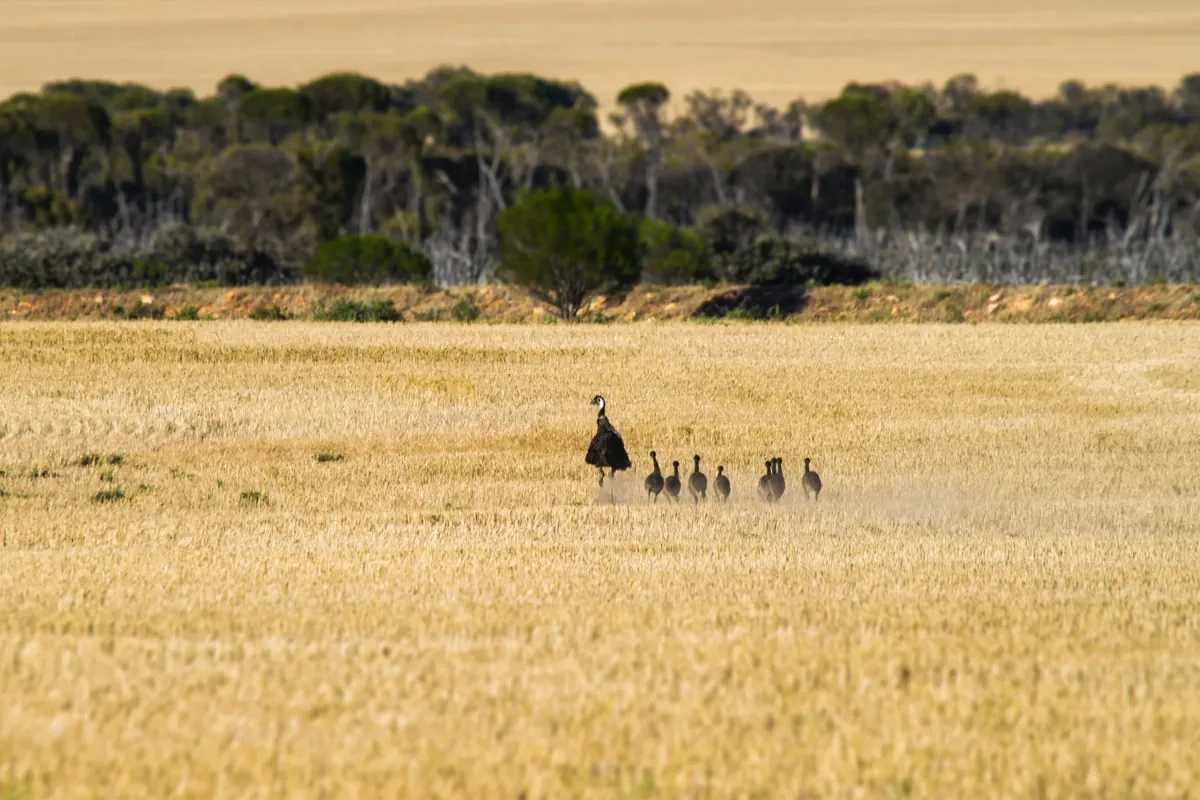
After hatching, males are the primary caregivers, protecting and raising the striped chicks.
Emu chicks hatch with brown and cream stripes that help camouflage them in grass and scrub.
Chicks typically stay close to their father for several months, with some remaining with him for up to a year and a half before becoming independent.
Emus have excellent eyesight and can spot movement at long distances, an advantage for detecting predators on the open plains.
By eating fruit and dispersing seeds across long distances, emus play an important role in maintaining plant diversity in the Australian outback.
Emus are farmed commercially for their lean, low-fat meat and for emu oil, which is used in some skincare and moisturizing products.
In Aboriginal Australian culture, the emu holds spiritual significance and appears in Dreamtime stories, rock art, and the night-sky "Emu in the Sky" constellation formed from dark dust clouds in the Milky Way.
Emus are capable swimmers and will cross rivers or lakes when needed, though they spend most of their time on land.
Emus have been introduced and farmed outside Australia, including in the United States, primarily for meat and oil production.
Frequently asked questions
Are emus dangerous?
Emus are not typically dangerous to humans, but they can kick or scratch with their sharp claws if they feel threatened or cornered.
Can emus fly?
No, emus cannot fly. Their wings are small and vestigial, used mainly for balance while running rather than flight.
What is the difference between a male and female emu?
Male and female emus look nearly identical, but males are solely responsible for incubating eggs and raising chicks, while females make the deep booming call and may mate with multiple males in a season.
How long do emus live?
Emus generally live 10 to 20 years in the wild and can live up to about 35 years in captivity.
What is emu oil used for?
Emu oil, rendered from fat beneath the skin, is used in some cosmetic and skincare products for its moisturizing properties, though scientific evidence for many health claims is limited.
Can you keep emus as pets?
In some places emus can be kept with the right permits, but they need substantial outdoor space and specialized care, so local regulations should always be checked first.
We write every article to be genuinely fun — and genuinely true. Each fact is checked against reputable sources before it goes live. Spotted something off? Tell us and read our fact-check policy.