FFacts On Tap Editorial Team Fact-checkedUpdated June 5, 20233 min read
Share
Finches are small, often brilliantly colored songbirds beloved by backyard birdwatchers and scientists alike. The core "true finch" family, Fringillidae, includes more than 200 species worldwide, prized for their cheerful songs and specialized seed-cracking beaks.
From the birds that helped inspire Charles Darwin's theory of evolution to the common house finch at your feeder, here are the real facts behind these colorful little birds.
Finches are found on every continent except Antarctica.
There are many well-known finch species, including the zebra finch, Gouldian finch, and common chaffinch.
The lesser goldfinch, found across the Americas, is considered the smallest true finch, measuring only about 3.5 to 4.7 inches (9 to 12 cm) long.
The hawfinch is the largest true finch, growing to about 7 inches (18 cm) long, with a powerful bill strong enough to crack cherry and olive stones.
Finches are known for their varied and often beautiful songs, which differ widely from species to species.
Some finch species, including the canary and the zebra finch, are popular pet birds.
Many finch species have distinctive, cone-shaped beaks adapted for cracking open seeds of different sizes.
The finches of the Galapagos Islands, often called Darwin's finches, played a key role in inspiring Charles Darwin's theory of evolution by natural selection.
Some finch species are threatened or endangered due to habitat loss and other pressures.
Finches such as canaries can live up to 10 years or more in captivity.
In many finch species, males are more brightly colored than females, a pattern known as sexual dimorphism.
Finches are highly social birds and often gather and forage in flocks.
Many finch species form monogamous pairs during breeding season, and some, like zebra finches, are known to form lifelong pair bonds.
Some finch species are known to hybridize with closely related species in the wild and in captivity.
The European goldfinch has a slender beak specially suited for extracting seeds from thistles and teasels.
The purple finch is known for its warbling song and the males' raspberry-red plumage.
The pine siskin is a small, nomadic finch that travels and feeds in large flocks.
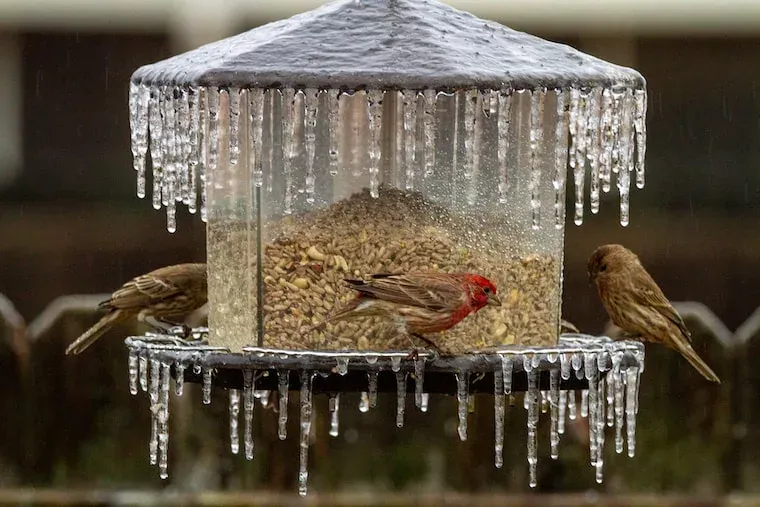
The house finch is one of the most common backyard birds across North America.
The scarlet finch is a brilliantly colored species native to the Himalayas and parts of Southeast Asia, not South America.
The crossbill has a distinctive crossed bill uniquely shaped to pry open pine cones and extract the seeds inside.
Frequently asked questions
What do finches eat?
Finches primarily eat seeds, but many species also eat fruits, buds, and insects, especially when feeding their young. Their beak shape often reveals what foods they specialize in.
How long do finches live?
Lifespans vary by species, but many finches, such as canaries, can live 10 years or more in captivity. Wild finches typically have shorter lifespans due to predation and environmental hazards.
Are finches endangered?
Most finch species are not endangered, but some, particularly island species and certain Galapagos finches, are threatened due to habitat loss, introduced predators, and disease.
Do finches make good pets?
Yes, species like the canary and zebra finch are popular, low-maintenance pet birds known for their songs and social nature.
What is the smallest finch species?
The lesser goldfinch, native to the Americas, is generally considered the smallest true finch, measuring roughly 3.5 to 4.7 inches long.
What is the largest finch species?
The hawfinch, found across Europe and Asia, is the largest true finch, reaching about 7 inches long with an unusually powerful, thick bill.
We write every article to be genuinely fun — and genuinely true. Each fact is checked against reputable sources before it goes live. Spotted something off? Tell us and read our fact-check policy.