FFacts On Tap Editorial Team Fact-checkedUpdated June 29, 20233 min read
Share
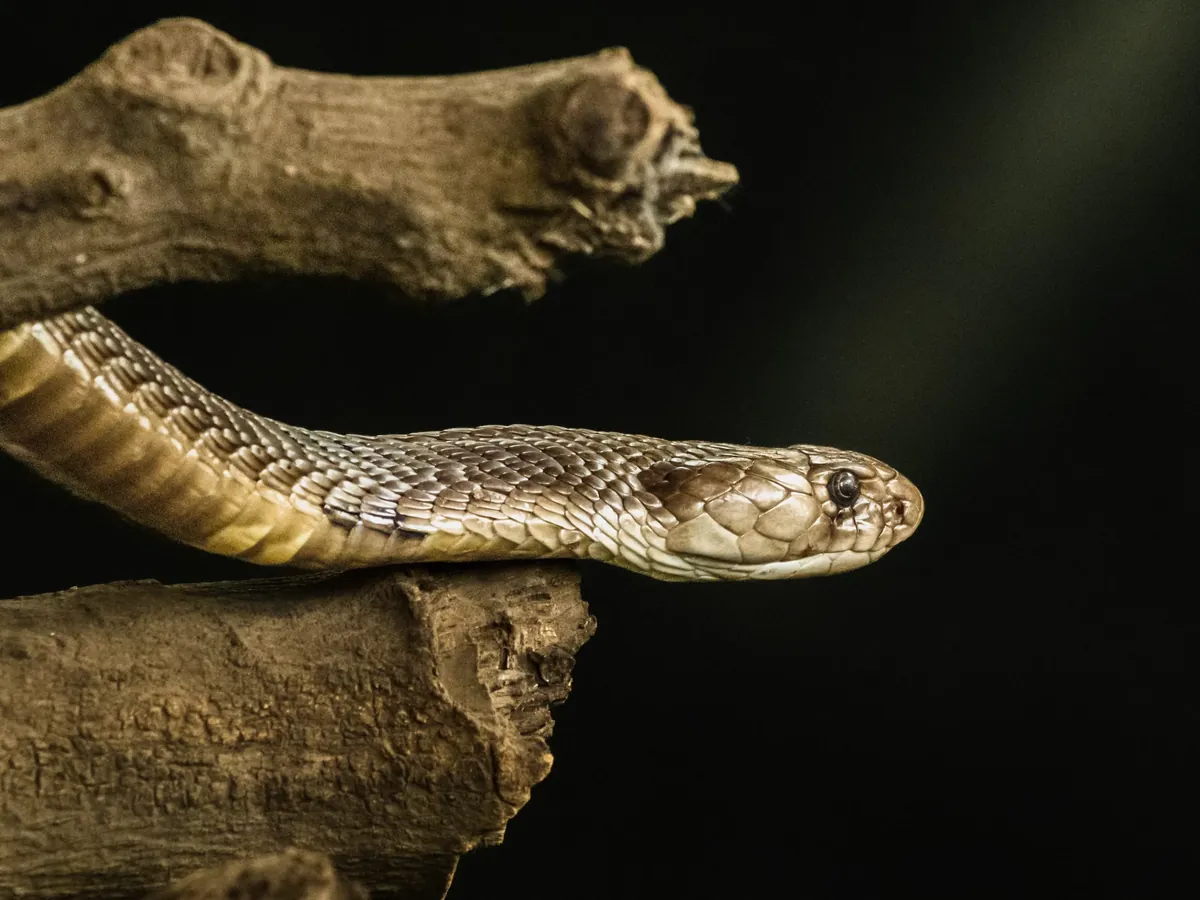
Few snakes capture the imagination like cobras. With their trademark raised hoods and potent venom, they've been feared, worshipped, and misunderstood for thousands of years.
Here are 20 verified facts about cobras, covering their biology, behavior, and the real story behind some of the myths that surround them.
Cobras are venomous snakes belonging to the family Elapidae, the same family as mambas, coral snakes, and sea snakes.
The term "cobra" mainly refers to the true cobras of the genus Naja, which includes roughly 30 recognized species found across Africa and Asia; related hooded elapids like the king cobra and rinkhals are also commonly called cobras.
The king cobra is the world's longest venomous snake, capable of reaching about 18 feet in length.
Cobras live in a wide range of habitats, from forests and grasslands to deserts, farmland, and wetlands.
Many cobras are capable swimmers and can hold their breath for several minutes while moving through water.
Cobras raise their iconic hoods to appear larger and more intimidating when threatened, rather than to attack prey.
A cobra's hood is formed by elongated ribs and muscles that spread the skin behind the neck outward.
Cobras are carnivorous, feeding mainly on rodents, birds, eggs, and other snakes; the king cobra specializes almost exclusively in eating other snakes.
Cobras rely on keen eyesight to detect movement, which sets them apart from many snake species that hunt mainly by scent and heat-sensing.
Like other snakes, cobras can sense vibrations through the ground, helping them detect approaching predators or prey.
Cobras can live up to 20 years in the wild and sometimes longer in captivity.
Cobras are largely solitary and typically only seek each other out during the mating season.
Female cobras lay clutches of roughly 10 to 40 eggs, depending on the species, and some, like the king cobra, build nests to guard them.
Baby cobras hatch fully venomous and are capable of delivering dangerous bites from birth.
Cobra venom is primarily neurotoxic, attacking the nervous system and causing paralysis that can lead to respiratory failure if untreated.
A serious cobra bite can be fatal to humans within hours without prompt antivenom treatment.
Cobras hold deep cultural and religious significance in many parts of Asia, particularly in India, where they are associated with Hindu deities such as Shiva.
Cobra venom has long been used in traditional folk medicine, though there is no solid scientific evidence supporting most of these historical medicinal claims.
Several cobra species are threatened by habitat loss and are hunted for their skin and venom, putting pressure on wild populations.
Compounds derived from cobra venom, including from the Indian cobra, are being researched by scientists for potential use in pain-relief medications.
Frequently asked questions
Are cobras aggressive?
No, cobras are generally not aggressive and prefer to avoid confrontation. They typically only strike when they feel cornered, threatened, or provoked.
Can cobras be kept as pets?
In some places it's legal with the right permits, but cobras require specialized, secure enclosures and expert handling, so they are not recommended for inexperienced snake owners.
Are all cobras venomous?
Yes, all true cobras produce venom, and some species can also spit venom at threats from a distance as a defense mechanism.
How can you tell if a snake is a cobra?
Cobras are best recognized by the hood they flare when threatened, formed by spreading their neck ribs, combined with a raised upper body posture.
What should you do if you encounter a cobra?
Stay calm, keep your distance, and slowly back away without sudden movements. If bitten, seek emergency medical treatment immediately, since prompt antivenom is critical.
Can a king cobra really kill an elephant?
It's more myth than routine reality: a king cobra's venom is potent and voluminous enough to potentially kill an elephant over several hours, but king cobras actively avoid large animals and this scenario is exceptionally rare in practice.
We write every article to be genuinely fun — and genuinely true. Each fact is checked against reputable sources before it goes live. Spotted something off? Tell us and read our fact-check policy.