FFacts On Tap Editorial Team Fact-checkedUpdated August 15, 20234 min read
Share
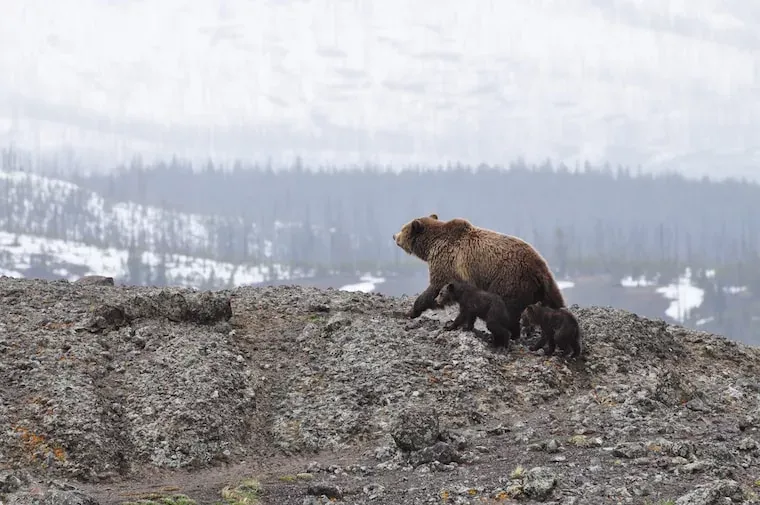
Brown bears are among the largest and most powerful land predators on Earth, ranging across North America, Europe, and Asia. Best known in the U.S. through the grizzly bear, a North American subspecies, they combine raw strength with surprising agility as swimmers, climbers, and fishers.
Here are the real facts behind the myths, from how far they can actually smell to why they aren't true hibernators.
The grizzly bear is a subspecies of brown bear found in North America; not all brown bears are grizzlies.
Brown bears are found across North America, Europe, and Asia, making them one of the most widely distributed bear species.
Brown bears are omnivores, eating berries, roots, nuts, fish, insects, and other animals depending on what's available.
Coastal brown bears, such as Kodiak bears, can weigh up to 1,500 pounds, while inland grizzlies typically weigh 200 to 700 pounds.
Brown bears can run up to 30 miles per hour in short bursts, fast enough to outpace a racehorse over a short distance.
They are strong swimmers and capable climbers, especially as cubs, though adult grizzlies climb less often than black bears.
A brown bear's sense of smell is roughly 2,100 times more sensitive than a human's, letting them detect food from several miles away, with some estimates as high as 20 miles under ideal wind conditions.
Brown bears enter a den and hibernate for roughly 5 to 7 months during winter to conserve energy when food is scarce.
Brown bears typically live 20 to 25 years in the wild, though some individuals live longer.
Mother bears are fiercely protective of their cubs and will defend them aggressively against perceived threats.
Brown bears have a distinctive muscular hump on their shoulders that powers their front legs for digging and swiping.
Their fur color varies widely, from light blond to dark brown or nearly black.
Brown bears are not typically aggressive toward humans but can become dangerous if surprised, threatened, or protecting cubs or food.
They are largely solitary animals, except for mothers with cubs or when bears gather at abundant food sources like salmon runs.
As opportunistic omnivores and occasional predators, brown bears help regulate populations of prey species and disperse seeds through their diet.
During hibernation, a brown bear's heart rate can drop from around 40-50 beats per minute to as low as 8-19 beats per minute.
Brown bears are considered 'super hibernators' with an unusual adaptation: unlike small hibernating mammals, their body temperature drops only a few degrees rather than near-freezing.
Brown bears have excellent hearing, generally believed to be more sensitive than a human's, though exact range estimates vary.
They are skilled fishers, often standing in rivers to catch salmon as the fish swim upstream to spawn.
Brown bears possess immense physical strength, capable of flipping heavy boulders and moving large fallen logs while foraging.
Brown bears have been documented killing wolves in territorial or food-related conflicts, though wolves are not a primary threat to adult bears.
Frequently asked questions
What should you do if you encounter a brown bear in the wild?
Stay calm, avoid direct eye contact, and back away slowly without running. Running can trigger a chase response, so give the bear space and speak in a low, calm voice as you retreat.
Are brown bears dangerous to humans?
Brown bears are not typically aggressive toward humans, but they can become dangerous if surprised, cornered, or protecting cubs or a food source. Giving them plenty of space greatly reduces risk.
How do brown bears catch fish?
Brown bears often wait in shallow rivers during salmon runs and use quick paw swipes or their jaws to catch fish swimming upstream to spawn.
How long do brown bears hibernate for?
Brown bears typically hibernate for about 5 to 7 months, denning in late fall and emerging in spring, though the exact duration depends on climate and food availability.
What is the lifespan of a brown bear?
Brown bears typically live 20 to 25 years in the wild, with some individuals living longer in areas with abundant food and low human conflict.
What is the difference between a brown bear and a grizzly bear?
Grizzly bears are a subspecies of brown bear found in interior North America. All grizzlies are brown bears, but not all brown bears are grizzlies, and coastal brown bears like Kodiak bears are typically much larger.
We write every article to be genuinely fun — and genuinely true. Each fact is checked against reputable sources before it goes live. Spotted something off? Tell us and read our fact-check policy.