FFacts On Tap Editorial Team Fact-checkedUpdated September 5, 20233 min read
Share
Spiders can make anyone feel a little uneasy, but these eight-legged creatures are among the most fascinating animals on Earth. From silk strong enough to inspire body armor to species that have barely changed in hundreds of millions of years, spiders have a lot more going on than their creepy reputation suggests.
Here are some fact-checked facts about spiders that might just make you appreciate them a bit more.
Spiders range enormously in size, from species just a few millimeters long to the giant huntsman spider, whose leg span can reach about 30 centimeters (roughly 12 inches) — the largest of any known spider.
There are more than 50,000 described species of spiders known to science, and they live on every continent except Antarctica.
Spiders are arachnids, not insects. Like all arachnids, they have two main body sections (a cephalothorax and an abdomen) and eight legs, and they're related to scorpions, ticks, and mites.
Spiders are ancient: fossils of true, silk-producing spiders date back at least 300 million years, and spider-like ancestors go back even further.
Nearly all spiders are predators, feeding mainly on insects and other small invertebrates. Most use venom to subdue prey and begin breaking it down before eating it.
Only a small fraction of spider species have venom that's medically significant to humans; the vast majority are harmless to people and help keep insect populations in check.
Spiders produce silk from specialized glands, and they use it for far more than webs — including egg sacs, draglines, and wrapping prey. Ounce for ounce, some spider silk is stronger than steel, which is why researchers have studied it for use in body armor and other materials.
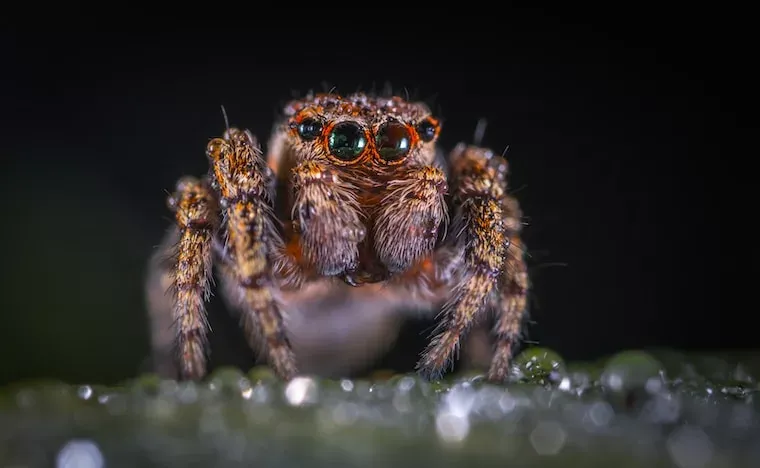
Not all spiders spin webs to catch prey — many species, like wolf spiders and jumping spiders, are active hunters that stalk or ambush their food instead.
Male spiders of many species perform elaborate courtship displays to attract females, including leg-waving dances, vibration signals, and offering silk-wrapped gifts of food.
Some spiders, including certain crab spiders, can gradually change color to blend in with flowers or other surroundings and avoid predators.
Some young spiders disperse by "ballooning" — releasing a strand of silk that catches the wind and carries them, sometimes for long distances, to new habitats.
Despite their reputation, spiders are ecologically valuable. By preying on insects, they help control pest populations in gardens, farms, and forests around the world.
Spiders don't have ears. Instead, many detect sound and vibrations through tiny sensory hairs and slit organs on their legs and body.
Most spiders have eight eyes, though eye number and arrangement vary by family, and eyesight ranges from nearly blind (in web-builders that rely on vibration) to sharp, image-forming vision in jumping spiders.
Frequently asked questions
Are all spiders venomous?
Nearly all spiders produce venom to subdue prey, but only a small percentage of species have venom potent enough to seriously harm humans. Most spider bites cause no more than mild, temporary irritation.
Can spiders fly?
No, spiders can't fly, but many young spiders disperse through the air by "ballooning" — releasing silk threads that catch the wind and carry them to new locations.
Do spiders have ears?
No. Spiders lack ears and instead sense sound and vibrations through specialized hairs and slit organs on their legs and body.
Do spiders eat their mates?
It happens in some species, most famously certain widow spiders, but it's far from universal. In most spider species the male simply leaves after mating, and the female cares for the eggs alone.
What should I do if I find a spider in my house?
Most house spiders are harmless and help control other insects. The simplest options are to leave it alone or gently capture it and release it outside.
We write every article to be genuinely fun — and genuinely true. Each fact is checked against reputable sources before it goes live. Spotted something off? Tell us and read our fact-check policy.