FFacts On Tap Editorial Team Fact-checkedUpdated June 4, 20233 min read
Share
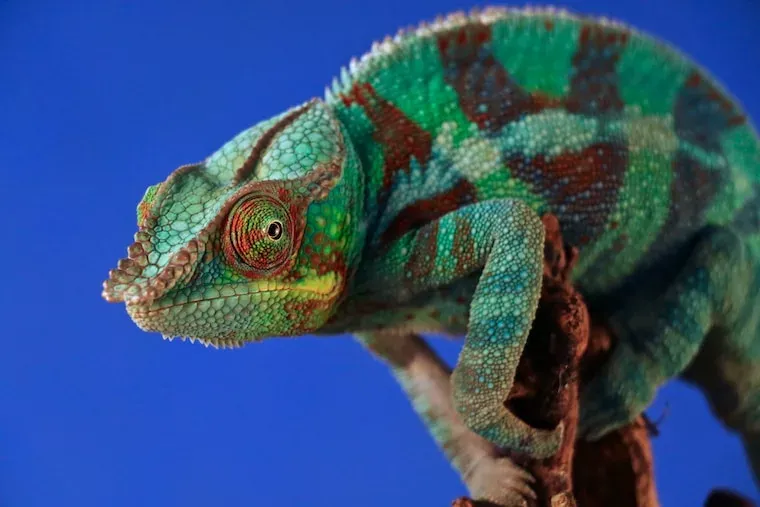
Chameleons are some of the most extraordinary reptiles on Earth, famous for their color-shifting skin, independently swiveling eyes, and lightning-fast tongues. But there's far more to these lizards than camouflage.
From how they actually change color to why most of them can never regrow a lost tail, here are verified facts about chameleons.
There are more than 200 recognized species of chameleon, with new ones still being described by scientists.
Chameleons are native to Africa and Madagascar, with a few species also found in southern Europe and parts of Asia.
Madagascar alone is home to roughly a third of all chameleon species, making it a global hotspot for chameleon diversity.
Chameleons range enormously in size, from tiny Brookesia species under an inch long to the Malagasy giant chameleon, which can reach about 27 inches (68.5 cm) including its tail.
Chameleons have long, sticky-tipped tongues that they can launch faster than a blink to catch insects.
Their feet are specially adapted with fused, opposing toes that act like tongs, giving them a powerful grip for climbing branches.
Chameleons can move each eye independently of the other, giving them a huge, nearly panoramic field of view to spot predators and prey at the same time.
Chameleons change color for several reasons, including communication, mood, temperature regulation, and camouflage - not just to match their surroundings.
Their skin contains layers of specialized cells, including pigment cells and light-reflecting nanocrystals that shift how light bounces off their skin.
Some species can change color within seconds, while others shift much more gradually.
Baby chameleons hatch already able to change color, though their color-shifting abilities become more refined as they mature.
Male chameleons are often larger and more vividly colored than females in many species.
Most chameleon species are solitary and territorial, generally avoiding other chameleons outside of mating season.
Chameleons communicate largely through body language, posturing, and color changes rather than vocalizations.
Many chameleon species can see into the ultraviolet range, which may help them detect prey and read UV-reflective skin patterns on other chameleons.
Some species, like Jackson's chameleon, have long, curved horns on their heads used mainly by males in territorial disputes.
Chameleons often drink by licking water droplets off leaves rather than from standing water.
Unlike many lizards, most chameleon species cannot regrow a lost tail - losing it is usually permanent, since their tails lack the fracture points other lizards use to detach and regenerate.
A few species, including panther and Jackson's chameleons, have limited tail-regrowth ability, but only if the loss happens early in life.
Many chameleon species are threatened by habitat loss, and some are also affected by overcollection for the pet trade.
Chameleon eyes can rotate independently to scan almost 360 degrees around their body without moving their head.
Frequently asked questions
Can chameleons change color to match any background?
No. Chameleons change color mainly to communicate mood and intentions, regulate body temperature, and blend in to some degree, but they cannot mimic every color and pattern they see.
How do chameleons change color?
They change color by adjusting the spacing of nanocrystals and pigment-containing cells in their skin, which alters how light reflects off it.
Are all chameleons able to change color?
Yes, all chameleon species can change color to some extent, though the range and speed of color change varies widely between species.
Do chameleons make good pets?
Chameleons have specific needs for humidity, temperature, and diet, so they are generally recommended only for experienced reptile keepers rather than beginners.
What do chameleons eat?
Most chameleons are insectivores that eat crickets, flies, and other insects, though some larger species will occasionally eat small vertebrates or plant matter.
Can chameleons regrow their tails?
Most chameleon species cannot regrow a lost tail, since it usually breaks off unevenly and lacks the fracture points that let other lizards regenerate theirs. A few species have limited regrowth ability early in life.
We write every article to be genuinely fun — and genuinely true. Each fact is checked against reputable sources before it goes live. Spotted something off? Tell us and read our fact-check policy.