FFacts On Tap Editorial Team Fact-checkedUpdated January 19, 20263 min read
Share
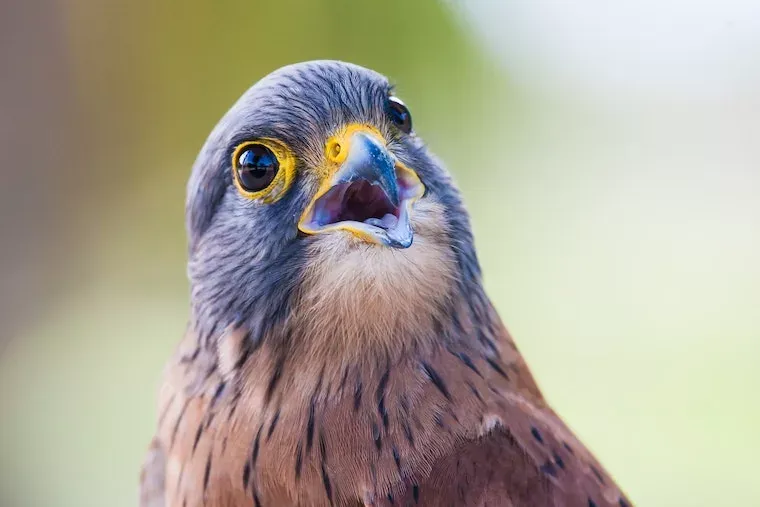
Falcons are birds of prey famous for their speed, sharp eyesight, and precision hunting. Found on every continent except Antarctica, this family includes the fastest animal on Earth alongside species barely bigger than a sparrow.
Here are the real facts behind these remarkable raptors, fact-checked and cleaned up.
Falcons belong to the family Falconidae, which includes roughly 60 to 65 species worldwide, including true falcons, falconets, and caracaras.
The peregrine falcon is the fastest animal on Earth, reaching speeds of up to 240 mph (and briefly recorded even faster) during its hunting dive, known as a stoop.
Falcons have exceptionally sharp eyesight, letting them spot small prey from great distances while flying high overhead.
Falcons use sharp, hooked beaks and strong talons to catch and kill prey.
Falcons are found on every continent except Antarctica.
The world's smallest falcon species is the black-thighed falconet of Southeast Asia, which is only about 6 inches long and roughly the size of a sparrow.
In North America, the smallest falcon is the American kestrel, a colorful raptor about the size of a mourning dove.
Falcons can live up to 15 years in the wild, and some captive individuals have lived into their 20s.
The gyrfalcon, the largest falcon species, lives in Arctic tundra and coastal regions and is well adapted to extreme cold.
Falcons hunt using a technique called "stooping," a high-speed controlled dive used to strike flying prey in midair.
The peregrine falcon nearly vanished from much of North America in the mid-20th century due to the pesticide DDT, which thinned its eggshells; after DDT was banned in 1972, populations recovered enough for the species to be removed from the U.S. endangered species list in 1999.
Falconry, the practice of hunting with trained birds of prey, has been practiced for thousands of years and is recognized by UNESCO as an Intangible Cultural Heritage tradition.
The gyrfalcon is the largest falcon species, with a wingspan that can reach around 4 to 5 feet.
Falcons are generally monogamous and often form long-term pair bonds, frequently reusing the same nesting site year after year.
In most falcon species, females are noticeably larger than males, a trait called reverse sexual size dimorphism.
Because falcons sit near the top of the food chain, their presence and breeding success are often used by scientists as an indicator of a healthy ecosystem.
Trained falcons are sometimes used at airports, farms, and city buildings to scare off pest birds like pigeons and gulls.
Falcons have appeared as symbols of speed, power, and status in art and mythology across many cultures, notably ancient Egypt, where the god Horus was depicted with a falcon's head.
Falcons have a protective third eyelid called the nictitating membrane, which sweeps across the eye to shield it from dust, wind, and impact during high-speed dives.
Some falcons, including the American kestrel, can hover almost motionless in midair while scanning the ground for prey.
Falcons are carnivores that primarily eat small birds, rodents, and other small animals, with diet varying by species and habitat.
As predators, falcons help control populations of rodents and other prey species, contributing to the balance of their ecosystems.
Frequently asked questions
How do falcons hunt?
Falcons rely on speed, sharp eyesight, and a hunting dive called a stoop, plunging from height to strike birds or small mammals in midair or on the ground.
What is the fastest falcon?
The peregrine falcon is the fastest, reaching around 240 mph during its hunting dive, making it the fastest animal on Earth.
Where do falcons live?
Falcons live on every continent except Antarctica, ranging from Arctic tundra to deserts and cities.
What do falcons eat?
Falcons are carnivores that mainly eat small birds and rodents, though larger species will also take other small animals.
How long do falcons live?
Wild falcons typically live up to about 15 years, while some captive falcons have lived into their 20s.
Can falcons be trained?
Yes. Falconry, the practice of training falcons and other birds of prey for hunting, dates back thousands of years and is still practiced today.
We write every article to be genuinely fun — and genuinely true. Each fact is checked against reputable sources before it goes live. Spotted something off? Tell us and read our fact-check policy.