FFacts On Tap Editorial Team Fact-checkedUpdated June 8, 20233 min read
Share
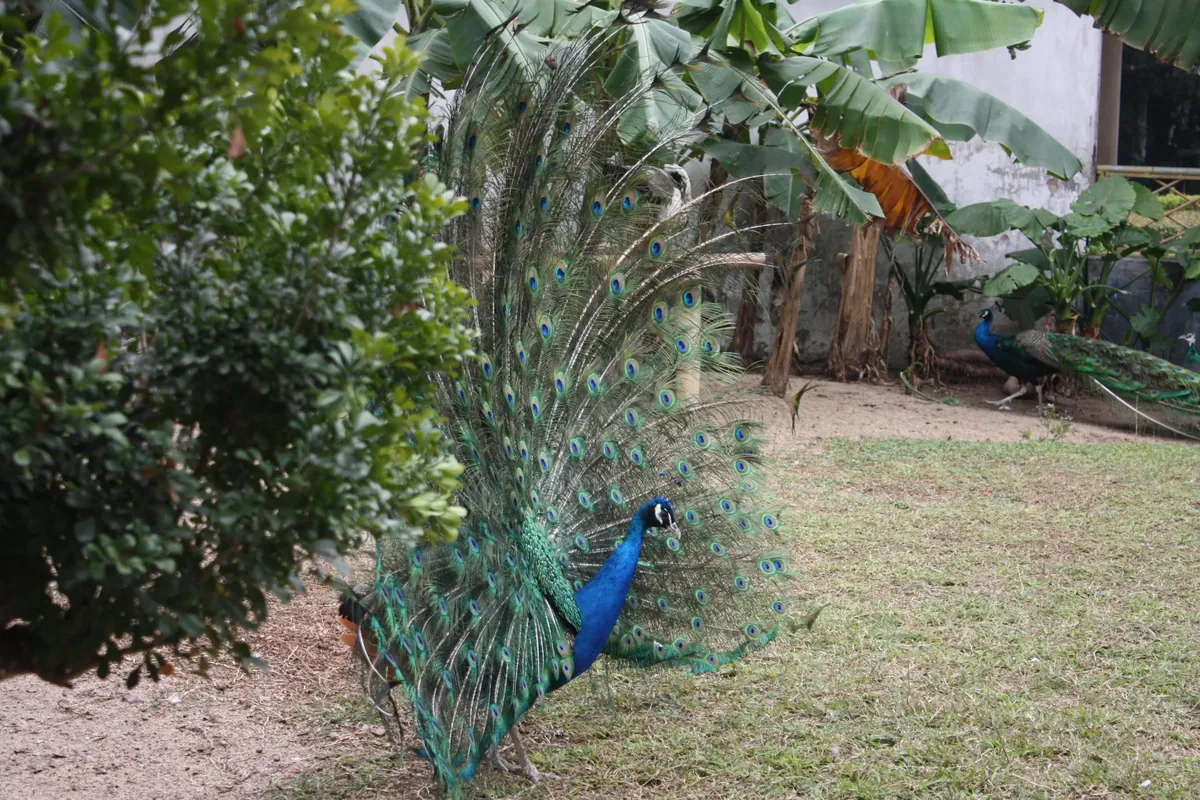
Peacocks are famous for one of the animal kingdom's most spectacular displays: a shimmering, eye-spotted train that can stretch nearly five feet long. Native to South Asia, these birds now live in zoos, parks, and gardens worldwide.
Here are fact-checked facts about peacocks, peahens, and the peafowl family they belong to.
"Peacock" technically refers only to the male bird; females are called peahens, and together they're known as peafowl.
The Indian Peafowl (Pavo cristatus) is the national bird of India.
Peafowl are omnivores, eating insects, plants, seeds, fruit, and small creatures such as lizards and amphibians.
A peacock's train feathers aren't blue or green pigment at all — microscopic structures in the feathers bend light to create their iridescent color.
Peacocks fan out and shake their train in a courtship display called "train-rattling" to attract peahens.
Despite their heavy train, peafowl can fly — usually in short bursts to escape predators or reach a roosting branch.
In captivity, peafowl typically live 15 to 20 years, and sometimes longer with good care.
A male peacock's train can grow to about 5 feet (1.5 meters) long, making up roughly 60% of his total body length.
A group of peafowl is called a "party" (sometimes an "ostentation" when the group includes displaying males).
Peacocks are known for their loud, far-carrying calls, which can be heard up to a mile away in open terrain.
Peafowl have historically been raised for meat and eggs in parts of Asia and elsewhere, though today they're kept mostly for ornamental and cultural reasons.
The peacock is a long-standing symbol of beauty, prosperity, and royalty across cultures — it's linked to the Hindu deities Saraswati and Kartikeya and to the Greek goddess Hera.
Peafowl are often kept in parks and estates for their striking appearance, though they can be loud and territorial, especially during breeding season.
Peacocks can see ultraviolet light, which humans cannot — their eyespot feathers even reflect UV, adding a layer of color peahens can see that we can't.
Peafowl molt their train feathers after each breeding season and grow a fresh set in time for the next one.
Peafowl are highly adaptable and can thrive in climates ranging from tropical forests to temperate parks and farms.
Peafowl have been kept as ornamental birds for thousands of years, including by ancient Greeks and Romans, who prized them for their beauty.
Peacock feathers have been used in fashion, art, and jewelry for centuries thanks to their vivid, light-reflecting color.
A peacock's train can have over 200 feathers, each tipped with a distinctive eye-shaped spot called an "ocellus."
Frequently asked questions
What is the lifespan of a peacock?
Peafowl typically live 15 to 20 years in captivity, sometimes longer with good care.
What is the difference between a peacock and a peahen?
Peacock refers to the male peafowl, known for his long, colorful train, while the peahen is the female, which has duller brown and green plumage and no train.
What do peafowl eat?
Peafowl are omnivores that eat insects, seeds, fruit, plants, and small creatures like lizards and amphibians.
Can peafowl fly?
Yes, though their heavy trains limit them to short, low flights, mainly used to escape danger or reach a roost.
How long is a peacock's train?
A mature male's train can reach about 5 feet (1.5 meters) long, making up around 60% of his total body length.
How do peacocks attract mates?
Males fan and shake their iridescent train in a display while peahens choose partners based on the size, color, and quality of that display.
We write every article to be genuinely fun — and genuinely true. Each fact is checked against reputable sources before it goes live. Spotted something off? Tell us and read our fact-check policy.