FFacts On Tap Editorial Team Fact-checkedUpdated September 15, 20234 min read
Share
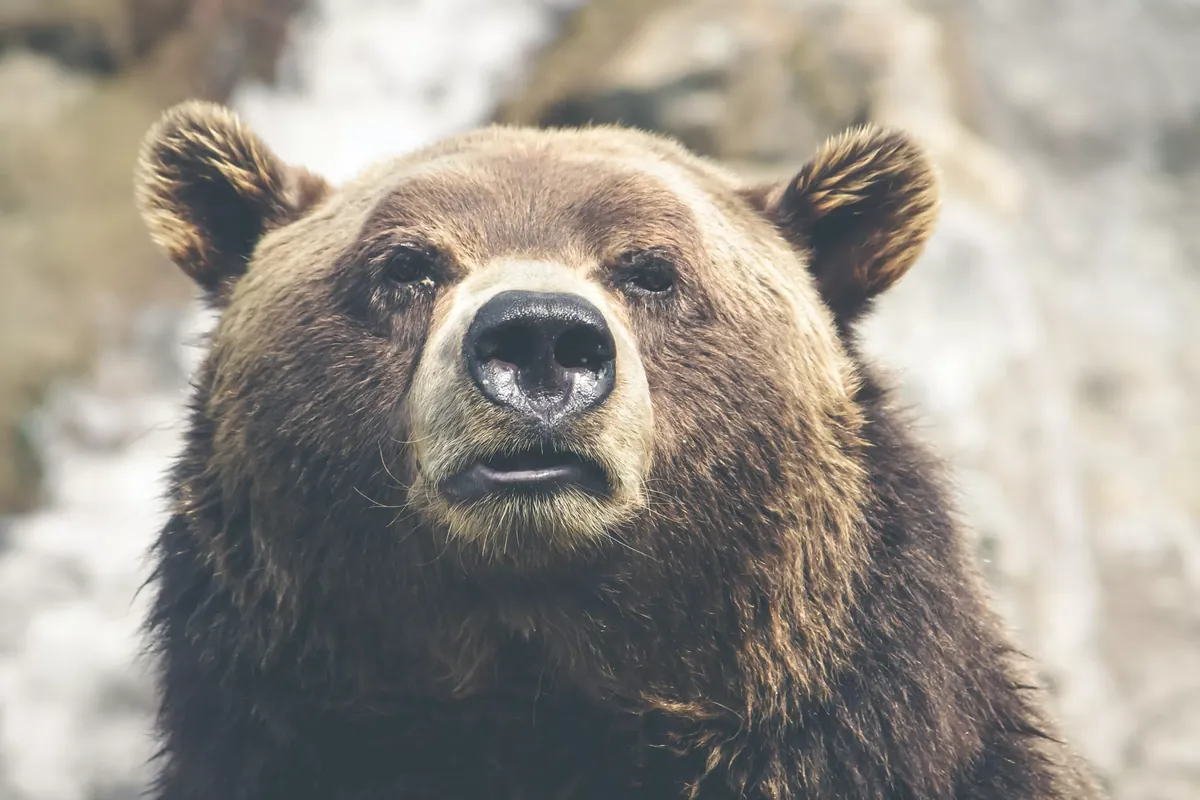
Grizzly bears are among North America's most powerful and iconic predators, roaming the wild lands of Alaska, western Canada, and the northern Rocky Mountains. Known for their massive shoulder hump, long claws, and surprising speed, these bears play a vital role in their ecosystems.
Here are verified facts about grizzly bears, from their biology and behavior to their conservation status today.
Grizzly bears (Ursus arctos horribilis) are a subspecies of brown bear native to North America.
They are found in Alaska, western Canada, and parts of the northern Rocky Mountains, including Montana, Wyoming, and Idaho.
Adult male grizzlies typically weigh 400 to 600 pounds inland, though coastal males with access to salmon can exceed 800 pounds.
Adult females are smaller, usually weighing 250 to 350 pounds.
Grizzly bears can stand on their hind legs, reaching heights of up to 8 feet, though this is usually to get a better look or smell rather than to attack.
They have an extraordinarily keen sense of smell, considered one of the best of any mammal, far surpassing that of a bloodhound.
Grizzly bears are omnivores, eating roots, berries, nuts, fish, insects, and other animals depending on what's seasonally available.
They do not truly hibernate in the strictest biological sense but enter a deep winter dormancy, denning for five to seven months without eating, drinking, or eliminating waste.
Grizzly bears can live 20 to 25 years in the wild.
They have a distinctive muscular hump on their shoulders, which powers their strength for digging.
Their long, curved claws, which can reach 2 to 4 inches, are built for digging up roots and small mammals rather than climbing.
Grizzly bears are strong swimmers and can cross rivers and lakes with ease.
They are generally solitary animals, except for mothers with cubs or bears gathering at abundant food sources like salmon runs.
Female grizzlies are fiercely protective of their cubs and are most likely to act aggressively toward humans when defending them.
Grizzly bears in the contiguous United States are listed as a threatened species under the Endangered Species Act, protected since 1975, mainly due to historical habitat loss and hunting.
As top omnivores, grizzlies help maintain healthy ecosystems by dispersing seeds and controlling prey populations.
Grizzly bears hold deep cultural and spiritual significance in many Native American and First Nations traditions.
The grizzly bear is the official state animal of both Montana and California, and it appears on the California state flag, even though grizzlies have been extinct in California since the 1920s.
Female grizzlies typically give birth every 2 to 4 years, one of the slowest reproductive rates of any North American mammal.
Despite their bulk, grizzly bears can run in short bursts at speeds up to 30 to 35 miles per hour.
Grizzly bears are highly intelligent and have excellent long-term spatial memory, helping them relocate reliable food sources year after year.
Frequently asked questions
How dangerous are grizzly bears?
Grizzly bears are generally not aggressive toward humans but can be dangerous if surprised, provoked, or if they feel their cubs or food are threatened. Giving them space and following bear-safety guidelines greatly reduces risk.
What should I do if I encounter a grizzly bear?
Stay calm, avoid direct eye contact, and back away slowly rather than running. Speak in a calm voice, make yourself look larger, and carry bear spray in grizzly country.
How fast can grizzly bears run?
Grizzly bears can run up to 30 to 35 miles per hour in short bursts, far faster than any human, which is why running away from one is dangerous.
What is the difference between grizzly bears and black bears?
Grizzly bears are generally larger, have a distinctive shoulder hump, longer claws, and a concave (dished) facial profile, while black bears lack the hump and have a straighter facial profile and shorter claws.
Do grizzly bears hibernate?
Grizzly bears enter a deep winter dormancy in dens for roughly five to seven months, during which their heart rate and metabolism slow dramatically, though it differs slightly from true hibernation seen in smaller mammals.
Are grizzly bears endangered?
In the contiguous United States, grizzly bears are listed as threatened under the Endangered Species Act, though populations in Alaska and Canada are considerably larger and more stable.
We write every article to be genuinely fun — and genuinely true. Each fact is checked against reputable sources before it goes live. Spotted something off? Tell us and read our fact-check policy.