FFacts On Tap Editorial Team Fact-checkedUpdated February 28, 20263 min read
Share
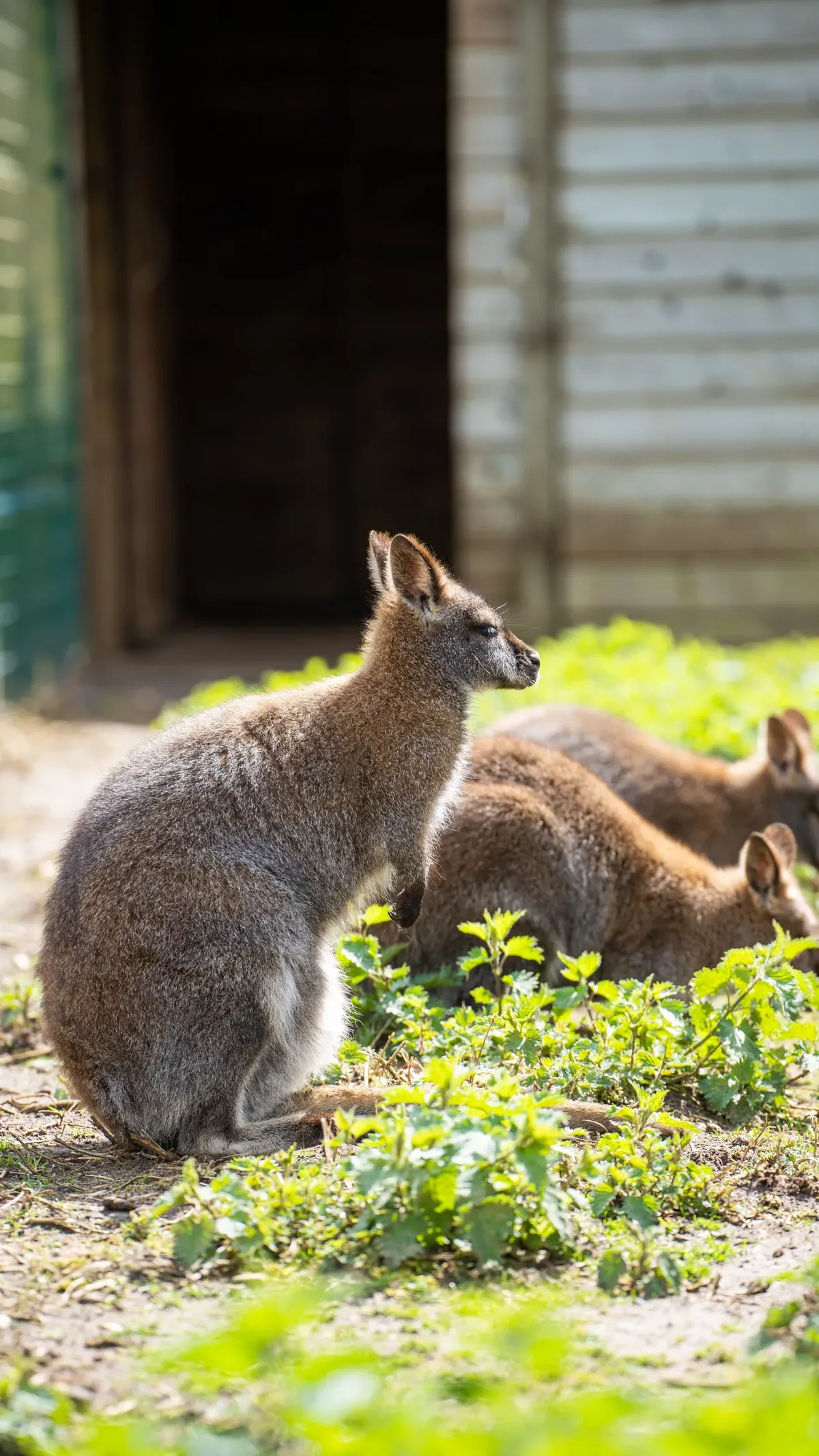
Kangaroos are the largest marsupials on Earth, found only in Australia and a few nearby islands. With their powerful hind legs, balancing tails, and built-in baby pouches, they're some of the most recognizable animals in the world.
Here are the real, verified facts behind the hype.
Kangaroos are marsupials native to Australia and New Guinea, and they are the largest marsupials alive today.
A kangaroo's powerful hind legs let it cover roughly 8 to 9 meters (about 25 to 30 feet) in a single leap, and it uses its thick tail as a counterbalance while hopping.
There are four main species commonly called 'true' kangaroos: the red kangaroo, eastern grey kangaroo, western grey kangaroo, and antilopine kangaroo.
Kangaroos are herbivores that graze mainly on grasses, leaves, and shrubs, and they can go long periods without drinking water by getting moisture from their food.
Female kangaroos have a forward-facing pouch where their tiny, underdeveloped newborn joeys crawl immediately after birth and continue developing for several months.
Kangaroos have excellent hearing and can rotate each ear independently to pinpoint sounds from different directions without moving their heads.
Aboriginal Australians have hunted kangaroos for tens of thousands of years, using the meat for food and the hides for clothing and tools.
At slow speeds, kangaroos use an unusual five-point 'pentapedal' walk, planting their tail like a fifth limb, but they switch to hopping as their only gait once moving quickly.
Kangaroos are social animals that live in groups called mobs, which can range from just a few individuals to more than 100 where food is plentiful.
A kangaroo's tail is extremely muscular and acts almost like a third leg, supporting its body weight when standing still or moving slowly.
Wild kangaroos typically live around 6 to 8 years on average, though some survive well into their teens, while kangaroos in zoos and sanctuaries can live 20 years or more.
Kangaroo gestation is unusually short, lasting only around 30 to 36 days depending on the species, one of the briefest of any mammal.
Red kangaroos can sustain running speeds of about 56 km/h (35 mph) and have been recorded reaching even faster bursts over short distances.
Kangaroos aren't natural swimmers, but they can swim well when needed, sometimes heading into water to escape predators or cool off.
Frequently asked questions
What is the gestation period of a kangaroo?
Kangaroo gestation is very short, typically around 30 to 36 days depending on the species. The joey is born tiny and undeveloped and crawls into the mother's pouch to finish growing.
How fast can a kangaroo run?
Red kangaroos can sustain speeds of about 56 km/h (35 mph) and have been recorded moving even faster in short bursts, making them the fastest hopping animal on Earth.
Are kangaroos endangered?
The four main kangaroo species are not endangered and are protected under Australian law, with large, stable populations. Some related species, such as certain tree-kangaroos, are considered endangered or threatened.
Can kangaroos swim?
Yes. Kangaroos aren't strong swimmers by nature, but they can swim competently when necessary, including to escape predators or cross water.
How do kangaroos communicate with each other?
Kangaroos communicate through vocal clicks, coughs, and grunts, along with body language such as thumping their feet, and by scent marking.
We write every article to be genuinely fun — and genuinely true. Each fact is checked against reputable sources before it goes live. Spotted something off? Tell us and read our fact-check policy.