FFacts On Tap Editorial Team Fact-checkedUpdated May 23, 20233 min read
Share
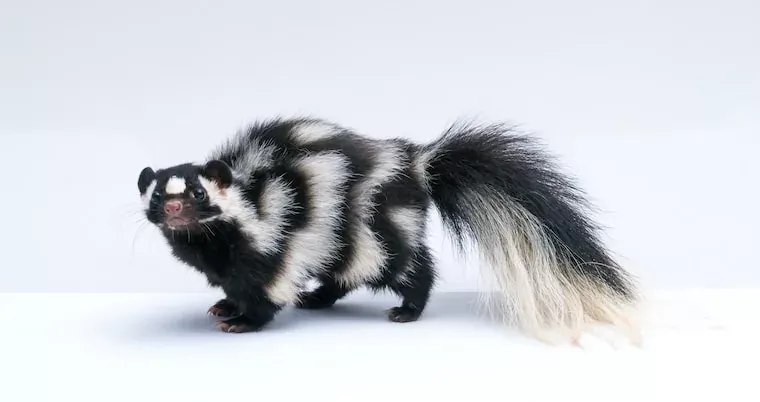
Skunks are famous for one thing above all: that unmistakable spray. But there's a lot more going on beneath the black-and-white stripes, from a surprising resistance to snake venom to a surprisingly slow gait that says "don't mess with me."
Here are the real, fact-checked details behind one of North America's most recognizable backyard animals.
Skunks are mostly nocturnal, meaning they're most active at night and rest during the day.
Skunks are omnivores, eating a mix of plants and animals, including insects, small rodents, eggs, berries, and grasses.
Skunks are excellent diggers, using their long front claws to dig for grubs and to excavate dens in the ground.
Those same long claws make skunks poor climbers overall; the common striped skunk rarely climbs trees, though the smaller spotted skunk species are agile climbers.
Skunks have relatively poor eyesight but an excellent sense of smell, which they rely on to find food at night.
A skunk's spray can travel up to about 10 feet with fairly accurate aim.
Skunks are generally solitary animals, though they may share dens with other skunks during cold winter weather.
Skunks are not naturally aggressive and only spray when they feel threatened or cornered.
Skunks can swim if they need to, using their partially webbed feet, though they aren't strong swimmers and avoid water when possible.
Skunks aren't picky eaters and will scavenge for whatever food is available, including garbage and pet food left outdoors.
Skunks don't truly hibernate, but they do enter a state of reduced activity called torpor during the coldest winter months, often denning up in groups for warmth.
Skunks are notably resistant to pit viper venom, including that of rattlesnakes, and will sometimes prey on snakes that other animals avoid.
Skunks help control pest populations by feeding on rodents, grubs, and insects that damage gardens and crops.
Wild striped skunks typically live about 2 to 4 years, though they can live considerably longer in captivity.
Skunk mothers are protective of their young and will fiercely defend their kits if threatened.
Before spraying, a skunk usually gives a warning display, stomping its front feet, arching its back, and raising its tail.
A skunk's spray comes from two glands near the base of the tail and is potent enough to deter animals as large as bears and coyotes.
The foul odor skunks are known for comes from sulfur-containing compounds in the oily fluid produced by their anal scent glands.
Skunks are highly adaptable and live in a variety of habitats, including forests, grasslands, farmland, and suburban and urban areas.
Skunks have made their way into popular culture, most famously as the Looney Tunes character Pepe Le Pew.
Frequently asked questions
Do skunks make good pets?
Descented skunks are kept as pets in some places, but it's illegal to own one in many U.S. states, and they require specialized care, diet, and housing even where it's legal.
Can you remove a skunk's scent?
Skunk odor is tough to eliminate, but a mix of hydrogen peroxide, baking soda, and dish soap is a widely recommended home remedy that works better than tomato juice, a popular myth.
How far can a skunk spray?
A skunk can spray a fine mist or a more direct stream up to roughly 10 feet, and the smell can be detected from much farther away.
How do you prevent skunks from spraying?
Give skunks space and avoid sudden movements or loud noises; if you see the warning posture (stomping feet, raised tail), back away slowly rather than running or making noise.
Do skunks carry diseases?
Skunks can carry rabies and are considered a rabies vector species in North America, so direct contact with wild skunks should always be avoided.
What should I do if I encounter a skunk?
Stay calm, give the skunk plenty of room, and move away slowly without startling it; skunks generally only spray when they feel cornered or unable to escape.
We write every article to be genuinely fun — and genuinely true. Each fact is checked against reputable sources before it goes live. Spotted something off? Tell us and read our fact-check policy.