FFacts On Tap Editorial Team Fact-checkedUpdated January 11, 20263 min read
Share
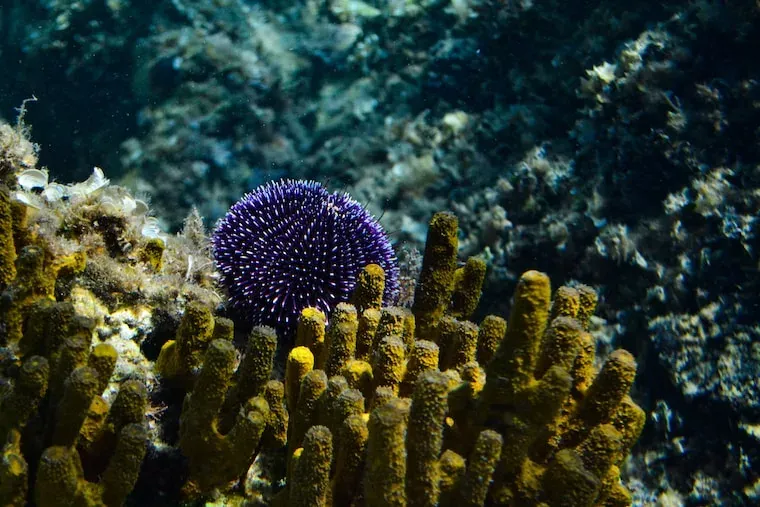
Sea urchins are spiny, globe-shaped creatures that roam ocean floors worldwide, from shallow tide pools to the deepest trenches. Close relatives of starfish and sand dollars, they use a strange five-toothed mouth to graze on algae and have quietly become one of science's favorite examples of extreme animal longevity.
Here are some verified facts about sea urchins you might not know.
Sea urchins are echinoderms, a name derived from Greek meaning "spiny skin." They are close relatives of starfish, sand dollars, and sea cucumbers.
There are roughly 950 known living species of sea urchins, found in every ocean from shallow reefs to the deep sea.
A sea urchin's rigid, spherical shell is called a test. It's made of fused calcium carbonate plates and is covered in movable spines that provide protection and help the animal move.
Sea urchins eat using a unique five-part jaw structure called Aristotle's lantern, named because Aristotle compared its shape to an ancient oil lantern. It has five hard teeth used to scrape algae off rocks.
In many coastal cultures, especially Japan, sea urchin roe (called uni) is prized as a delicacy and is a common ingredient in sushi.
Despite their armored appearance, sea urchins are vulnerable to pollution, ocean warming, disease outbreaks, and overfishing.
Sea urchins help keep marine ecosystems in balance by grazing on algae, and in turn they're an important food source for sea otters, fish, birds, and other predators.
Sea urchins can regenerate lost spines and repair damage to their test over time.
Adult sea urchins have five-fold (pentaradial) symmetry, meaning their bodies are organized into five matching sections around a central point.
Echinoids, the group that includes sea urchins, have existed for roughly 450 million years, making them one of the oldest surviving animal lineages.
Most sea urchin species live for several years to a couple of decades, but the red sea urchin (Mesocentrotus franciscanus) is a striking exception, with some individuals confirmed to be over 100 years old and possibly living far longer.
Red sea urchins show almost no signs of biological aging: a 100-year-old individual reproduces and grows at rates similar to a much younger one, making them a key model species for longevity research.
Sea urchins move using hundreds of tiny, flexible tube feet powered by an internal water-vascular system, in addition to walking on their spines.
Sea urchins have no brain; instead, a simple nerve ring and radial nerves coordinate their movement and feeding responses.
Frequently asked questions
What do sea urchins eat?
Sea urchins mainly graze on algae using their five-toothed Aristotle's lantern, though some species also eat small invertebrates, detritus, and other organic matter.
Can you eat sea urchins?
Yes. The roe (reproductive organs) of certain species, known as uni, is considered a delicacy in many cuisines, especially in Japan, where it's a popular sushi ingredient.
Are sea urchins dangerous?
Their spines can cause painful puncture wounds if stepped on or handled carelessly, and some species have venomous spines that cause swelling and intense pain. Fatalities are extremely rare.
How do sea urchins reproduce?
Most sea urchins reproduce by releasing eggs and sperm into open water, where fertilization happens externally; the resulting larvae drift as plankton before settling on the seafloor.
How long do sea urchins live?
Lifespans vary widely by species, typically ranging from a few years to a few decades, but the red sea urchin is a notable exception, with individuals verified to live past 100 years.
We write every article to be genuinely fun — and genuinely true. Each fact is checked against reputable sources before it goes live. Spotted something off? Tell us and read our fact-check policy.