FFacts On Tap Editorial Team Fact-checkedUpdated June 12, 20233 min read
Share
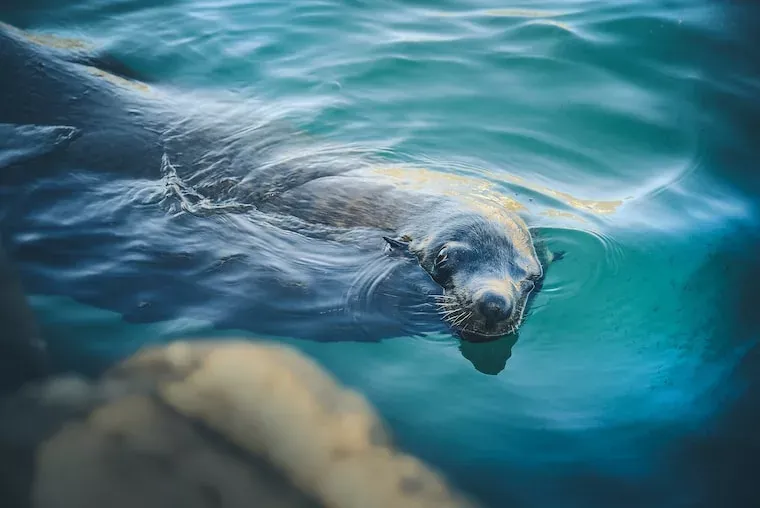
Sea lions are playful, noisy, and surprisingly athletic marine mammals found from the Galapagos Islands to the rocky California coast. Known for their loud barks, agile swimming, and curious personalities, they're one of the most recognizable pinnipeds in the ocean.
Here are some verified facts about sea lions that reveal just how remarkable these animals really are.
Sea lions are not seals. They belong to a different family of pinnipeds (Otariidae, the "eared seals") and have visible external ear flaps, longer front flippers they use to "walk" on land, and the ability to rotate their hind flippers underneath their body to move on all fours.
True seals (family Phocidae), by contrast, have no external ear flaps, smaller flippers, and move on land by wriggling on their bellies.
The California sea lion is considered the fastest pinniped in the world, capable of swimming in bursts of up to 25 miles per hour, though it typically cruises at a much slower pace.
Sea lions are strong divers and can descend several hundred feet in search of food, with some California sea lions recorded diving to depths of over 800 feet.
Sea lions typically dive for a few minutes at a time, but some individuals have been recorded holding their breath for up to 15 minutes during deep dives.
Sea lions have a thick layer of blubber that insulates them in cold water and stores energy for long fasting periods, such as when mothers stay with pups on land.
Sea lions are highly social animals that gather in large groups called colonies, which can include hundreds to thousands of individuals on beaches and rocky shorelines.
They communicate through a variety of barks, grunts, and growls, as well as body language like flipper-waving and head movements.
Sea lions are considered one of the more intelligent marine mammals. They can be trained to perform complex tasks and have demonstrated abilities like understanding same/different concepts and matching sounds to symbols in research settings.
A California sea lion named Ronan became famous in scientific studies for bobbing her head in time to a musical beat, showing that rhythmic ability isn't limited to humans and a few other species.
The U.S. Navy has trained California sea lions for decades to help locate underwater objects and detect divers, taking advantage of their excellent underwater vision and hearing.
Sea lion pups are born on land and are nursed by their mothers for close to a year, during which mothers alternate between nursing and short foraging trips at sea.
Sea lions face real threats from human activity, including entanglement in fishing gear, pollution, habitat disturbance, and reduced prey availability from overfishing.
Conservation efforts, including protections under the U.S. Marine Mammal Protection Act, have helped some sea lion populations, like California sea lions, recover substantially since the 1970s.
Frequently asked questions
What do sea lions eat?
Sea lions are opportunistic hunters that mainly eat fish and squid, along with other marine creatures available in their environment.
How long do sea lions live?
Sea lions can live around 20 to 30 years in the wild, with females typically living longer than males.
Are sea lions dangerous to humans?
Sea lions are generally not aggressive, but they can bite or act defensively if they feel threatened or cornered, so it's important to keep a safe distance and never approach or feed them.
How is a sea lion different from a seal?
Sea lions have visible external ear flaps and long front flippers that let them walk on land, while seals lack visible ear flaps and move by wriggling on their bellies.
How can I help protect sea lions?
You can support sea lion conservation by reducing plastic and fishing-gear waste, choosing sustainably sourced seafood, keeping a safe distance from wild sea lions, and supporting marine mammal protection organizations.
We write every article to be genuinely fun — and genuinely true. Each fact is checked against reputable sources before it goes live. Spotted something off? Tell us and read our fact-check policy.