FFacts On Tap Editorial Team Fact-checkedUpdated August 23, 20233 min read
Share
Swans are among the most elegant birds on the water, gliding across lakes, ponds, and rivers with an almost regal calm. Admired for centuries in art, literature, and folklore, these large waterfowl are more than just a pretty sight.
Here are some genuinely verified facts about swans, their behavior, and the surprising roles they play in nature and culture.
There are seven recognized species of swan: the mute, whooper, tundra, trumpeter, black, black-necked, and Bewick's swan.
The mute swan, known for its orange bill and pure white feathers, is one of the most widespread and familiar swan species.
Swans typically live 10 to 20 years in the wild, and can live longer, sometimes into their 20s or 30s, in captivity with protection from predators.
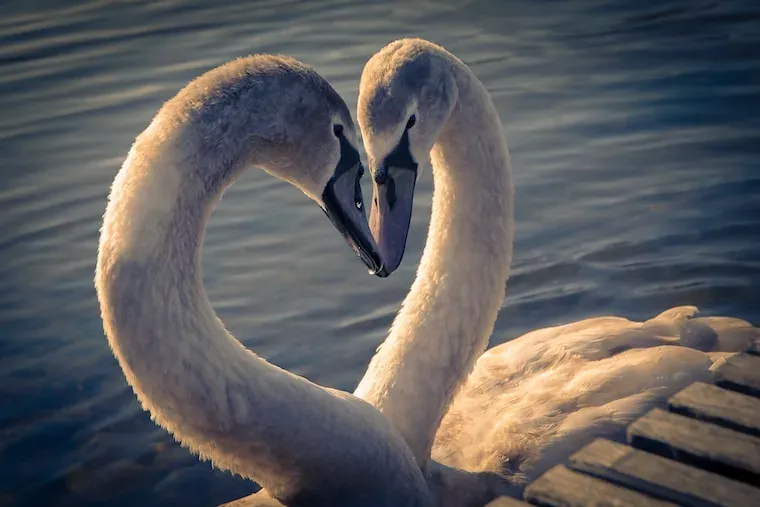
Swans are largely monogamous and often form pair bonds that last for life. If one partner dies, the survivor will sometimes find a new mate.
Swans are highly territorial, especially during breeding season, and will aggressively defend their nests from predators and intruders, including humans.
Swans are omnivores. Their diet is mostly made up of aquatic plants, but they also eat small amounts of insects, mollusks, and small aquatic animals.
Swans feed mainly by 'dabbling' and 'upending' at the surface, tipping forward to reach underwater plants with their long necks rather than diving deep.
Swans are strong swimmers, capable of paddling at several miles per hour, and they can also fly at impressive speeds during migration.
Swans are known for their loud calls, from the trumpeter swan's deep honk to the whooper swan's bugling cry, which can carry across long distances.
Swans have a preen gland near the base of their tail that produces oil they spread through their feathers with their bills to keep them waterproof.
Swans communicate through body language, including head-bobbing, wing-flapping, and hissing, to signal aggression, courtship, or submission.
Swans have long been symbols of love, fidelity, and grace in art and literature, partly because of their lifelong pair bonds.
The mute swan is the national bird of Denmark.
Swans are social birds outside of breeding season and often gather in large groups called flocks or 'bevies' on the water and 'wedges' in flight.
Swans are highly adaptable and live in a range of habitats, including freshwater lakes, rivers, coastal estuaries, and even city parks.
Swans are among the heaviest flying birds; trumpeter swans, the largest species, can weigh up to 30 pounds with wingspans exceeding 7 feet.
The whooper swan is the national bird of Finland and is named for its loud, whooping call.
By grazing on aquatic vegetation, swans help keep waterways from becoming choked with plant growth, playing a real role in wetland ecosystems.
Swans have inspired art, literature, and performance for centuries, most famously as the central symbol of the ballet Swan Lake.
Many swan populations, including mute swans in parks and city ponds, have become accustomed to humans and are commonly seen being fed by visitors.
Frequently asked questions
Do swans mate for life?
Swans are largely monogamous and often stay with the same mate for many years or for life. If a partner dies, the surviving swan will sometimes find a new mate.
What do swans eat?
Swans are omnivores whose diet is mostly aquatic plants, supplemented with small amounts of insects, mollusks, and other small aquatic creatures.
How long do swans live?
In the wild, swans typically live 10 to 20 years, while those in protected or captive settings can live into their 20s or 30s.
Are swans aggressive?
Swans can be aggressive, particularly during breeding season, when they will defend their nest and cygnets from predators or perceived threats, including humans.
Do swans really dive underwater?
Not typically. Swans mostly feed by dabbling and upending, tipping forward to reach submerged plants with their necks while staying near the surface, rather than diving deep like loons or mergansers.
We write every article to be genuinely fun — and genuinely true. Each fact is checked against reputable sources before it goes live. Spotted something off? Tell us and read our fact-check policy.