FFacts On Tap Editorial Team Fact-checkedUpdated August 22, 20234 min read
Share
Alligators have prowled North America's rivers and swamps for millions of years, armored, ancient, and built for ambush. Beneath the tough hide and toothy grin is a surprisingly sophisticated animal.
Here are verified facts about alligators covering their biology, behavior, and place in the wild.
American alligators are native to the southeastern United States, found in states such as Florida, Louisiana, Georgia, and South Carolina.
Large male American alligators can grow to about 13-14 feet long and weigh close to 1,000 pounds, though most adults are smaller.
Alligators are cold-blooded (ectothermic), meaning their body temperature rises and falls with their surroundings.
Alligators can live up to 50 years in the wild, and some individuals in captivity have lived even longer.
Alligators are strong swimmers and can reach speeds of roughly 20 miles per hour in short underwater bursts, though they cruise far slower most of the time.
An alligator's bite force has been directly measured at around 2,000 psi, far stronger than a lion's bite (about 650 psi) and among the strongest ever measured for a living animal, though some shark bite estimates are even higher.
Alligators have roughly 80 teeth in their mouth at any time and can replace each tooth many times over their life.
Alligators are carnivores that eat fish, birds, turtles, and mammals, adjusting their diet as they grow larger.
An alligator's digestive system produces very strong stomach acid, helping it break down bone and shell from its prey.
As apex predators, alligators help control populations of fish and other animals, which keeps their wetland ecosystems balanced.
Alligators are most active in warm weather and slow down dramatically in cold winter months, sometimes entering a dormant state called brumation.
Alligators often bask together in groups to warm themselves in the sun, though they are not truly social animals in the way mammals are.
Alligators use their powerful tails to propel themselves through water and to make communicative splashes.
Alligators communicate with grunts, hisses, and deep bellows, especially during the spring breeding season.
Alligators have excellent eyesight both above and below the surface of the water.
A clear inner eyelid, called a nictitating membrane, covers an alligator's eyes underwater so it can see while swimming.
Alligators support a real economy in the southeastern U.S. through regulated hunting, farming, and ecotourism.
Unregulated hunting pushed American alligators to the brink by the mid-20th century, but legal protection and conservation programs allowed them to recover fully by the late 1980s.
Alligators generally avoid people and rarely attack unless provoked, cornered, or fed by humans.
Alligator hide is prized for leather goods such as boots, belts, and handbags.
Alligator meat is eaten as a regional specialty in parts of the southeastern United States.
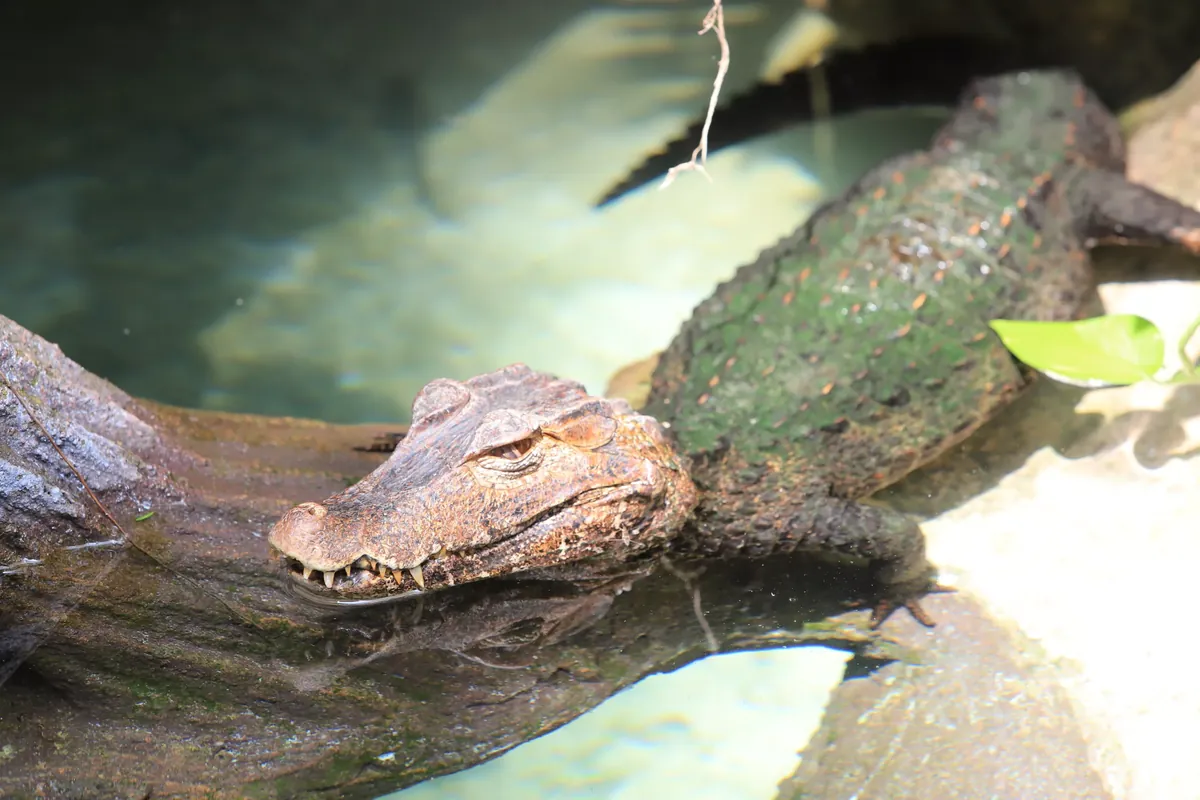
Alligators are often confused with crocodiles, but alligators have a wider, U-shaped snout and live mainly in freshwater, while crocodiles have a narrower, V-shaped snout and tolerate saltwater.
Frequently asked questions
What is the difference between an alligator and a crocodile?
Alligators have a wider, U-shaped snout and live mostly in freshwater, while crocodiles have a longer, V-shaped snout and are more tolerant of saltwater. Crocodiles also tend to show more visible teeth when their mouths are closed.
Are alligators dangerous to humans?
Alligators generally avoid people and attacks are rare, but they can become aggressive if provoked, cornered, or accustomed to being fed by humans. Wildlife agencies advise keeping a safe distance and never feeding wild alligators.
How do alligators communicate with each other?
Alligators communicate through grunts, hisses, and low bellows, which are especially common during the spring breeding season. They also slap the water with their tails and heads to send signals to other alligators.
What is the best way to observe alligators in the wild?
The safest way to see alligators is at a national park, state park, or wildlife refuge where they are protected and monitored. Always keep a safe distance, stay on marked trails or boardwalks, and never approach or feed them.
How long do alligators live?
American alligators typically live around 50 years in the wild, and some individuals in zoos or sanctuaries have lived even longer under human care.
How do alligators hunt for their prey?
Alligators are ambush predators that lie motionless in the water, using sharp eyesight and sensitive pressure receptors on their skin to detect prey, then strike suddenly with a powerful bite and drag their catch underwater.
We write every article to be genuinely fun — and genuinely true. Each fact is checked against reputable sources before it goes live. Spotted something off? Tell us and read our fact-check policy.